
Overview
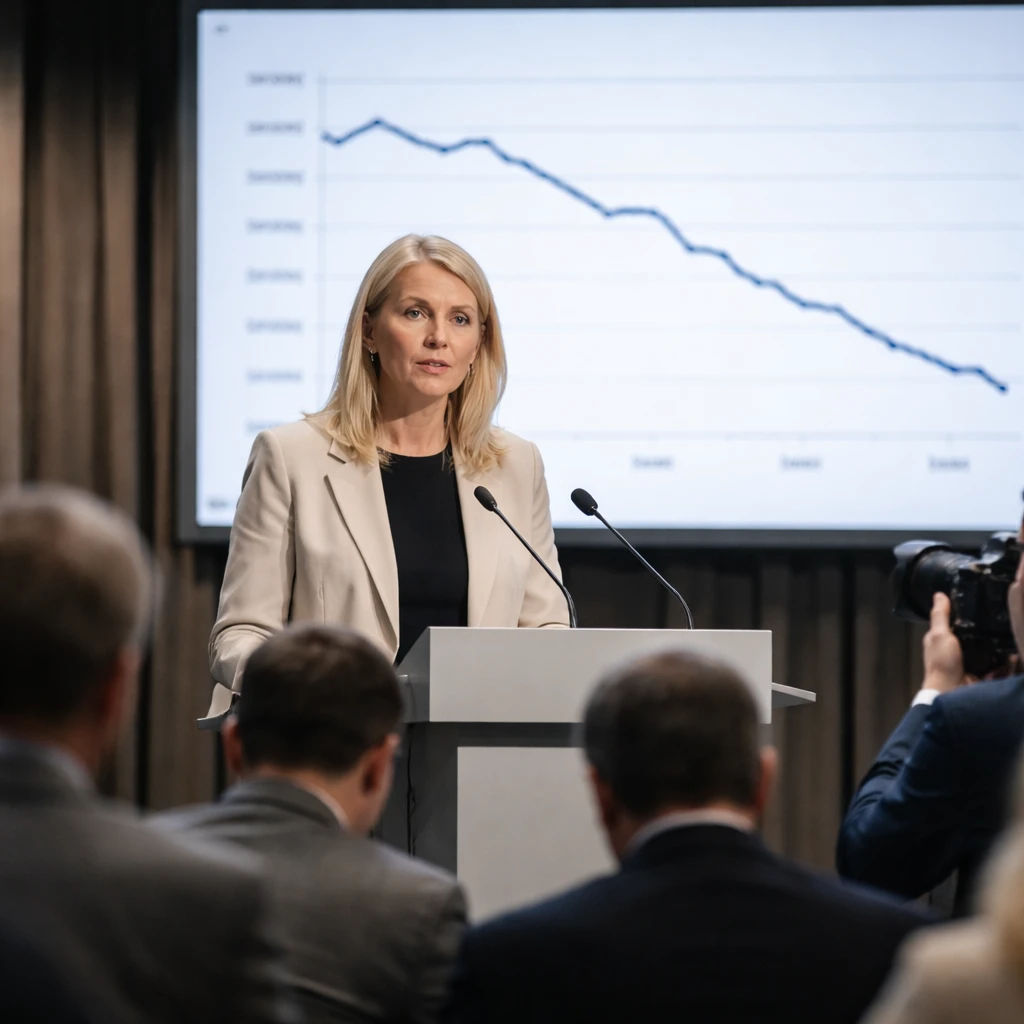
First Deputy Governor Aino Bunge of Sweden's central bank said on Wednesday that inflation in Sweden is likely to decline "quite noticeably" over the course of this year. The deputy governor attributed part of the expected fall to a temporary cut in the value-added tax applied to food.
Underlying trends
Bunge added that recently published data indicate inflationary pressures may already be subdued even when the mechanical effect of the temporary VAT reduction is taken out of the calculation. That observation suggests the disinflation process may not be driven solely by tax policy but also by softer price dynamics in other areas of the economy.
Economic indicators and forecast alignment
The central bank official acknowledged that cyclical indicators have shown a mixed picture in recent periods. Despite that, she said that developments in the real economy as a whole have been broadly consistent with the bank's own forecast.
Risks that could alter the outlook
Bunge pointed to several factors that have the potential to change the inflation and economic trajectory and, as a result, could influence the policy rate set by the central bank. Among the uncertainties she singled out was the unsettled geopolitical situation at the global level. These risks mean the path for inflation and monetary policy is not without potential deviations from the currently expected course.
Summary of implications
- Inflation is expected to fall notably this year, with a temporary food VAT cut contributing to that decline.
- Data suggest underlying inflation may be easing even after removing the VAT effect.
- Cyclical indicators are mixed, but real-economy developments broadly match the Riksbank's forecast; geopolitical uncertainty remains a key risk to the outlook.
Note on limitations
The remarks reflect the assessment given by the central bank's First Deputy Governor on the date she spoke. The comments identify potential influences on inflation and the policy rate but do not establish a definitive outcome if those factors change.