
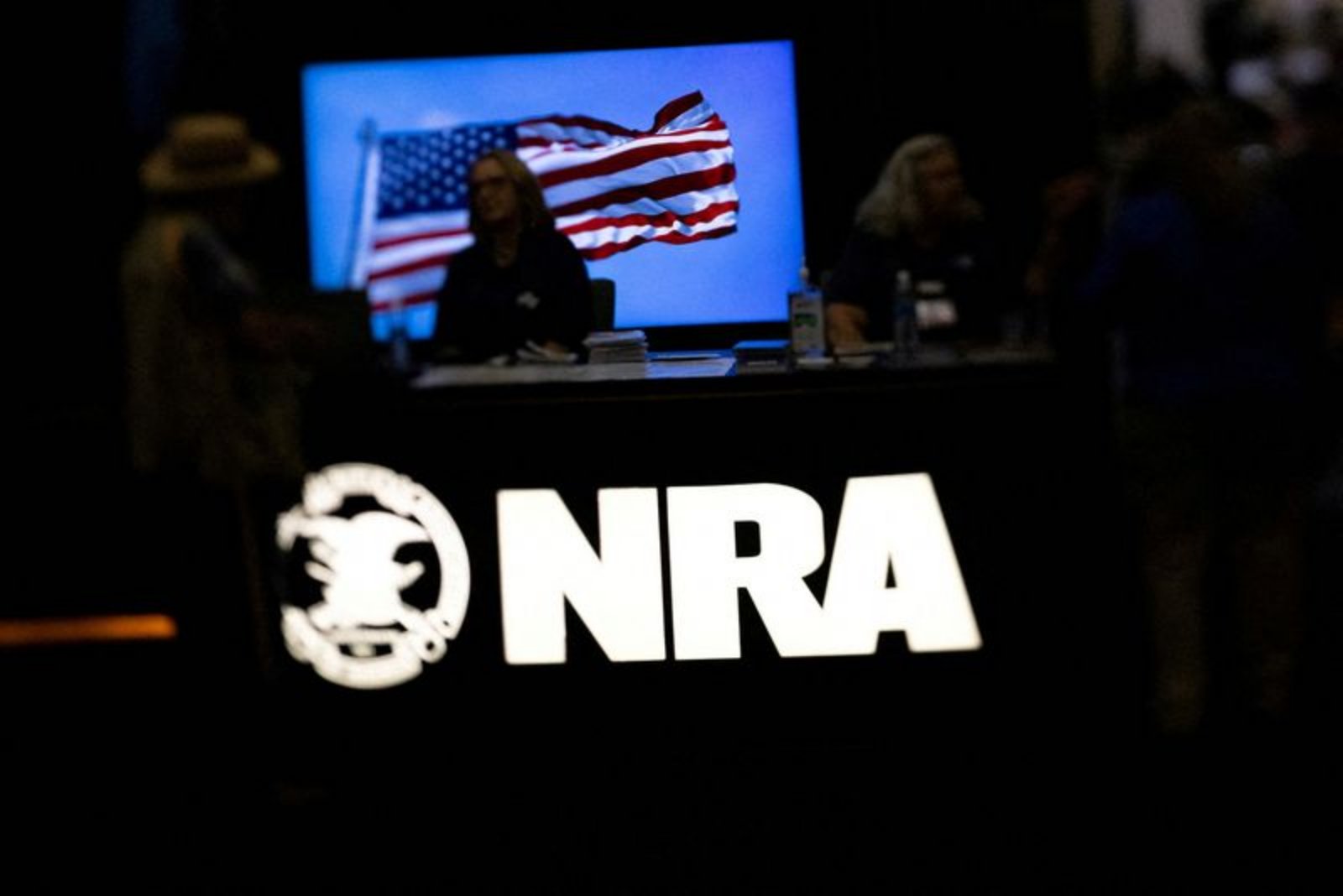
WASHINGTON - On Feb. 23 the U.S. Supreme Court chose not to take another step to reinstate litigation brought by the National Rifle Association that accused Maria Vullo, who once led New York’s Department of Financial Services, of coercing banks and insurers to disassociate from the gun rights organization.
The procedural history of the case has been complex. In 2018 the NRA sued Vullo, alleging her office unlawfully retaliated against the group for its advocacy of gun rights after a mass shooting in Parkland, Florida that left 17 people dead. The NRA said Vullo instituted an "implicit censorship regime" by urging financial firms to consider reputational risk in doing business with the group and by taking enforcement actions against insurers tied to NRA-endorsed products.
In May 2024 the Supreme Court unanimously revived the NRA’s lawsuit after lower courts had dismissed it. That ruling reaffirmed a First Amendment principle, stating that the Constitution "prohibits government officials from wielding their power selectively to punish or suppress speech, directly or, as alleged here, through private intermediaries." But the Court left open a separate question in that opinion: whether Vullo could be shielded from suit by qualified immunity, a legal doctrine that can protect officials from civil liability under certain circumstances.
After the 2024 decision the case returned to the U.S. Court of Appeals for the 2nd Circuit in New York. The appeals court concluded last year that Vullo was entitled to qualified immunity because the governing law was not "clearly established" at the time of her interactions with banks and insurers. The 2nd Circuit wrote that "reasonabler officials in Vullo’s position would not have known for certain ... that her conduct crossed the line from forceful but permissible persuasion to impermissible coercion and retaliation." That ruling triggered a second appeal to the Supreme Court.
On Feb. 23 the high court declined to take up that renewed appeal, leaving intact the 2nd Circuit’s finding that qualified immunity applies in this case. As a result, the particular claims against Vullo remain dismissed under the immunity doctrine even though the Court previously recognized the First Amendment issue at the heart of the NRA’s complaint.
The NRA, a prominent and politically active gun rights organization aligned with Republican interests, has for years opposed gun control measures favored by many Democrats. Its litigation has played a role in broadening legal protections for gun rights in the United States, and in this suit the group argued that New York’s actions amounted to a form of "blacklisting" intended to deprive it of basic financial services and to hinder its advocacy.
Vullo, who was appointed by a Democratic governor, publicly urged banks and insurance companies to weigh the reputational risks of doing business with gun rights organizations following the Parkland shooting. Her office levied fines totaling more than $13 million against Lloyd’s of London and two other insurers over an NRA-endorsed product called "Carry Guard," which New York officials concluded violated state insurance law. That product had provided liability coverage for policyholders who caused injuries from gunfire, including in some instances involving wrongful use of a firearm. Following enforcement actions, the insurers agreed to stop selling NRA-endorsed products that New York deemed illegal.
With the Supreme Court's refusal to intervene again, the legal posture remains that the First Amendment claim can be viable in principle but that Vullo, specifically, was insulated from suit by qualified immunity because the contours of the law were not sufficiently clear at the time of her conduct.
Contextual note - The procedural sequence in this case highlights the intersection of constitutional free speech protections, the reach of regulatory influence over private intermediaries such as banks and insurers, and the protections that qualified immunity can afford public officials when legal standards are not clearly established.