
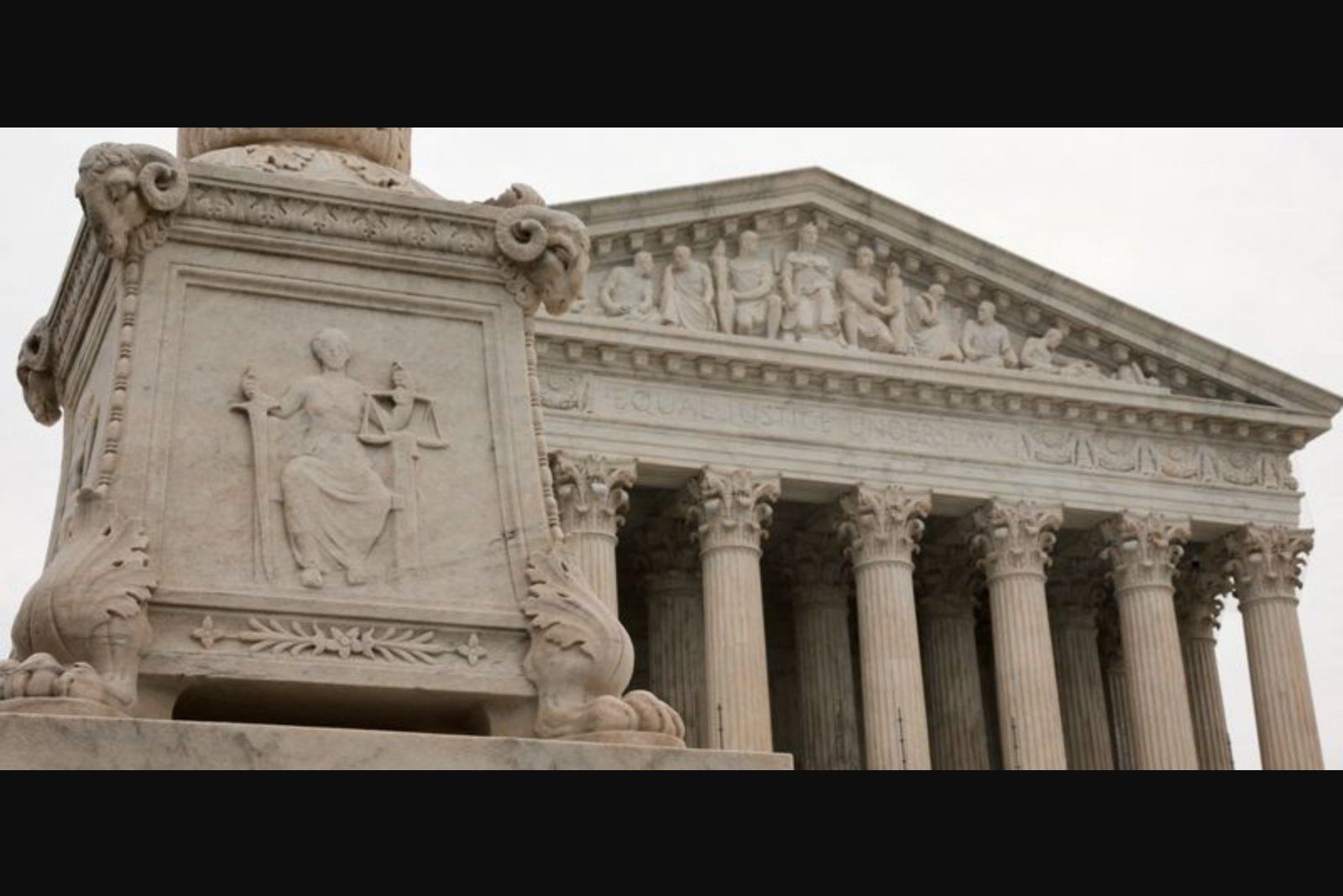
The Supreme Court’s docket for the term running from October through the end of June brings together numerous high-profile legal contests that probe the limits of executive power, the scope of federal statutes and the reach of constitutional protections. The cases span tariff authority, the independence of the Federal Reserve, birthright citizenship, voting and election law, agency tenure protections, transgender participation in sports, speech and professional regulation, firearms restrictions, campaign finance rules, absentee voting procedures, asylum processing at the southern border, corporate liability for human rights abuses and product liabilities, as well as disputes over regulatory penalties and copyright liability.
Overview
The docket features matters that have immediate public policy consequences and longer-term legal significance. Some decisions this term have already issued on an emergency basis, while many remaining disputes are scheduled for argument or await scheduling. Several cases are expected to be resolved by the end of June, according to the court’s calendar and the timing referenced during arguments.
Tariff Authority - Trump Administration Tariffs Under IEEPA
On February 20 the justices issued a ruling that struck down broad tariffs imposed by the previous administration under a statute aimed at national emergencies. In a 6-3 decision the Supreme Court upheld the judgment of a lower court finding that the president exceeded the authority granted by the International Emergency Economic Powers Act, commonly referred to by its acronym IEEPA. The court concluded that IEEPA did not confer the power the president asserted to impose tariffs. The opinion underscored that authority to impose taxes and tariffs resides with Congress under the Constitution, not with the president.
The tariffs in question had been central to a broader trade posture pursued by the administration at the time, and the court’s ruling carries implications for international commerce, trading relationships and financial markets because those tariffs were a core element of a trade policy that contributed to global economic uncertainty.
Federal Reserve Independence - Attempted Firing of a Fed Governor
The court considered a high-stakes dispute over the president’s attempt to remove a sitting Federal Reserve governor, a case that probes statutory protections for the central bank’s independence. During arguments on January 21 the justices signaled skepticism about the administration’s request to overturn a lower court order that temporarily barred the president from immediately dismissing the governor at issue while her legal challenge proceeds.
The Federal Reserve was created by Congress through the Federal Reserve Act, which includes provisions that diminish day-to-day political interference by specifying that governors may be removed only "for cause." The statute does not, however, define "for cause" or set out procedures for removal. The president in this case asserted allegations of mortgage fraud as justification for attempting the removal; the governor has denied those allegations and characterized them as a pretext for disagreement over monetary policy. The governor remains in office pending the outcome of the litigation, and the court was expected to issue a ruling by the end of June.
Birthright Citizenship - Executive Directive Challenged
Arguments are set for April 1 in a case testing the legality of an executive directive that sought to limit birthright citizenship in the United States. The directive instructed federal agencies not to recognize the citizenship of children born in the country when neither parent is a U.S. citizen nor a legal permanent resident.
A lower court previously enjoined the directive in a class-action suit brought by parents and children whose citizenship the order threatened to eliminate. That court held the directive contravened the Fourteenth Amendment of the Constitution as well as a federal statute that codifies birthright citizenship. The dispute centers on whether a 19th century constitutional provision long understood to grant citizenship by birth can be altered by executive instruction.
Voting Rights - Louisiana Electoral Map and Section 2
One prominent voting rights case argued on October 15 asks the justices to consider the scope of Section 2 of the Voting Rights Act of 1965, which bars electoral maps that dilute minority voting power even in the absence of intentional racial discrimination. The litigation concerns a Louisiana congressional map that drew six U.S. House districts, resulting in two districts with Black-majority populations compared with a prior plan that produced just one such district.
A lower court determined that the map violated the equal protection guarantee of the Constitution. During oral argument the court’s conservative bloc signaled openness to narrowing another important provision of the Voting Rights Act, a move that would affect litigation over electoral maps across many jurisdictions. A decision in this case was expected by the end of June.
Tenure Protections for Independent Agency Officials - Federal Trade Commission Matter
The court weighed challenges to the statutory tenure protections afforded officials at independent agencies when it heard an appeal in litigation over the president’s removal of a Federal Trade Commission member. The Justice Department appealed a lower court ruling that determined the Republican president overstepped his authority when he attempted to remove a Democratic FTC commissioner in March before the end of her statutory term.
In oral argument on December 8 the conservative justices signaled sympathy for the view that the tenure protections Congress legislated for the leaders of independent agencies unconstitutionally impinge on presidential authority. While the case was pending, the court allowed the administration to remove the commissioner. The outcome of the appeal could provide a significant expansion of presidential power and simultaneously threaten a long-standing precedent protecting the independence of administrative agencies. A ruling was expected by the end of June.
Transgender Participation in Sports
The court addressed appeals from Idaho and West Virginia that challenge lower court rulings in favor of transgender high school athletes who contested state laws prohibiting transgender athletes from participating on female sports teams. The cases were argued on January 13, and the record reflects that 25 other states have enacted similar laws restricting transgender athletes.
During argument the conservative justices expressed concern about imposing a nationwide rule given the substantial disagreement among states and the unresolved scientific and medical questions over whether interventions such as puberty blockers or gender-affirming hormones fully mitigate any physiological advantages. The justices’ questioning suggested they were inclined to uphold the state bans, but the court’s decision was not yet final and was expected by the end of June.
Free Speech and Professional Regulation - Colorado Conversion Therapy Law
The court considered a constitutional challenge to a Colorado statute that prohibits licensed psychotherapists from engaging in so-called conversion therapy with minors - therapeutic practices that seek to change a young person’s sexual orientation or gender identity. In oral argument on October 7 the conservative justices appeared receptive to the challenge brought by a Christian counselor who contends that the law violates First Amendment protections by restricting speech.
Colorado maintains that it is regulating professional conduct rather than pure speech and that it has statutory authority to prohibit medical or therapeutic practices that it deems unsafe or ineffective. A lower court had upheld the statute. The Supreme Court’s eventual ruling was anticipated by the end of June.
Hawaii Handgun Carry Restrictions
The court heard a constitutional challenge on January 20 to a Hawaii law that requires individuals to have the property owner's "express authorization" to carry a handgun onto privately owned property that is open to the public. The law had been backed by Hawaii’s Democratic administration, and four other states maintain comparable measures.
Challengers, supported by the Trump administration in their appeal, asked the high court to overturn a lower court’s decision that found the Hawaii statute likely complies with the Second Amendment. During argument the conservative justices expressed skepticism toward the law and appeared inclined to broaden gun rights, signaling potential willingness to restrict the ability of states to impose such property-based carrying limits. A final ruling was expected by the end of June.
Gun Possession and Drug Use
The court will hear argument on March 2 in a case where the Justice Department defends a federal prohibition on firearm possession by users of illegal drugs. The statute under review dates to the Gun Control Act of 1968 and was one of the provisions applied in a 2023 prosecution of the then president's son.
A lower court held that the law largely conflicted with the Second Amendment, prompting the administration to appeal. The case involves a dual U.S.-Pakistani citizen living in Texas who is a party to the litigation. The outcome will determine whether the historic statutory prohibition on gun possession by illegal drug users remains constitutional under current Second Amendment jurisprudence.
Campaign Finance - Limits on Coordinated Party Spending
The Supreme Court considered a Republican-led challenge seeking to invalidate federal limits on coordinated expenditures by political parties in support of candidates. The dispute centered on whether statutory caps on the amount parties may spend with the input of the candidates they back - known as coordinated party expenditures - violate the First Amendment’s protections for political speech.
Arguments were heard on December 9 in a case that involves Vice President JD Vance as one of the named challengers. During oral argument some conservative justices appeared sympathetic to loosening restrictions while the court’s liberal justices signaled an inclination to maintain the existing statutory limits. The court’s decision was expected by the end of June.
Mail-In Ballots - Mississippi Five-Day Receipt Rule
On March 23 the justices were scheduled to hear argument in litigation over a Mississippi law that allows certain mail-in ballots to be counted if they are postmarked by Election Day and arrive within five business days after the election. Republican challengers contested the law, and a lower court invalidated it prior to the appeal.
The dispute has potential implications for absentee and mail voting procedures, as a ruling could affect how states structure deadlines and receipt rules for ballots cast by mail in federal elections.
Asylum Processing at the Border - Metering Policy
On March 24 the court was scheduled to hear a case concerning the federal government's authority to limit the processing of asylum claims at ports of entry along the U.S.-Mexico border. The challenged policy, known as "metering," allowed immigration officials to stop asylum seekers at the border and decline to process their claims.
A lower court ruled that the policy violated federal law. Although the policy was later rescinded by a subsequent administration, the current administration has signaled it might consider reinstating similar measures. The government appealed the lower court's determination, asking the high court to uphold its asserted authority to manage intake at ports of entry.
Corporate Liability for Human Rights Abuses Abroad - Cisco and the Alien Tort Statute
The court took up an appeal from a technology company and the federal government asking the justices to narrow the reach of a long-dormant statute that lawyers have used in recent decades to bring civil suits in U.S. courts over alleged human rights abuses abroad. The law at issue is the Alien Tort Statute, enacted in 1789, which had been largely unused for almost two centuries until revived for international human rights litigation in the 1980s and later.
The present appeal concerns a revived 2011 lawsuit alleging that the company knowingly created technology that enabled Chinese authorities to surveil and persecute members of a persecuted spiritual movement. The company and the government asked the court to curtail the statute’s applicability to corporate defendants. No argument date had been scheduled for the case at the time of reporting.
Civil Investigatory Subpoena Dispute - Crisis Pregnancy Centers
The court appeared inclined to rule in favor of operators of faith-based crisis pregnancy centers in New Jersey who are challenging an attorney general’s civil investigative subpoena. The facilities, which provide counseling with the aim of discouraging abortions, faced a subpoena seeking information about donors and medical personnel as part of an investigation into possible deceptive practices.
At arguments on December 2 a majority of the justices seemed open to reviving a federal lawsuit the centers brought to resist the subpoena. The litigation raises questions about the reach of state investigatory authority and the protections afforded to organizations asserting religious or associational privacy interests. A decision was expected by the end of June.
Religious Exercise in Prison - Rastafarian Inmate Case
The court confronted a claim brought by an incarcerated individual whose faith requires him to grow his hair. Prison officials in Louisiana had shaved him bald, prompting a suit alleging violations of a federal statute that protects incarcerated persons from religious discrimination. The plaintiff appealed a lower court ruling that dismissed his case on the ground that the relevant statute does not allow for individual officials to be sued for monetary damages under the circumstances presented.
Arguments were presented on November 10, and the conservative justices appeared inclined to reject the inmate’s bid to pursue monetary claims against the officials. A ruling was expected by the end of June.
Death Penalty and Intellectual Disability - Alabama Case
Alabama officials sought permission to carry out the execution of an inmate convicted of a 1997 murder after a lower court found the inmate to be intellectually disabled and therefore ineligible for execution under the Eighth Amendment’s prohibition on cruel and unusual punishment as interpreted in a 2002 precedent. The state appealed the lower court’s factual and legal findings, which were supported by IQ test scores and expert testimony presented in the post-conviction proceedings.
The high court heard argument on December 10, and a decision in the case was anticipated by the end of June.
Product Liability - Bayer Roundup Litigation
The court agreed to hear an appeal by a multinational pharmaceutical and agricultural company seeking to sharply limit state-law causes of action that allege a glyphosate-based weedkiller caused cancer. The company asked the court to find that federal pesticide law preempts certain state-law claims, a ruling that could sharply reduce or eliminate liability in many pending cases.
The particular case before the court was brought by an individual who said he developed non-Hodgkin’s lymphoma after long use of the product. A lower court rejected the company’s preemption argument in that case. No argument date had been set at the time of reporting.
Regulatory Penalties - FCC Fines on Wireless Carriers
The justices are considering whether the Federal Communications Commission exceeded its authority in pursuing tens of millions of dollars in penalties against major wireless carriers for allegedly sharing customer location data without consent and doing so before the carriers had an opportunity to be heard in court. The case raises broader questions about the constitutional limits on agency enforcement powers and the procedural protections necessary when agencies seek substantial monetary penalties.
No date for argument had been announced.
Copyright Liability - Internet Service Provider Case
The court heard argument on December 1 in a case brought by major music labels seeking to hold an internet service provider financially responsible for allegedly enabling widespread consumer piracy of copyrighted works. A lower court ordered a new trial to determine damages related to contributory copyright infringement, and the provider warned the retrial could expose it to liability of up to $1.5 billion.
At argument the justices appeared skeptical of the provider’s assertion that mere awareness of user piracy could not support a finding of contributory liability. The court’s decision in the case was expected by the end of June.
Timing and Outlook
Several of the disputes the court has heard or will hear this term involve questions the justices framed as fundamental limits on executive authority, statutory construction and constitutional protections. Many rulings were forecast to issue by the end of June, while other cases remained unscheduled for argument. The justices have also addressed multiple matters on an emergency basis during the term, especially those touching on actions by the executive branch.
Collectively, these decisions stand to affect sectors across the economy and public life - international trade and financial markets from the tariffs dispute; monetary policy and the banking sector from the question of Fed independence; election administration and political finance systems from the voting and campaign finance matters; the healthcare and education systems from cases addressing transgender rights and professional regulation; technology and communications firms from the Alien Tort Statute, FCC enforcement and copyright cases; manufacturers and agricultural firms from the product liability appeal; and the criminal justice system from capital punishment and firearms disputes.
Concluding Note
The court’s term presents a concentrated array of legal questions with implications for governance and regulatory frameworks. The high court’s determinations, whether issued on an emergency basis or following plenary consideration, will clarify statutory boundaries and constitutional protections in matters that affect a broad cross-section of public policy domains.
Key procedural dates and expectations referenced in this account are drawn from the court’s calendar and the timing noted during arguments; some matters have already produced rulings while others await argument scheduling.