
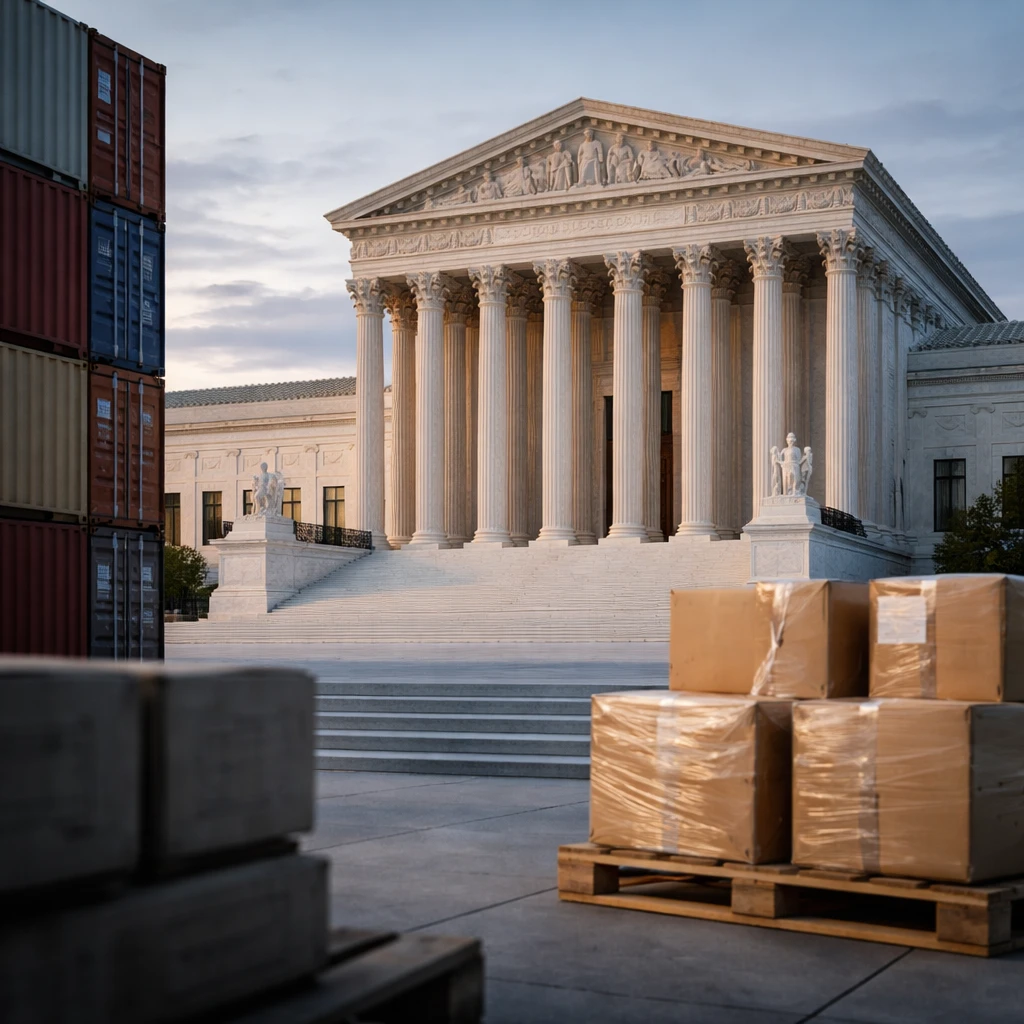
The U.S. Supreme Court has designated February 20 as an upcoming opinion day, with further sessions set for February 24 and 25, according to the court's calendar. Market participants and importers are closely watching the docket because one of the pending opinions could address the legality of key tariffs imposed under the Trump administration.
The tariff dispute is one of 12 cases that were argued in October or November and remain undecided as the court returns from a four-week recess. Federal government figures cited in the case record indicate the contested levies are imposing costs on importers exceeding $16 billion each month.
The litigation centers on President Trump's April 2 "Liberation Day" tariffs, which applied duties ranging from 10% to 50% on a wide swath of imports. The Supreme Court's review also encompasses separate duties directed at shipments from Canada, Mexico and China that were imposed with the stated purpose of addressing fentanyl trafficking.
A ruling that disfavors the administration would constitute President Trump's most consequential legal reversal since his return to the White House, according to statements referenced in court filings. The White House has signaled readiness to move quickly to replace any tariffs the court invalidates by using alternative legal mechanisms, though President Trump has acknowledged those substitutes would be more cumbersome to implement.
Justices heard oral arguments on November 5 on an expedited schedule, prompting some observers to expect a faster resolution than the Supreme Court's typical months-long deliberation period. The compressed timeline had suggested a decision might appear within weeks after argument rather than the usual extended interval.
As the court prepares to issue opinions on the scheduled dates in February, importers and market participants remain attentive to both the legal outcome and the administration's stated contingency plans for restoring trade measures should the court strike them down.