
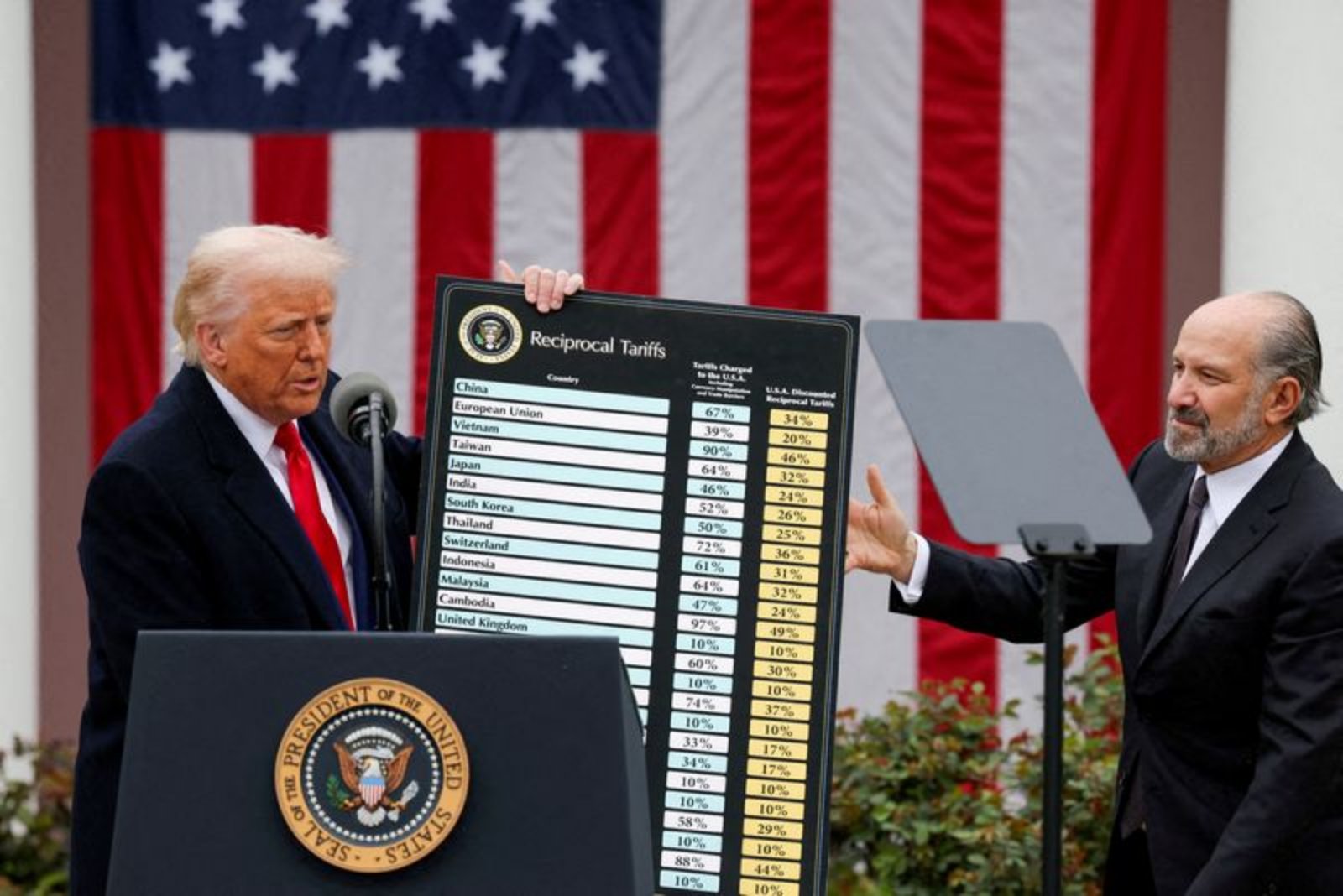
WASHINGTON, Feb 23 - A recent U.S. Supreme Court decision that struck down major elements of last year’s tariff program has reopened uncertainty over which imports will be taxed, at what rates, and from which countries. In response, the administration announced a temporary global tariff that it said could last several months while seeking alternative legal paths.
The court, in a 6-3 decision, voided most of the levies the administration had put in place under an emergency statute. Following that ruling, the administration first announced a 10% global levy and then raised it to 15% as an interim measure that could remain in effect for up to five months while more durable approaches are developed.
That sequence - the court ruling followed by a rapid, temporary policy announcement - has brought back memories of the early months of 2025, when tariff proposals appeared to change at short notice. The immediate practical effect for firms is a return to a high degree of ambiguity about import tax exposure, which affects pricing strategies, inventory timing, and near-term hiring and investment choices.
European Central Bank president Christine Lagarde framed the situation in plain terms on CBS’s Face the Nation, warning of potential disruptions if trade rules shift suddenly. "If it shakes the whole equilibrium which people in trade have got used to...it is going to bring about disruptions," she said, adding that market participants want predictable rules before committing to business activity. She also expressed hope that any subsequent tariff plans would be "sufficiently thought through so that we don’t have, again, more challenges, and the proposals will be in compliance with the Constitution."
Industry leaders and analysts say the policy oscillation can make straightforward commercial choices difficult. Businesses that had adjusted to the earlier tariff environment now face questions about whether to revise prices, accelerate imports while legal status is unsettled, or postpone hiring and capital expenditures until a clearer framework emerges.
Gregory Daco, chief economist at EY-Parthenon, said the underlying uncertainty never fully disappeared even when companies appeared to be adapting. "We’ve seen extreme volatility by country and by product. That’s very uncertain still," he said, noting the difficulty businesses face when tariff signals change repeatedly and with little lead time. "It’s impossible to plan. You hear that tariffs are off and you are considering how to get refunds. Then a few hours later it’s 10%. Then it’s 15% the next day....Not having that stable framework is hurtful for activity, hiring, investment."
The court’s majority opinion emphasized the institutional route for imposing trade barriers. Justice Neil Gorsuch, supporting the majority, argued that proposals that must "earn such broad support...they tend to endure, allowing ordinary people to plan their lives in ways they cannot when the rules shift from day to day." That reasoning highlights the potential stabilizing role of legislative or clearly prescribed administrative processes in producing predictable trade policy.
For Federal Reserve policymakers and other economic watchers, the return of trade-policy volatility complicates efforts to read medium-term inflation dynamics. In recent months some Fed participants had grown comfortable with the notion that the inflationary push from tariffs was abating. Still, officials have previously cited the rapid shifts around trade and other policies as factors that made economic forecasting and business planning more difficult.
Short-term import tax rates could fall as a result of the court decision, but they could also rise again depending on how the administration seeks to replicate the struck-down levies through alternative statutes or extended investigations. Any permanent fix may require additional rulemaking or even Congressional action, steps that can stretch over months and that may themselves invite further legal challenges.
Analysts have tried to quantify the immediate effect of the ruling. Bernard Yaros, lead U.S. economist for Oxford Economics, calculated that the effective tariff rate would drop from 12.7% to 8.3% if one excludes the levies the court overturned. Yet he noted that the possibility of a new 15% across-the-board levy, even if temporary and potentially subject to bilateral carve-outs, keeps the policy picture unsettled.
Yaros warned that any short-term gains from lower tariffs could be partially offset by the prolonged uncertainty created as the administration pursues alternate legal paths. Even were the overall tariff burden to be replicated by other means, the distribution of levies across sectors and countries could differ, creating another round of recalibration for businesses, investors, and households.
That risk of renewed volatility comes at a time when headline economic sentiment in the United States has been broadly positive. A recent survey by the National Association for Business Economics found that nearly 60% of responding economists did not expect a recession for at least a year, up from 44% in August. The same survey indicated that 74% of respondents expected the spread of artificial intelligence to at least moderately raise productivity growth over the next three to five years.
Still, even a broadly bullish outlook does not immunize the economy from the effects of policy swings. Bernard Yaros wrote that the new round of tariff uncertainty could "ding" U.S. growth in coming months as firms delay or alter near-term decisions in response to shifting import taxes and legal ambiguity.
For now, businesses and investors must weigh the competing signals: a general improvement in economic sentiment on one hand, and renewed trade-policy turbulence on the other. How firms respond - by adjusting pricing, changing inventory timing, seeking refunds where applicable, or pausing hiring and investment - will determine the short-run economic consequences of this legal and policy back-and-forth.
Contextual takeaway - The Supreme Court’s action has disrupted the relative calm many in business had anticipated, and the administration’s temporary tariff has only reintroduced the ambiguity about trade costs that companies had been incorporating into decisions. The path forward likely involves procedural work that could take months and keep the trade-policy outlook unsettled.