
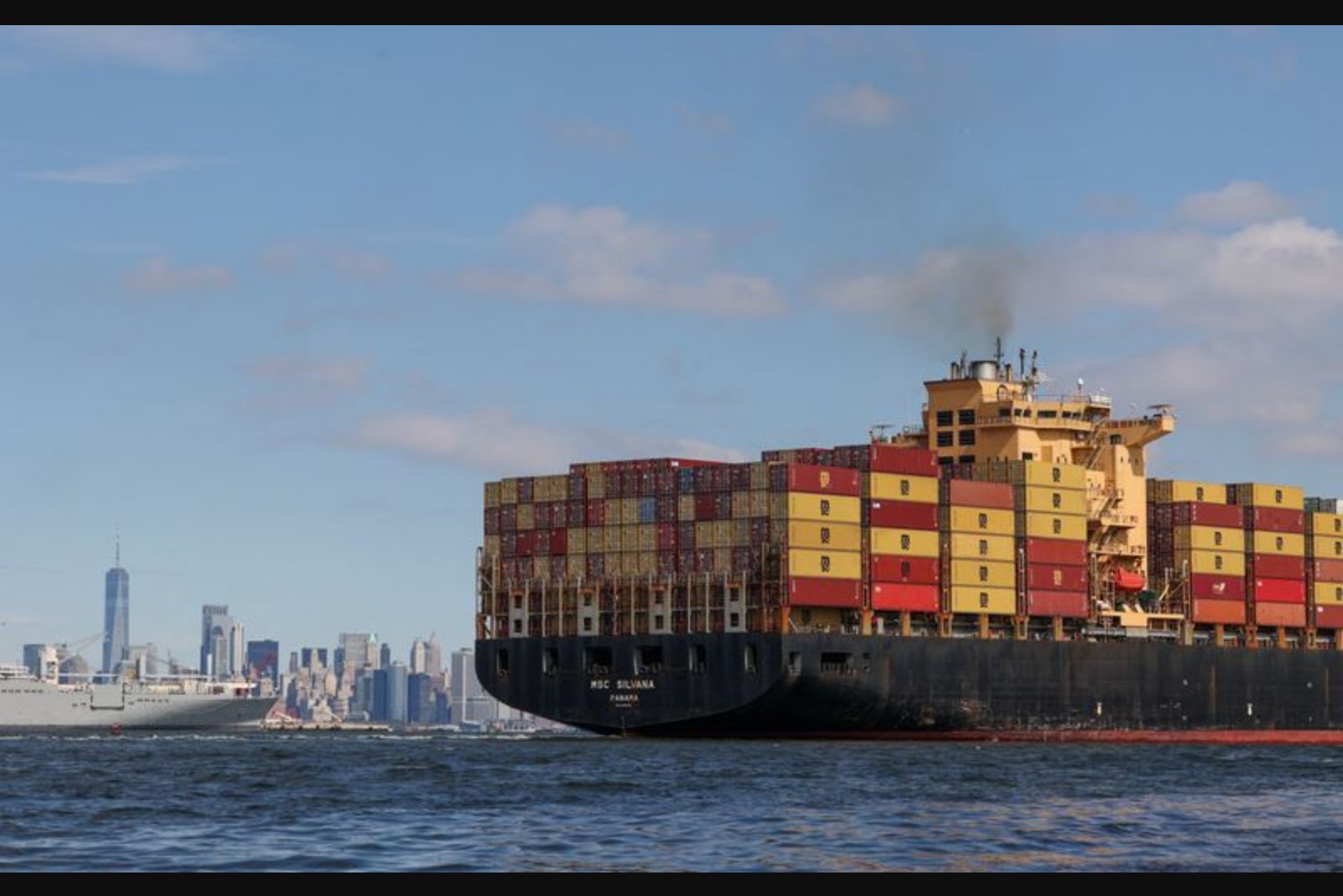
The U.S. Supreme Court on Friday delivered a far-reaching rebuke of a major presidential initiative, holding that the use of the International Emergency Economic Powers Act - IEEPA - did not authorize the imposition of broad, global tariffs on nearly every U.S. trading partner. The opinion, written by Chief Justice John Roberts, rejected the administration’s interpretation of the statute and invalidated the tariffs in clear terms.
Roberts framed the central legal question narrowly: whether the phrase granting the president authority to "regulate ... importation" under IEEPA extended to the power to levy tariffs. His answer was direct. "Our task today is to decide only whether the power to 'regulate ... importation,' as granted to the president in IEEPA, embraces the power to impose tariffs. It does not," Roberts wrote.
The ruling leaves little open to future litigation on the statute’s core interpretation. It did not split the question for another day or suggest partial remedies; instead, the court invalidated the president’s tariff program without addressing downstream consequences such as refunds, implications for existing trade negotiations, or other potential effects on the Republican president himself.
Constitutional scholars and commentators interpreted the opinion as a renewed assertion of the judiciary’s role in policing the bounds of executive power. Peter Shane, an expert in constitutional law and the presidency at New York University School of Law, said the decision made clear that "the court has shown it will not necessarily provide legal cover for every plank of Trump’s platform."
Vote and alignment
The court announced the decision in a 6-3 judgment. Chief Justice Roberts was joined by Justices Neil Gorsuch and Amy Coney Barrett - both conservative appointees from the president’s first term - together with the court’s three liberal justices in rejecting the administration’s statutory claim. Three other conservative justices dissented.
Jonathan Adler, a professor at William & Mary Law School, characterized the ruling as evidence that the court is taking seriously the task of "policing the scope of power delegated to the president by Congress." He added that the opinion signaled limits to the practice of repurposing older statutes to justify novel executive actions: "The president cannot just pour new wine out of old bottles," Adler said. "If there are problems current statutes do not address, the president must ask Congress for a newer vintage."
Administration reaction
President Trump responded to the decision with strong personal criticism of the justices who ruled against him, singling out Republican appointees among them. He labeled those justices "fools" and "lapdogs" for Democrats, accused them of being "very unpatriotic and disloyal to our Constitution," and asserted his view that "the court has been swayed by foreign interests."
Context within a year of emergency docket rulings
The tariffs case stands in contrast to a pattern from the prior year in which the Supreme Court granted many of the administration’s emergency requests. For most of 2025, the court acted on a so-called emergency or "shadow" docket in a sequence of cases, often issuing immediate rulings without the extensive briefing and argument that accompany the court’s regular-term decisions.
Acting on that expedited docket, the court handled 28 emergency requests from the administration and ruled in its favor in 24 of those matters, with another subsequently declared moot. Those emergency rulings allowed the administration to proceed with actions such as firing federal employees, asserting control over independent agencies, restricting service by transgender people in the military, and deporting migrants to countries where they have no ties, while underlying litigation continued.
Observers noted that the emergency docket functioned differently from the court’s full review process. The tariffs case, by contrast, was argued in November and decided after full consideration on the merits during the court’s regular procedure. That distinction underpinned commentary suggesting the court’s willingness to reach a different outcome when a policy is examined through the regular, deliberative process.
Broader judicial posture and prior rulings
Legal observers traced the tariffs decision to a larger pattern in which the court has both upheld and constrained presidential initiatives across recent terms. The court issued certain significant losses for the administration during the president’s first term, including blocking plans to add a citizenship question to the census and rejecting efforts to end deportation protections for Dreamers. In 2024, the court also issued a landmark ruling - authored by Roberts - granting the president broad immunity from criminal prosecution on his 2020 election subversion charges.
That 2024 immunity ruling, together with the series of emergency-docket decisions favoring the administration, had prompted critics to question whether the court's independence was under strain. At times the president publicly attacked judges who ruled against his policies. Such attacks produced a rebuke from Chief Justice Roberts in at least one instance, underscoring tensions between the judicial branch and the administration.
Still, some experts called for patience in assessing the court’s direction. They pointed out that the court’s willingness to rule for the administration on emergency requests did not necessarily indicate a broader predisposition to endorse all of its policies when those policies received full briefing and argument. As Jonathan Adler observed, the tariffs case may represent the first major policy initiative by the administration to be reviewed and rejected on the merits by the court after extended consideration.
Expert reactions and legal implications
University of California, Berkeley law professor John Yoo highlighted that justices appointed by presidents of both parties joined the majority, calling the alignment an answer to critiques that the court simply rubber-stamps the administration’s actions. "The decision belies the attacks from the left that the Supreme Court - particularly its conservative majority - simply rubber-stamps the Trump administration’s policies," Yoo said.
Peter Shane emphasized that the decision did not turn on questions of policy wisdom or the discretionary merits of the tariffs themselves. "The ruling does suggest that, on pure questions of law that do not put the court in the position of smacking down Trump’s motives or second-guessing his judgment, there is a majority that will not rubber-stamp his action," Shane said.
Unresolved and pending matters
The opinion did not address certain downstream issues related to the tariffs, such as the mechanics of refunds to affected parties or ramifications for prospective trade negotiations. The court also did not comment on potential political or personal consequences for the president stemming from the invalidated tariff program.
Looking ahead, the court is scheduled to hear arguments on April 1 in another high-profile matter concerning the legality of a presidential directive to restrict birthright citizenship in the United States. That case, like the tariffs dispute, could provoke intense scrutiny and possibly another split among the justices.
Conclusion
Friday’s decision makes clear that the Supreme Court will, at least in this instance, place statutory limits on executive action even after a period during which the administration secured multiple emergency victories at the high court. The Roberts opinion squarely rejects the administration’s statutory reading of IEEPA and reasserts the judiciary’s role in interpreting the limits of powers that Congress delegates to the presidency.