
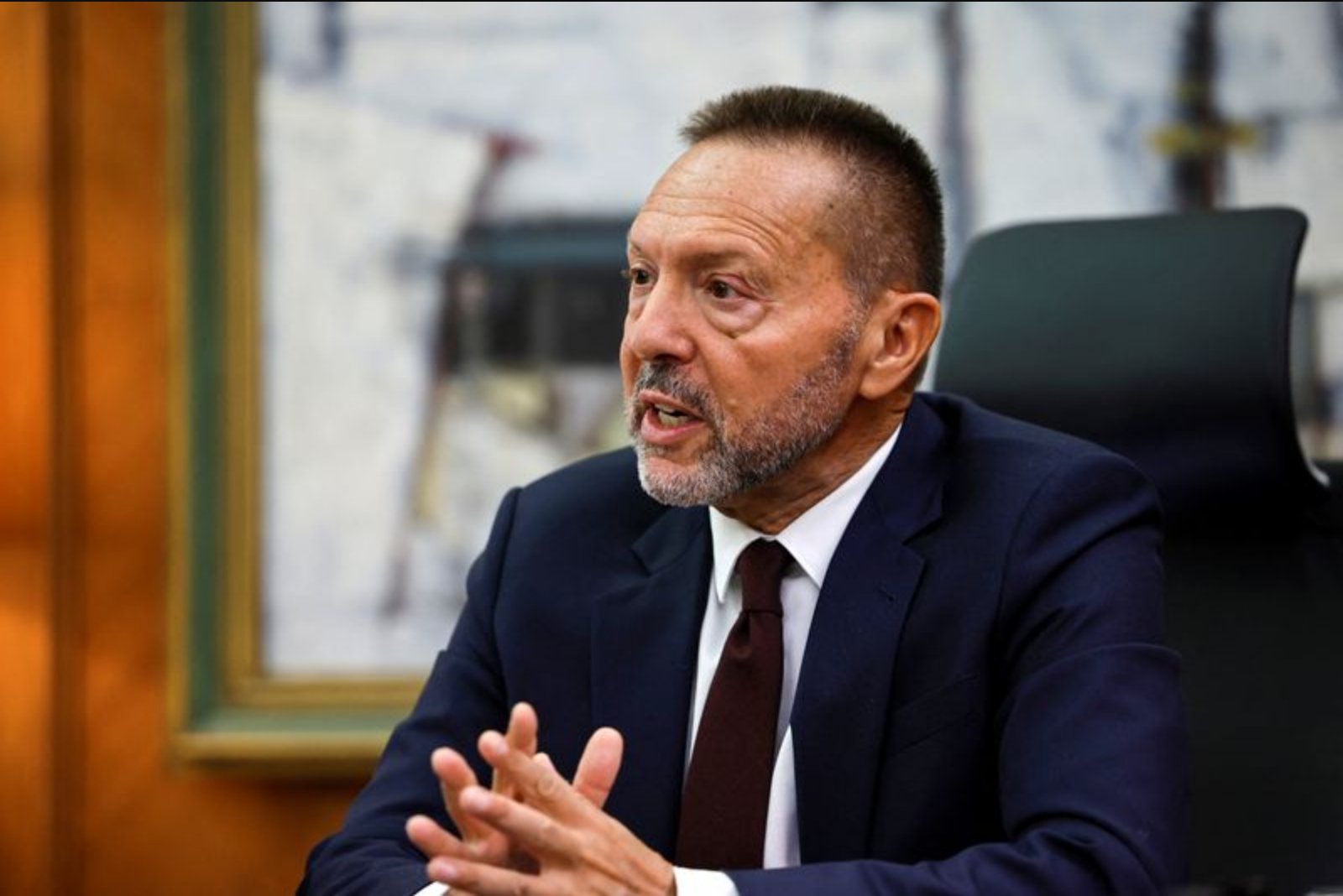
Frankfurt, March 3 - European Central Bank policymakers should retain flexibility when setting interest rates because the consequences of the war on Iran for inflation and growth will depend on the conflict's duration, ECB policymaker Yannis Stournaras said on Tuesday.
Stournaras, who serves as governor of the Bank of Greece, warned that a prolonged escalation would add upward pressure on prices, noting that the region-wide widening of the U.S.-Israeli war on Iran threatens to lift energy costs and disrupt supplies of other chemicals - forces that could further weaken Europe's modest growth.
"If negotiations start tomorrow, there will be de-escalation," he said in a phone interview. "If it continues, there will be upward pressure on inflation. I do not exclude either. So, we should show flexibility."
He stressed that it remains too early to reach firm conclusions about the conflict's macroeconomic effects. For the moment, Stournaras said the central bank should refrain from immediate policy moves and instead monitor developments closely.
"Its impact on inflation and output depends on the duration and the depth of the armed conflict," he said. "As we have no visibility on either of them and taking into account the outlook of inflation, in my view we should not rush to change any of the monetary policy parameters now but be alert and monitor the situation very carefully."
Stournaras described the fighting as "another serious supply-side shock" for the euro zone economy, adding to previous disruptions. He pointed to an earlier energy shock that followed Russia's 2022 invasion of Ukraine and to U.S. trade tariffs imposed last year as additional strains on the region.
Political leaders have offered differing timeframes: Israeli Prime Minister Benjamin Netanyahu said the war on Iran was "not going to take years." U.S. President Donald Trump initially projected the conflict to last four to five weeks, but has since sought to justify a broad, open-ended war.
Given the uncertainty around how long the conflict might persist and how deep its economic effects will be, Stournaras recommended that the ECB keep its options open rather than making immediate adjustments to monetary policy. He argued that observing how the situation unfolds is the appropriate near-term stance.
Takeaway - The ECB should be prepared to act but not rush into policy changes until clearer information emerges on the duration and severity of the Iran conflict and its implications for inflation and output.