
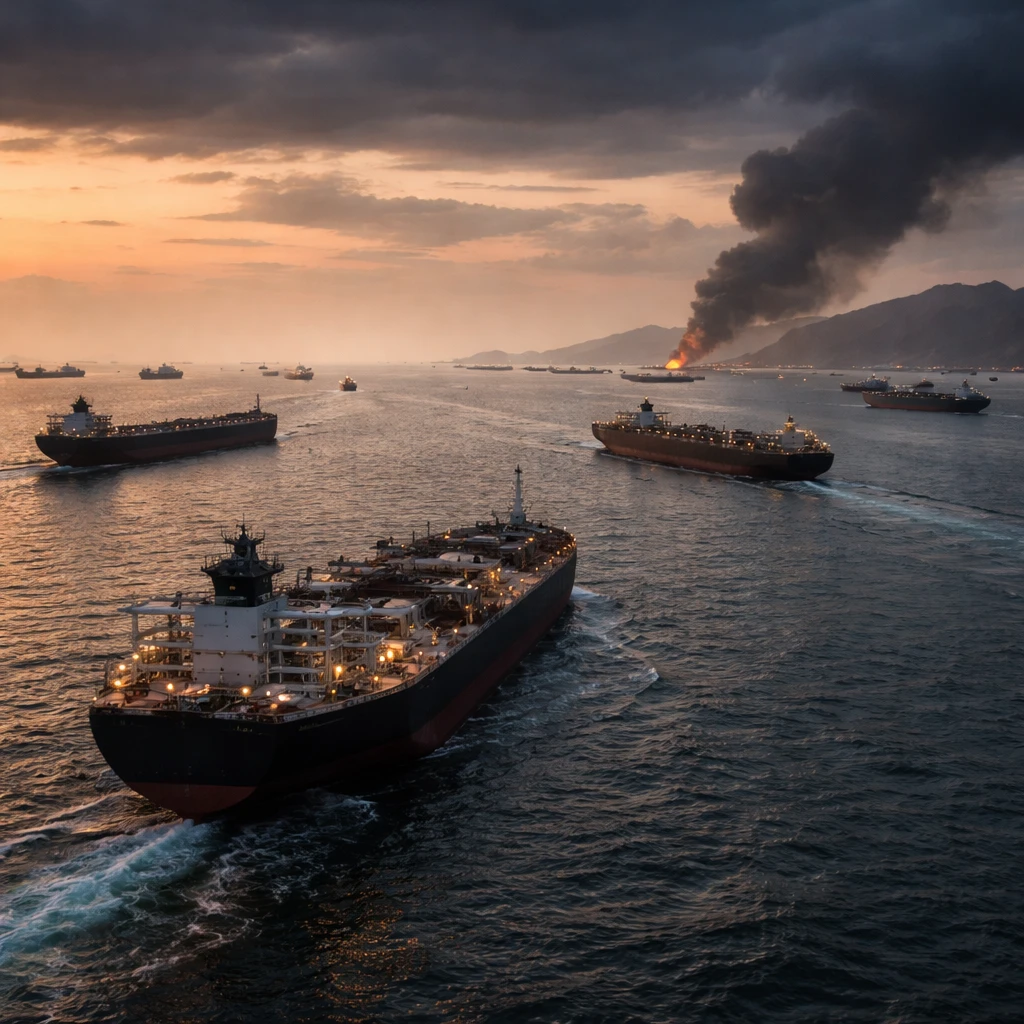
Stifel's research team warns that the geopolitical environment in the Middle East has entered a heightened period of instability after coordinated U.S. and Israeli strikes on Iran. In response, Tehran has effectively closed the Strait of Hormuz - a maritime chokepoint that normally carries more than 25% of global seaborne oil. The immediate market reaction has been acute: Brent crude climbed roughly 14% and European natural gas prices jumped about 70%.
Major shipping firms are avoiding the Gulf by rerouting tankers around the Cape of Good Hope, and some insurers have withdrawn coverage for voyages through the region. Stifel notes that a prolonged blockade of the strait could thrust oil toward the $100 per barrel level, a development the firm says would reorient investor preference toward value stocks and away from growth names.
Inflationary dynamics and valuation pressure
Stifel's strategists argue the timing of the attacks is deliberate, occurring alongside U.S. activity in Venezuela and ahead of significant trade negotiations with China. They identify two principal macroeconomic channels through which rising energy costs will affect global markets: first, a tightening in financial conditions that compresses already-elevated price-to-earnings (P/E) multiples; second, a direct upward impulse to headline inflation.
Because consumer spending comprises about 68% of U.S. GDP, the team emphasizes that sustained increases in fuel and utility bills are likely to weigh on discretionary consumption. That consumption drag in turn alters sectoral leadership in equity markets, shifting the comparative advantage toward Energy and Utilities sectors while penalizing high-growth technology companies that are more sensitive to higher discount rates.
Stifel also highlights that Asian economies that import significant volumes of energy are currently among the most exposed to these supply-chain dislocations. The additional time and expense of rerouting energy shipments adds what the firm describes as a "security premium" to global trade flows.
Broader strategic and trade realignments
The report places the disruption at the Strait of Hormuz in a wider context: the escalation is accelerating a reconfiguration of transatlantic and trans-Pacific trade patterns. Stifel points to a sizeable military build-up in the region, which the firm says is prompting a reassessment of "just-in-time" supply chains as the velocity of global energy movements slows markedly.
Longer transit times and the accompanying capital inefficiencies act, in Stifel's view, as a de facto tax on global manufacturing. That dynamic compounds the "inflationary bind" faced by Western central banks as they weigh policy settings.
With the bombings ongoing, market attention has moved beyond transient volatility to the prospect of a sustained "High for Longer" interest rate regime. Stifel warns that if oil remains around $100 a barrel, the odds of policymakers engineering a soft landing fall, since central banks including the Federal Reserve may have to maintain restrictive policy to counter energy-driven price surges.
In light of these conditions, Stifel recommends defensive portfolio positioning and greater exposure to hard assets as the most viable means of protection in what the firm terms a "war-footing" economy.
Conclusion
Stifel's analysis ties elevated geopolitical risk in the Middle East directly to market structural shifts: higher energy prices, compressed P/E multiples, elevated headline inflation and a rotation from growth-oriented equities toward value and asset-backed sectors. The firm underscores that prolonged closure of the Strait of Hormuz and continued military escalation would reinforce these trends and complicate central bank paths toward easing.