
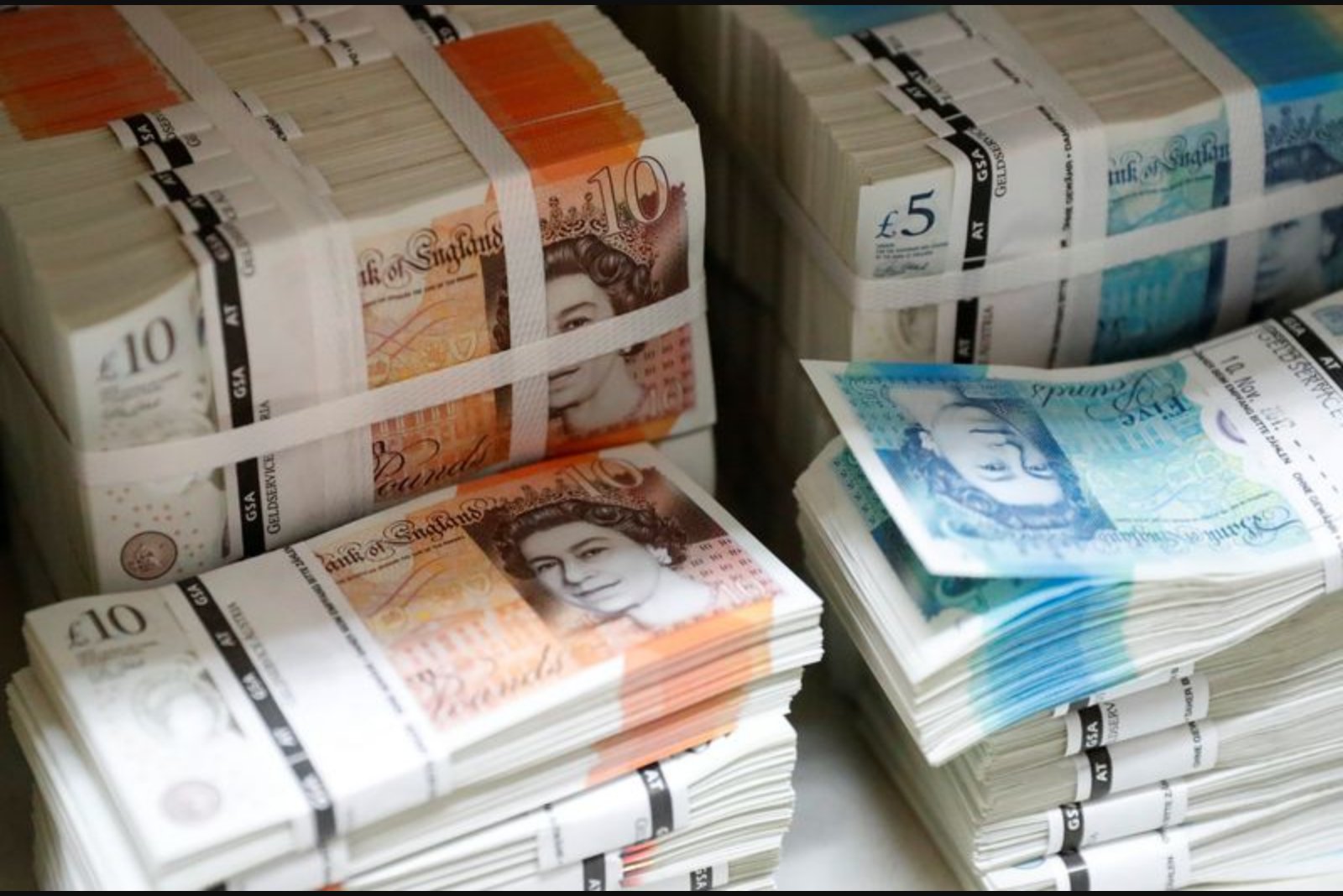
Sterling continued to lose ground on Friday, sliding for a fourth straight session against the dollar following a weak set of UK economic figures and a flight to the greenback amid concerns about the economic fallout from the conflict in the Middle East.
Official data released on Friday showed Britain's economy unexpectedly stagnated in January, and measures of long-term inflation expectations remained stubbornly high. Those outcomes have fed into a debate among economists about how the Bank of England will respond to the energy price shock that followed the onset of the Iran war.
Market pricing reflected the nervousness. The pound was last down 0.51% on the day against the dollar at $1.3273.
Andrew Wishart, an economist at Berenberg, said policymakers are likely to react to the renewed risk of persistent inflation. "We think that the renewed risk of persistent inflation will lead the Monetary Policy Committee (MPC) to vote 8-1 in favour of a hold rather than a cut next Thursday," he said. He added that "once energy prices fall back, or it becomes clear that demand is soft enough for underlying disinflation to continue despite higher energy prices, we expect the BoE to resume interest rate cuts."
The euro strengthened slightly versus sterling, rising 0.13% to 86.37 pence after touching 86.18 pence on Thursday, its weakest since early February. Swap market pricing also shifted, with some participants anticipating further monetary tightening at a later date.
Matthew Ryan, head of market strategy at Ebury, noted the market's tilt toward higher policy rates further out. "Swap markets are now largely pricing in a 25 basis-point hike by the end of 2026," he said. He warned that this appears excessive in light of weak domestic demand and a cooling jobs market, and added it is not yet clear whether the supply-side shock will de-anchor inflation expectations.
Markets continued to price in at least one rate increase from the European Central Bank in 2026.
Gilt yields reflected the repricing. British two-year government bond yields were last up 0.5 basis points at 4.11%, after having jumped by more than 50 basis points since March 2 as traders factored in the possibility of a more hawkish stance from the Bank of England.
Sanjay Raja, chief UK economist at Deutsche Bank, outlined a pathway for future easing. "The next rate cut, we think, will come in the second quarter this year, when the MPC sees more evidence of falling core inflation alongside a likely resolution of the Iran conflict," he said.
Taken together, the data and market moves leave BOE-watchers weighing the trade-off between near-term inflation risks tied to energy prices and signs of weakening domestic demand. The precise path for interest rates will depend on how these forces evolve in the coming weeks.