
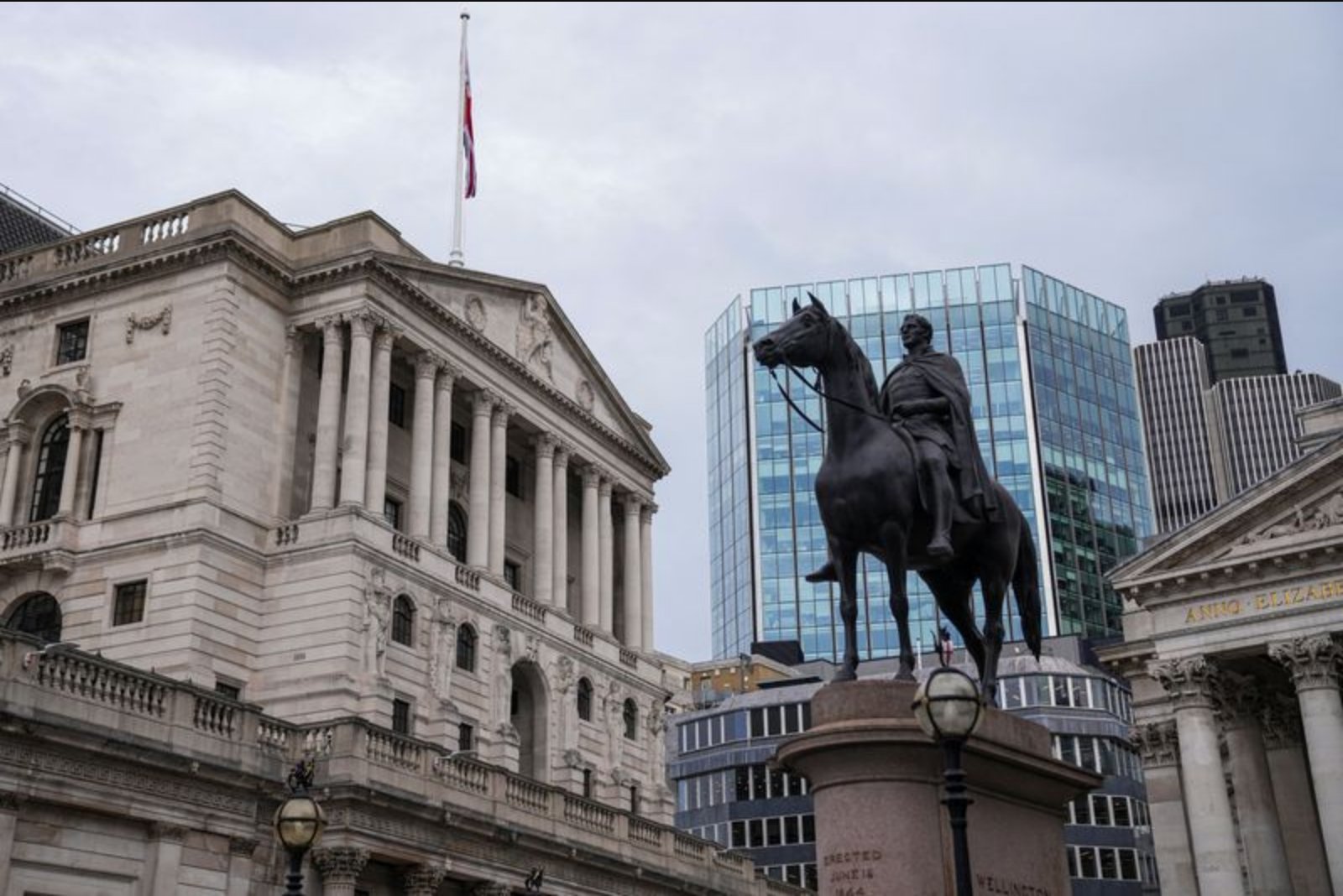
Two major financial institutions - Standard Chartered and Morgan Stanley - have revised their forecasts for when the Bank of England (BoE) will begin lowering interest rates, pushing anticipated cuts into the second quarter as inflationary pressures tied to the Middle East conflict intensify.
Standard Chartered now defers a March reduction until the second quarter and trims the timing of subsequent easing by one quarter, leaving its projected terminal policy rate at 3.25% by the end of 2026. The bank noted that oil and gas prices have surged sharply since late February - rising roughly 50% and 90% respectively, on StanChart's estimates - heightening the risk that central banks will need to alter planned paths for monetary easing.
That spike in energy costs prompted Standard Chartered to warn that prolonged upward pressure on energy prices could contribute as much as 1.5 percentage points to eurozone inflation. The brokerage also highlighted the particular vulnerability of the United Kingdom to an energy price shock, noting that already stretched public finances would likely face additional pressure if the government chooses to offset a portion of higher household energy bills.
Morgan Stanley likewise abandoned a March cut forecast. The firm now expects the BoE to ease policy in April, followed by additional reductions in November and then February 2027 - a shift from its earlier expectation of cuts in July and November. Both Morgan Stanley and Standard Chartered said they now assign a lower probability to further rate increases this year unless inflation risks accelerate rapidly.
On market pricing, data compiled by the LSEG indicate investors currently see a 98% chance that the BoE will hold rates at its upcoming meeting. The BoE Monetary Policy Committee is scheduled to convene on March 19.
On growth sensitivity, Morgan Stanley provided estimates for the impact of energy price movements on the UK economy: a 10% decline in oil and gas prices would lift UK GDP growth by roughly 20 basis points, while a sustained oil price near $120 per barrel could reduce growth by about 70 basis points.
Both banks emphasized conditionality in their views. "We struggle to forecast hikes in the UK in 2026," Morgan Stanley said. Standard Chartered added: "If the energy price shock proves more permanent, we think a pivot to hikes would require a clear rise in inflation expectations, whereas rate cuts should not be discounted if recession risks become more pronounced."
Note: The Bank of England's policy decision in March will be watched closely for signals on how persistent energy-driven inflation pressures might shape the timing of future easing.