
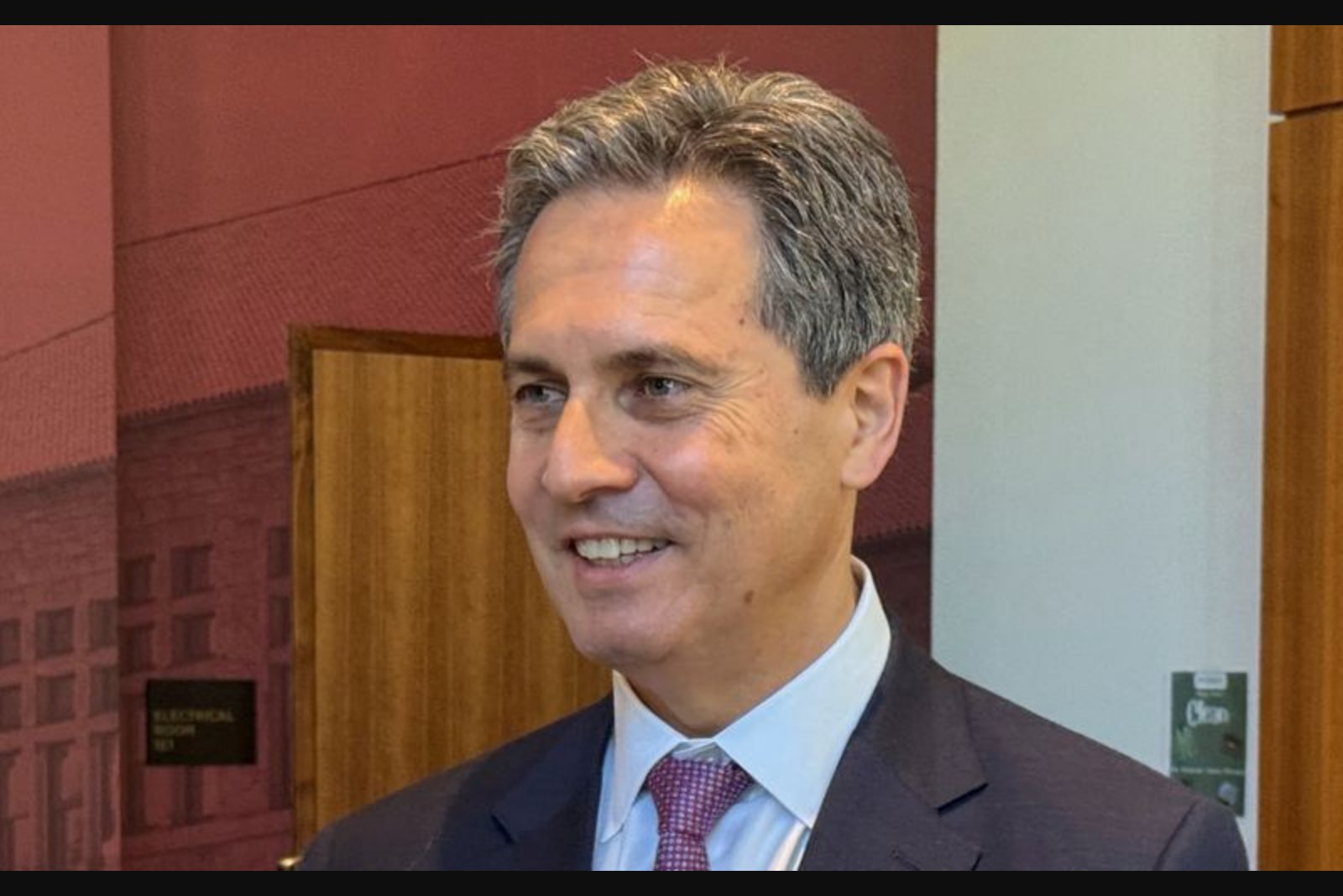
St. Louis Federal Reserve President Alberto Musalem said on Thursday that the Federal Reserve might have to push its policy rate higher if inflation does not begin to slow within the next six months. Speaking at a Central Bank of Iceland and Northwestern University economic conference in Reykjavik, Musalem outlined scenarios in which a rate increase would be warranted and emphasized his concern that upside inflation risks have grown.
"If we don’t see disinflation in the next one to two quarters, that would concern me," Musalem said as he described the conditions that could force the Fed to reconsider its current stance. He added: "Right now my view is that the risks have tilted more towards the inflation side than the labor market side."
The comments came as official data showed U.S. inflation accelerating. The Commerce Department’s Bureau of Economic Analysis reported that the personal consumption expenditures price index rose 3.8% year-on-year in April, the fastest annual increase in three years, with higher energy prices cited amid the war with Iran.
Musalem acknowledged that the policy path is conditional. He said he could envision a scenario in which a rate cut is appropriate later in the year if economic growth slows and the labor market, which he described as currently stable, begins to weaken. Unemployment stood at 4.3% in April, and economists expect it to remain at that level this month.
Nonetheless, Musalem stressed his greater concern about inflation not moving toward the Fed’s target. He warned that if inflation expectations drift up or stay elevated, that could signal the public doubts the Fed will restore price stability, making higher inflation more entrenched. "I see risks that inflation may not converge to target as we would like," he said. "So we need to be very vigilant."
Earlier in his presentation, Musalem cautioned against relying prematurely on advances in artificial intelligence as a source of productivity gains that would lower inflation. He warned of the risks of banking on AI’s potential before there is clear evidence it is producing disinflationary effects.
The remarks arrive just after Kevin Warsh was sworn in as Fed chair less than a week ago. Warsh has expressed the view that AI will be a strong disinflationary force, a position that suggests he may be more receptive to easier monetary policy - a stance President Donald Trump has said the economy needs and that he expects Warsh to deliver.
For now, the Fed has left its policy rate in the 3.50%-3.75% range throughout the year. Financial markets assign better-than-even odds to at least one rate hike by the end of 2026. Federal Open Market Committee members will next meet to set policy in mid-June.
Context for markets and sectors
Musalem’s comments, coupled with the April PCE reading and the Fed’s current policy range, reinforce the possibility of higher-for-longer rates if inflation does not resume a sustained downward path. Sectors sensitive to interest rates and input costs - including consumer staples, energy-exposed industries, and labor-intensive segments of the economy - may be affected by either tighter policy or renewed inflationary pressure.