
An abrupt increase in crude oil prices following a hawkish Federal Reserve policy meeting has tightened the odds against an interest-rate reduction this year and added pressure to the outlook for the central bank's incoming leader.
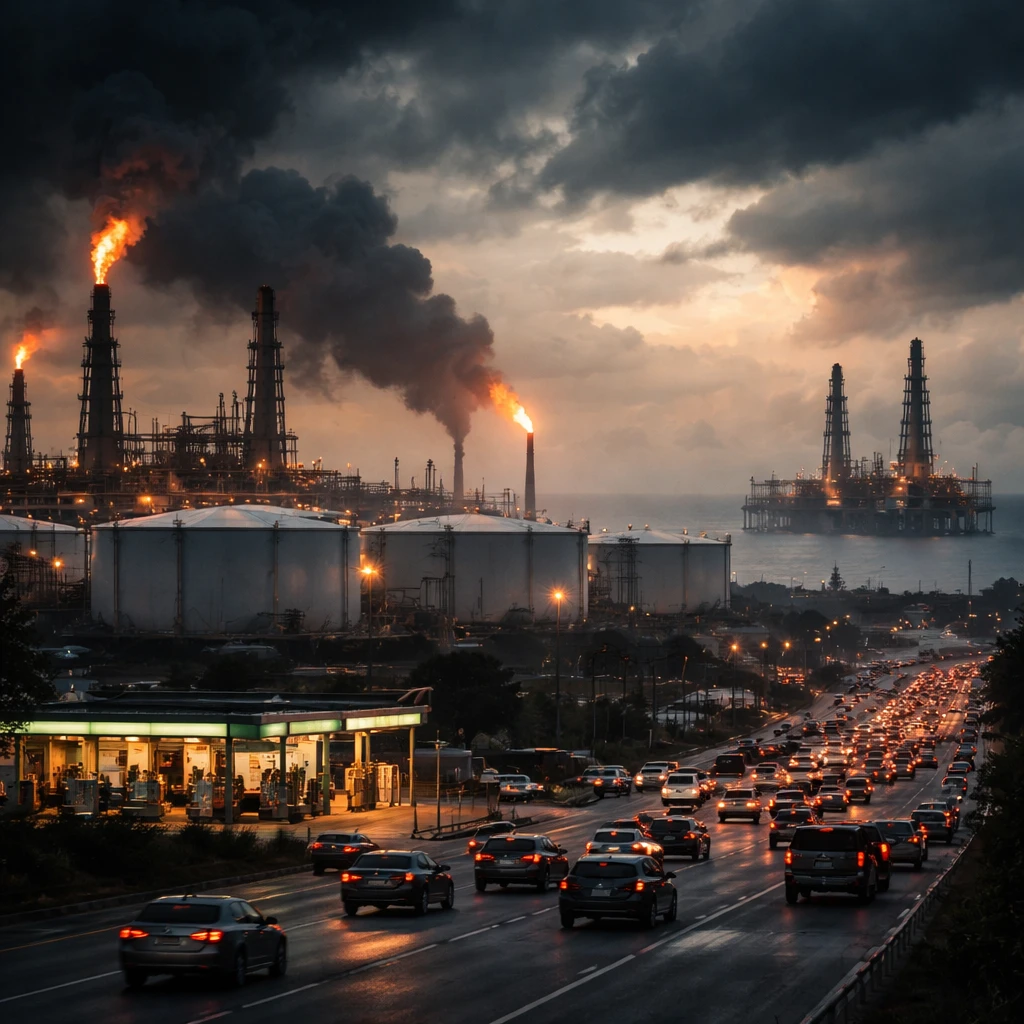
Benchmark U.S. crude climbed above $118 a barrel before easing on Thursday morning as the U.S.-Israeli war with Iran escalated and oil and gas fields were targeted. The rise in fuel costs translated into an average U.S. gasoline price of $3.88 a gallon, roughly a 30% increase from levels before the start of the joint U.S.-Israeli bombing campaign.
The geopolitical shock has pushed major central banks toward caution and influenced Federal Reserve deliberations. Fed policymakers on Wednesday projected higher inflation for the year than they had previously expected. Despite those upward revisions, their projections still include a single quarter-percentage-point rate cut this year.
Fed Chair Jerome Powell warned that any projection should be treated with a "grain of salt" because of uncertainty around the length of the war, the potential scale of future oil-price moves, and the wider global consequences for inflation and growth. He highlighted the possibility that consumers could alter spending patterns or pull back on purchases, which could affect economic momentum.
Investors have placed inflation risks at the top of their concerns and increasingly view the U.S. central bank as unlikely to make interest-rate changes in the near term. That shift in market expectations complicates the outlook for the Fed chief nominee, Kevin Warsh. Prior to his selection to replace Powell, Warsh had expressed in press interviews and news articles that the central bank could cut rates and rely on rising productivity to lower inflation safely. The recent tightening of oil markets and the Fed's more cautious inflation projections have reduced the near-term plausibility of that scenario.
By Thursday morning, market participants were assigning roughly equal odds - about 10% - to the chances of a Fed rate hike versus a rate cut by the end of the year, although that positioning was again in flux as prices and geopolitical developments continued to move.
Context and implications
The surge in oil and gasoline prices is feeding directly into inflation measures and is prompting central banks, including the Fed, to reassess the path of monetary policy. Higher energy costs can lift headline inflation and alter household spending patterns, creating a trade-off between containing inflation and sustaining economic growth. For the Fed, the near-term effect has been a more cautious stance and a warning that forecasts are subject to significant uncertainty.
For markets and policymakers, the key variables to watch remain the trajectory of oil prices, the duration of the conflict, and how consumers respond to higher fuel costs.