
Economy March 4, 2026

Spain, U.S. Give Conflicting Accounts After White House Says Madrid Agreed to Military Cooperation

White House press secretary says Spain has agreed to help U.S. military operations, while senior Spanish officials publicly reiterate an anti-war position and deny cooperation

By Leila Farooq
Spain, U.S. Give Conflicting Accounts After White House Says Madrid Agreed to Military Cooperation

The White House said Spain agreed to cooperate with U.S. military operations after President Donald Trump threatened trade measures over Madrid's refusal to allow U.S. aircraft to operate from jointly run bases in southern Spain. Spanish leaders have publicly condemned recent U.S. and Israeli strikes on Iran and denied agreeing to such military cooperation, creating a diplomatic contrast between U.S. and Spanish statements.

Key Points

  • White House press secretary Karoline Leavitt stated Spain agreed to cooperate with the U.S. military after the president's warning.
  • President Trump had threatened trade action, including a possible embargo, over Spain's refusal to permit U.S. aircraft to use jointly operated bases in southern Spain for operations against Tehran - a development that touches trade and defense considerations.
  • Spanish leaders, including Prime Minister Pedro Sanchez and Deputy Prime Minister Maria Jesus Montero, have publicly denounced the strikes on Iran and denied being subservient, while Foreign Minister Jose Manuel Albares reportedly denied cooperation according to El Pais - a contrast that affects diplomatic relations and market sentiment tied to geopolitical risk.

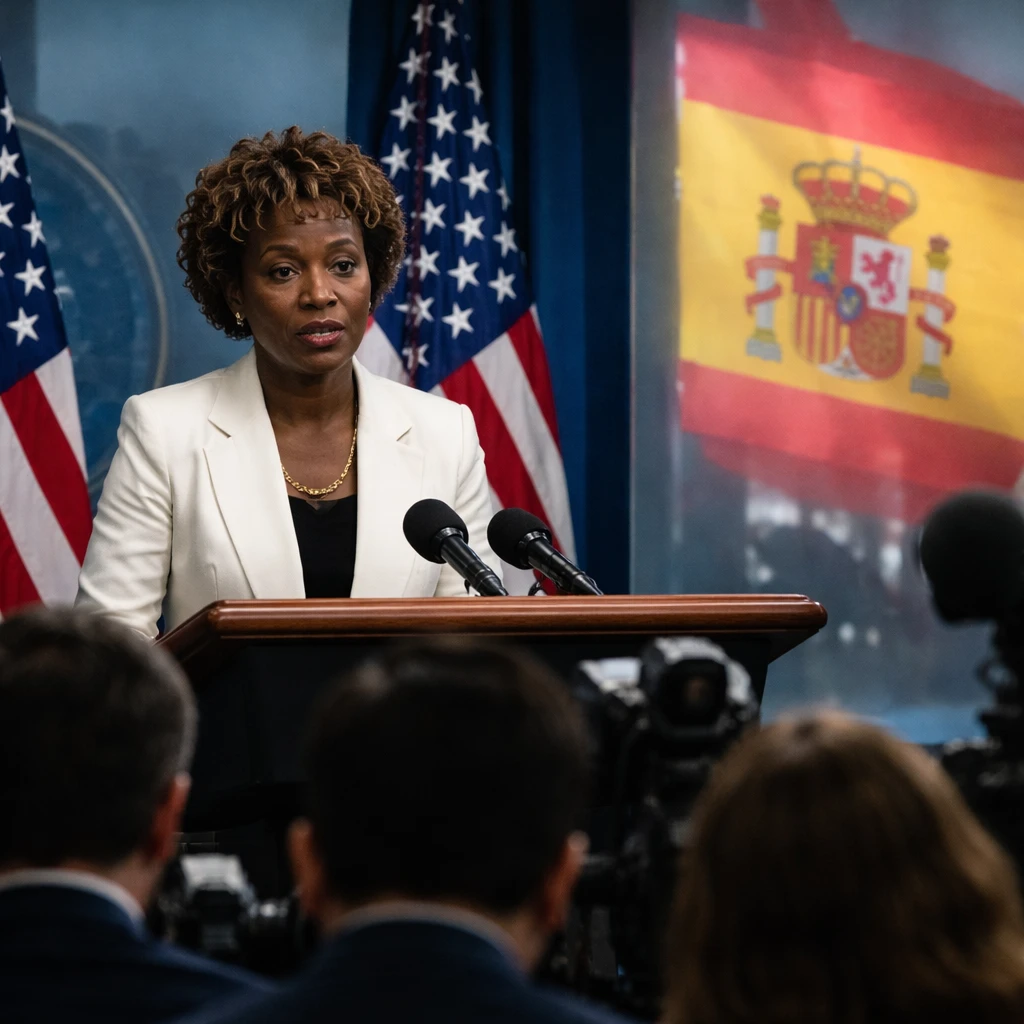
White House Press Secretary Karoline Leavitt told reporters on Wednesday that Spain has agreed to cooperate with the U.S. military, saying she believed Madrid had "heard the president's message yesterday loud and clear." Leavitt added: "It is my understanding over the past several hours they've agreed to cooperate with the US military."

The comment came a day after President Donald Trump warned he might cut trade ties with Spain over its refusal to permit U.S. aircraft to operate from jointly run naval and air bases in southern Spain for an offensive against Tehran. Trump had floated the possibility of imposing a trade embargo on Madrid in response to that refusal.

Spanish officials, however, have continued to express a public stance that contrasts with the White House account. Spain has condemned the U.S. and Israeli bombings of Iran, calling them reckless and illegal. Prime Minister Pedro Sanchez used a televised address to restate his government's anti-war position and cautioned that the conflict could spark a major global catastrophe.

Deputy Prime Minister Maria Jesus Montero put the matter in stark terms on Wednesday, saying Spain "will not be vassals" to another country. At the same time, Spain's Foreign Minister Jose Manuel Albares, according to reporting in El Pais, denied that Spain had agreed to U.S. military cooperation.

The exchange of claims - Washington saying cooperation had been secured and Madrid publicly reiterating opposition to the strikes while denying cooperation - leaves a visible gap between the two governments' narratives. The White House statement frames a rapid shift toward collaboration after President Trump's warning, while senior Spanish officials have continued to emphasize sovereignty and an anti-war stance.

At present the public record in each capital contains competing statements rather than a single, reconciled account of arrangements. The White House attribution rests on Leavitt's briefing remarks, while the Spanish denials and public statements are reflected in comments from the prime minister, the deputy prime minister, and reporting that cites the foreign minister.


Summary of developments

  • The White House said Spain agreed to cooperate with the U.S. military, according to Press Secretary Karoline Leavitt.
  • President Trump had threatened trade measures after Spain refused U.S. aircraft access to jointly run southern bases for operations against Tehran.
  • Spanish leaders have publicly denied cooperating and condemned the strikes on Iran, asserting an anti-war position and national sovereignty.

Risks

  • Conflicting public accounts between the U.S. and Spanish governments create diplomatic uncertainty, which could affect defense cooperation and bilateral trade discussions.
  • The U.S. threat of trade measures or an embargo introduces risk to trade-dependent sectors and companies engaged in commercial ties with Spain, pending any concrete policy steps.
  • Heightened geopolitical tension tied to military actions and the potential for a broader confrontation raises market sensitivity among investors monitoring political risk, particularly in defense and international trade-exposed sectors.

More from Economy

LaGuardia Arrival Operations Halted Briefly After Bomb Threat on SAS Flight to Newark Mar 4, 2026 USPS Brings in Restructuring Advisers as Cash Crisis Deepens Mar 4, 2026 Fed Beige Book Signals Modest Growth, Persistent Inflation and Stable Jobs Mar 4, 2026 Global Equity Sellers Accelerate Fundraising as Middle East Hostilities Escalate Mar 4, 2026 UK Halts Plan to Wind Down North Sea Windfall Tax as Iran Tensions Lift Prices Mar 4, 2026