
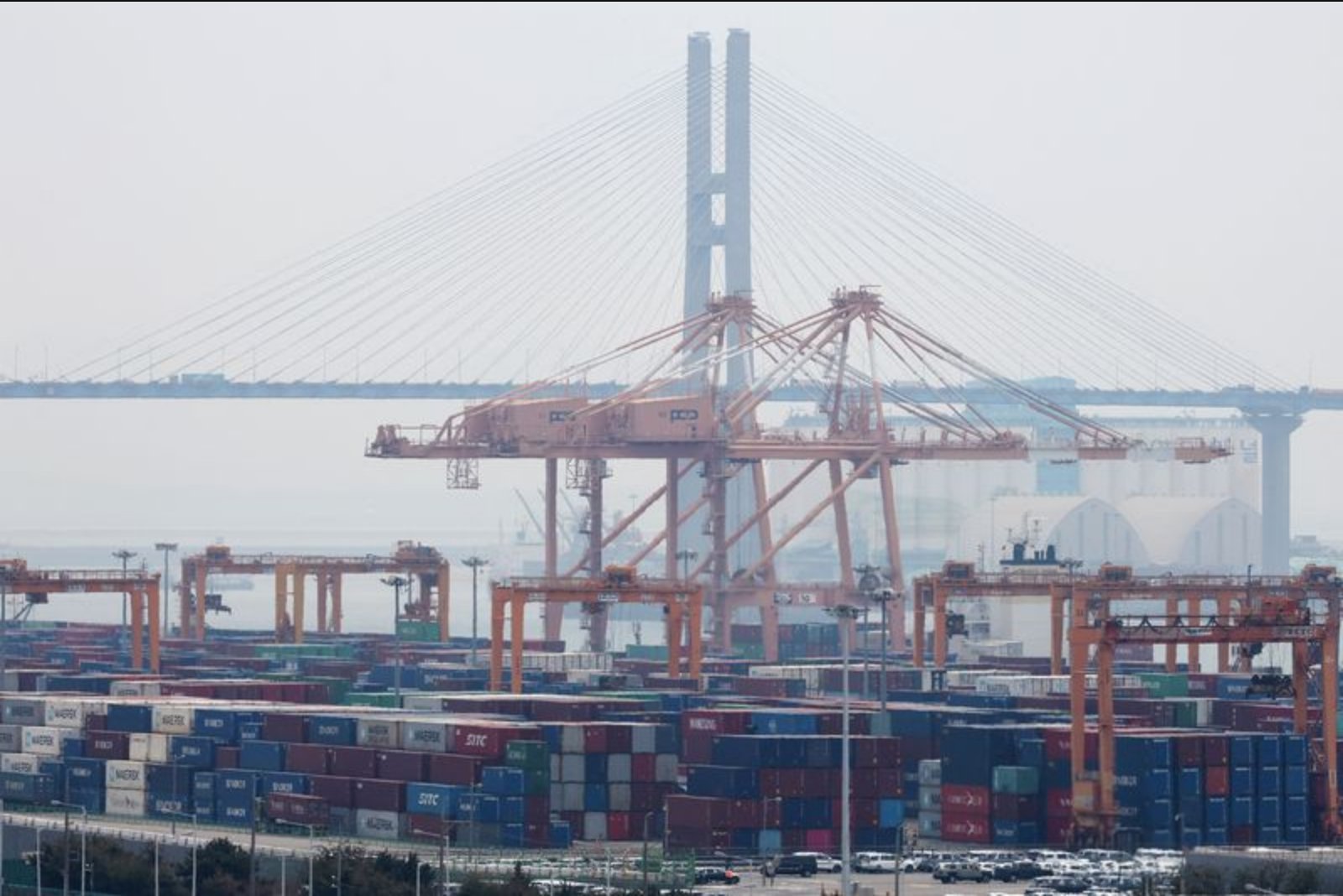
South Korea's merchandise exports are projected to have continued an uninterrupted rise in February, extending a streak to nine months, driven largely by soaring semiconductor shipments, according to a Reuters poll released on Feb. 27. The median forecast from nine economists put February export growth at 24.0% from a year earlier, a pace that would remain below January's 33.8% rebound but represent the second-fastest year-on-year increase in the current run that began in June 2025.
Economists who responded to the poll highlighted the outsized role of chips in the latest export momentum. In the first 20 days of February, overall exports reportedly climbed 23.5%, with semiconductors alone surging 134.1% over the year-earlier period. Shipments to major trading partners were also strong: exports to China rose 30.8%, to the United States grew 21.9%, and to the European Union increased 11.4%.
Analysts noted that chip prices have been climbing more steeply than anticipated, while inventories in South Korea and Taiwan remain comparatively low, supporting the view that semiconductor exports will remain a primary driver of outbound shipments. Stephen Lee, an analyst at Meritz Securities in Seoul, said there is a substantial chance semiconductor export growth could exceed 100% across the first half. He also flagged that other manufacturing categories, notably autos and machinery, have shown little momentum and are being pressured by tariff-related effects.
Timing effects tied to the Lunar New Year complicate direct month-on-month comparisons. This year, the holiday fell in February rather than January, creating distortions in trade data between the two months. The poll noted there were 19 working days in February this year versus 22 in the same month a year earlier, a factor that can amplify or mute headline growth rates depending on the pattern of shipments.
The central bank and policymakers have already begun to reflect the export strength in domestic forecasts and decisions. The Bank of Korea raised its forecast for economic growth this year to 2.0% from 1.8%, citing the chip-driven export boom, and kept interest rates unchanged while signaling a steady policy stance for the next six months. Separately, South Korean authorities said they would proceed with the trade agreement reached with Washington in November, amid renewed uncertainty following the U.S. Supreme Court's ruling that President Donald Trump's emergency tariffs were illegal.
On the import side, the poll indicated February imports likely rose 13.0% from a year earlier, accelerating from an 11.6% increase in January and marking the strongest import growth since September 2022. Combining the export and import projections, the median estimate for the monthly trade balance stood at a surplus of $10.0 billion, wider than the $8.71 billion recorded in the previous month.
South Korea is scheduled to publish the official trade figures for February on Sunday, March 1, at 9 a.m. (0000 GMT). Until then, the poll results provide a snapshot of activity that underscores the centrality of semiconductors to the country's near-term external performance while pointing to uneven recovery across other industrial sectors.