
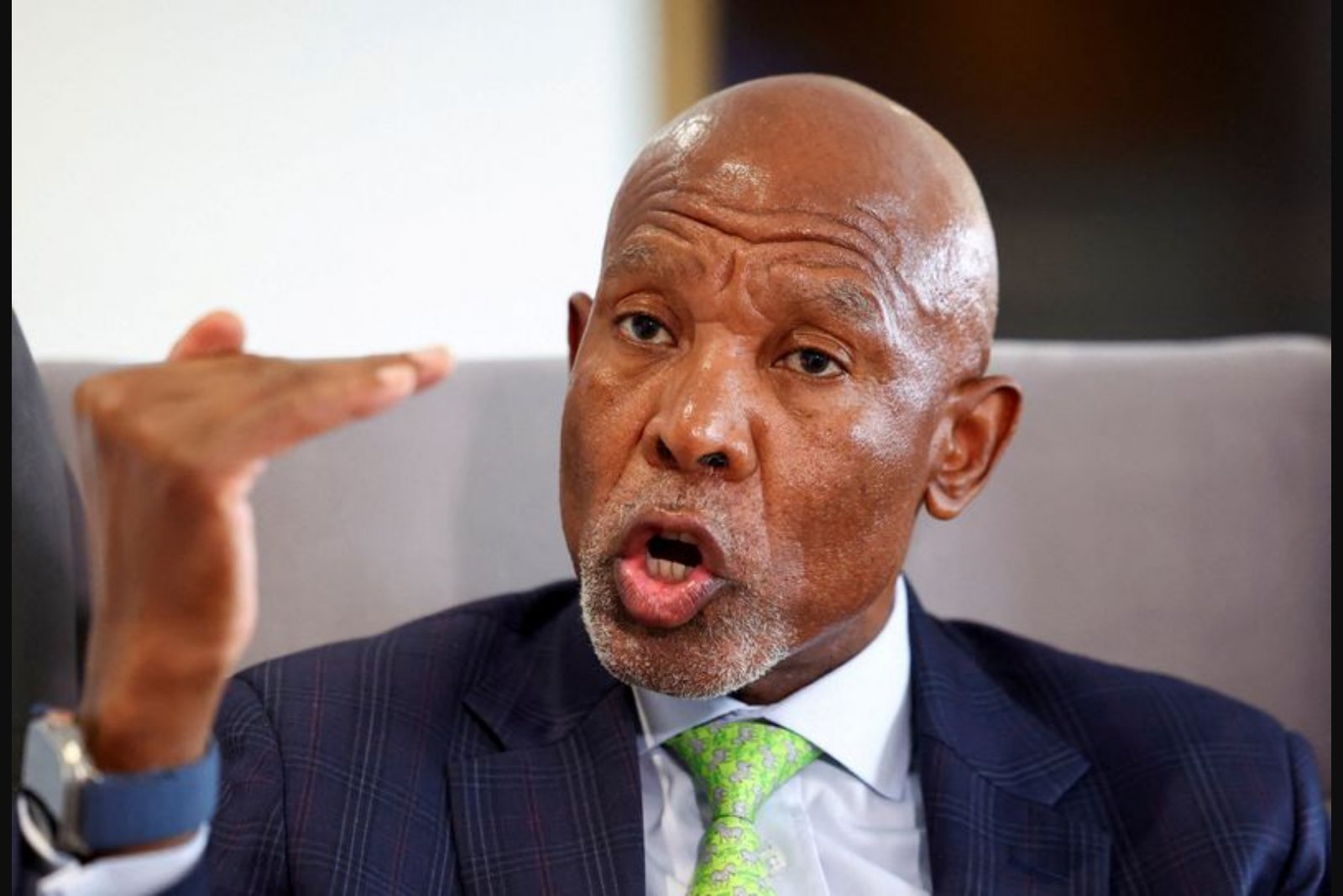
South Africa would be willing to tap new European Central Bank (ECB) repo facilities if they are made available, the nation’s central bank governor said at the Warwick Economics Summit in Coventry, England. The governor described the move as beneficial for South Africa given the scale of trade and investment originating in Europe.
The ECB has indicated plans to make its repo liquidity lines both less costly and simpler to access, aiming to bolster the euro’s role internationally. These arrangements permit foreign central banks to borrow euros against euro-denominated collateral and are intended as crisis-time liquidity backstops.
Speaking on the sidelines of the summit, the governor said such an arrangement would reinforce trade links between South Africa and Europe. "To the extent that you’d have a repo line with the ECB, that would help to underpin that trade," he said, adding: "It would be a welcome development."
Monetary policy outlook at home
On domestic monetary policy, the central bank left the policy rate unchanged last month at 6.75%. The governor said that level remains "still distant from the terminal rate," indicating that officials view further cuts as possible but conditional.
Policymakers are seeking clearer evidence of slowing inflation before they resume easing. Current internal projections point to two additional 25-basis-point reductions this year and another cut the following year. However, the governor emphasized the conditional nature of that path: "This forecast of the rate path is not a policy commitment, it’s a guideline that changes from meeting to meeting."
One important factor that has contributed to the decline in inflation over the past year is the strong appreciation of the rand. That currency strength has recently shown signs of easing amid renewed global market jitters, including movements in the price of gold, a major South African export.
Nevertheless, the governor treated the broader appreciation as reflecting improvements in economic policy, and also pointed to reduced FX volatility as a notable development: "What is also important to note here is that the volatility of the currency has declined. The rand used to be a very volatile currency."
International financial plumbing and the BRICS discussion
Now serving a third term as governor, he addressed concerns about the so-called "weaponisation" of the international financial system. He said emerging-market economies were not engaged in a deliberate attempt to supplant the U.S. dollar, but were seeking protection against outcomes like those experienced by Russia when it was cut off from critical financial infrastructure such as the SWIFT messaging system.
Regarding the dollar’s status, the governor characterized access to dollar payment channels as "a privilege, not a right," while also asserting that the greenback will remain dominant. He expressed skepticism about the feasibility of a unified BRICS currency, a notion advanced by Russia and Brazil and expected to surface at the BRICS summit to be hosted by India later this year - a discussion that the governor noted will take place despite U.S. President Donald Trump threatening 100% tariffs on any nation that joins it. "I do not see how they (BRICS countries) do it without a BRICS central bank," he said.
On reserve holdings, the governor observed that South Africa’s allocation - roughly 60% held in dollars at present - mirrors trade patterns and would only shift if those trade flows change.
Payments interoperability and cross-border frictions
He also highlighted the rationale behind efforts to make fast-payment systems interoperable. The principal aim, he said, is to reduce the high costs and frictions associated with cross-border payments, notably within Africa where non-convertibility issues force trade to be invoiced in dollars through multi-bank chains.
The governor’s comments outline a dual focus for South Africa’s policy: welcoming improved euro liquidity backstops that could underpin trade, while retaining a cautious, data-dependent approach to cutting domestic interest rates amid evolving currency and global market conditions.