
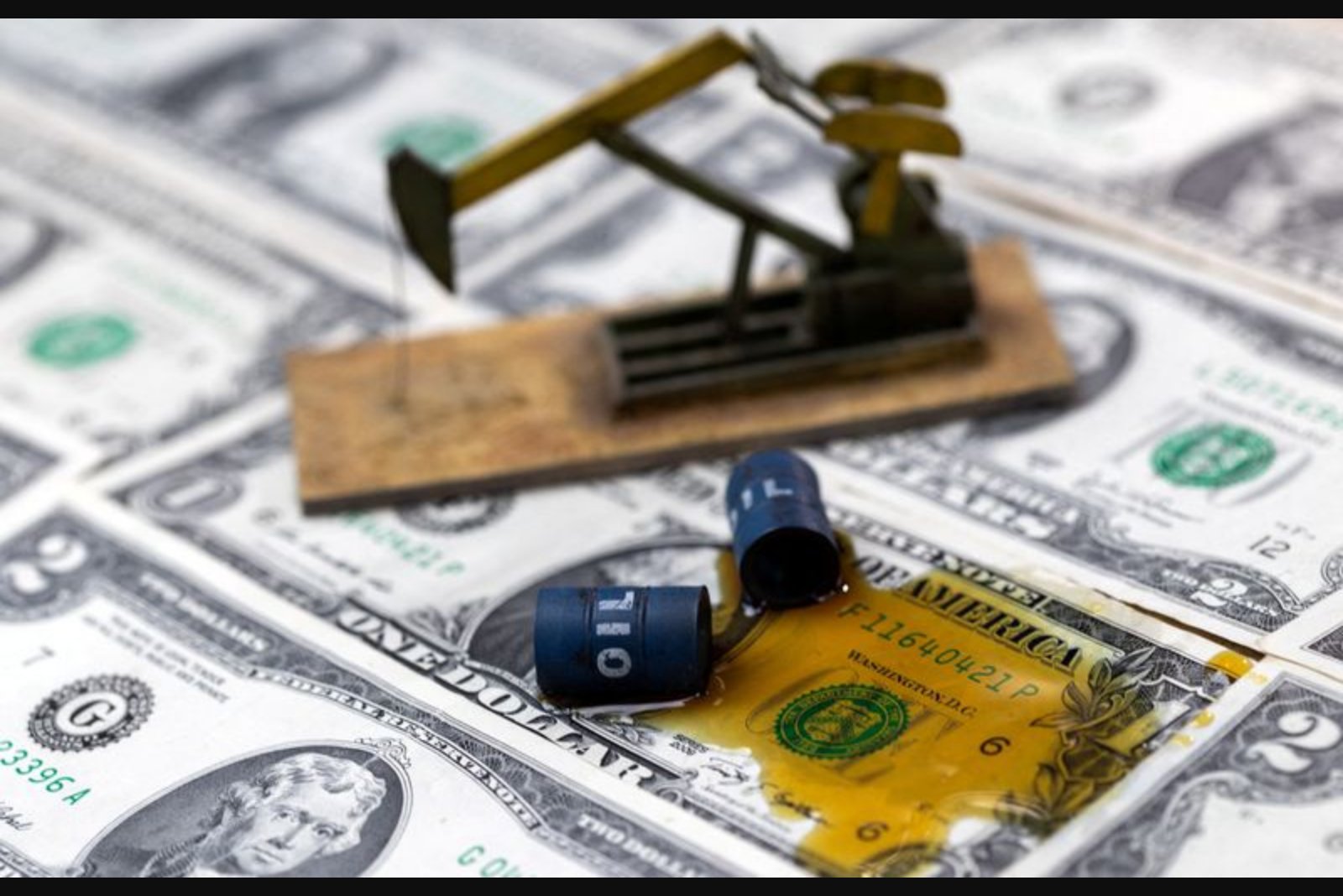
The recent, dramatic rise in oil prices - a roughly 50% increase that pushed U.S. crude above $100 a barrel - has become a primary source of unease for U.S. stock investors as markets digest the economic implications of the U.S.-Israeli war on Iran. The move to the highest price in more than three years has prompted investors to reassess exposures and implications for growth, inflation and corporate profits.
"It’s a shock," said Michael Reynolds, vice president of investment strategy at Glenmede. "It’s out of left field, and people and investors are having to figure out what it means in real time as it’s unfolding." His comment captures the abruptness with which portfolios and market expectations have been forced to adjust.
Market moves and volatility
Both U.S. and Brent crude breached the $100-per-barrel threshold on Monday, a level investors view as a potential catalyst for amplified stock market turbulence. At one point on Monday, the commodities neared $120. For context on the speed of the rise, U.S. crude had settled at $67.02 on February 27, the last trading session before the U.S.-Israeli strikes.
Stock-market volatility has risen alongside oil. The Cboe Volatility Index topped 30 on Monday for the first time in nearly a year, having been below 20 in late February. The benchmark S&P 500, although declines in U.S. stocks have been milder than in some other regions, was last nearly 4% below its late-January all-time closing high after recovering from larger intraday losses earlier in Monday’s session.
Some strategists are already mapping more severe scenarios. Yardeni Research said last Tuesday that it expected a 10% correction in the stock market and, in a note on Sunday, warned that "now we can’t rule out a bear market and even a recession." Deutsche Bank strategists described the oil shock as ranking "among the more serious of history," while also noting that investors appeared to be pricing a short rather than protracted conflict.
Oil and equities - a tightening relationship
The correlation between oil prices and stocks has intensified as the crude price moved sharply higher. The 20-day correlation between the S&P 500 and U.S. crude stood at -0.813 as of Monday morning, according to LSEG data - a strong inverse relationship indicating they have tended to move in opposite directions recently. That tighter linkage has forced equity investors to watch oil movements more closely than in typical market environments.
Historical episodes of extreme oil moves have previously coincided with equity stresses. The note cites early 2022, when oil moved above $120 after the start of the conflict in Ukraine and stock prices declined, and 2015-2016, when U.S. crude fell below $30 and investors worried low oil signaled broader economic weakness. Those examples underscore how sudden swings in crude can have outsized financial effects.
Economic and consumer impacts
Analysts and investors are focused on how sustained higher oil prices might ripple through the economy. JPMorgan economists estimate that each 10% increase in the oil price translates roughly into a 15 to 20 basis-point drag on GDP growth. They also cautioned that the effects could be non-linear, with larger spikes producing bigger hits to growth. Whether those impacts materialize at scale depends materially on the duration of the price spike.
The immediate consumer-level effect is visible at the pump. AAA reported the national average for gasoline at $3.478 a gallon on Monday, up from $2.902 a month ago - the highest level since the summer of 2024, the motorists’ group said. Consumers often perceive oil-price moves in real time when filling their tanks, and that visibility can quickly temper discretionary spending.
Kevin Gordon, head of macro research and strategy at Charles Schwab, noted the visceral nature of fuel costs for consumers: "From an average consumer perspective, oil prices are about ... as visceral as it gets just because of filling up your gas tank." As discretionary budgets tighten, companies and sectors reliant on consumer spending may face pressure.
Sectors under stress and beneficiaries
Companies with high energy intensity are among the most exposed. Airlines are a clear example, with fuel comprising an estimated 20% to 25% of unit costs, according to Morningstar. The S&P 1500 passenger airlines index has fallen about 15% since the conflict began, reflecting the sensitivity of airline margins and investor sentiment to fuel-cost swings.
By contrast, energy-producing companies have seen some positive movement. The S&P 500 energy sector has gained 1% since late February, even as the broader S&P 500 has fallen over 2% in the same span. Such divergence highlights the redistributive effect of rising crude prices across market sectors.
Investor positioning and outlook
Market participants are weighing scenarios across a range of outcomes. Some firms, including Raymond James, expressed the view that the conflict could be relatively short-lived; the wealth management firm maintained a year-end price target for U.S. crude at $55-$60 a barrel. Other strategists argued the shock ranks among the more serious in history, and that the degree of market damage hinges heavily on whether investors are pricing in a short or prolonged conflict.
Investors are also mindful that headlines can rapidly change market dynamics. Gordon cautioned that one ceasefire agreement headline could reverse recent moves aggressively, underscoring the fragility of current market sentiment. The degree to which oil remains elevated - and for how long - will be a central determinant of whether current volatility proves transitory or evolves into deeper corrections or worse.
Conclusion
The swift ascent of crude above $100 a barrel in response to the U.S.-Israeli war on Iran has recalibrated investor risk assessments. Higher energy costs threaten to raise operating expenses for energy-intensive businesses, cut into consumer discretionary spending through higher pump prices, and feed inflation concerns that could influence the timing of Federal Reserve rate cuts. With volatility up and correlations between oil and stocks turning strongly negative, investors and strategists are grappling with a range of scenarios - from a short-lived shock to outcomes that could include deeper market corrections or economic contraction - even as some pockets of the market, notably energy producers, have benefited from the move.