
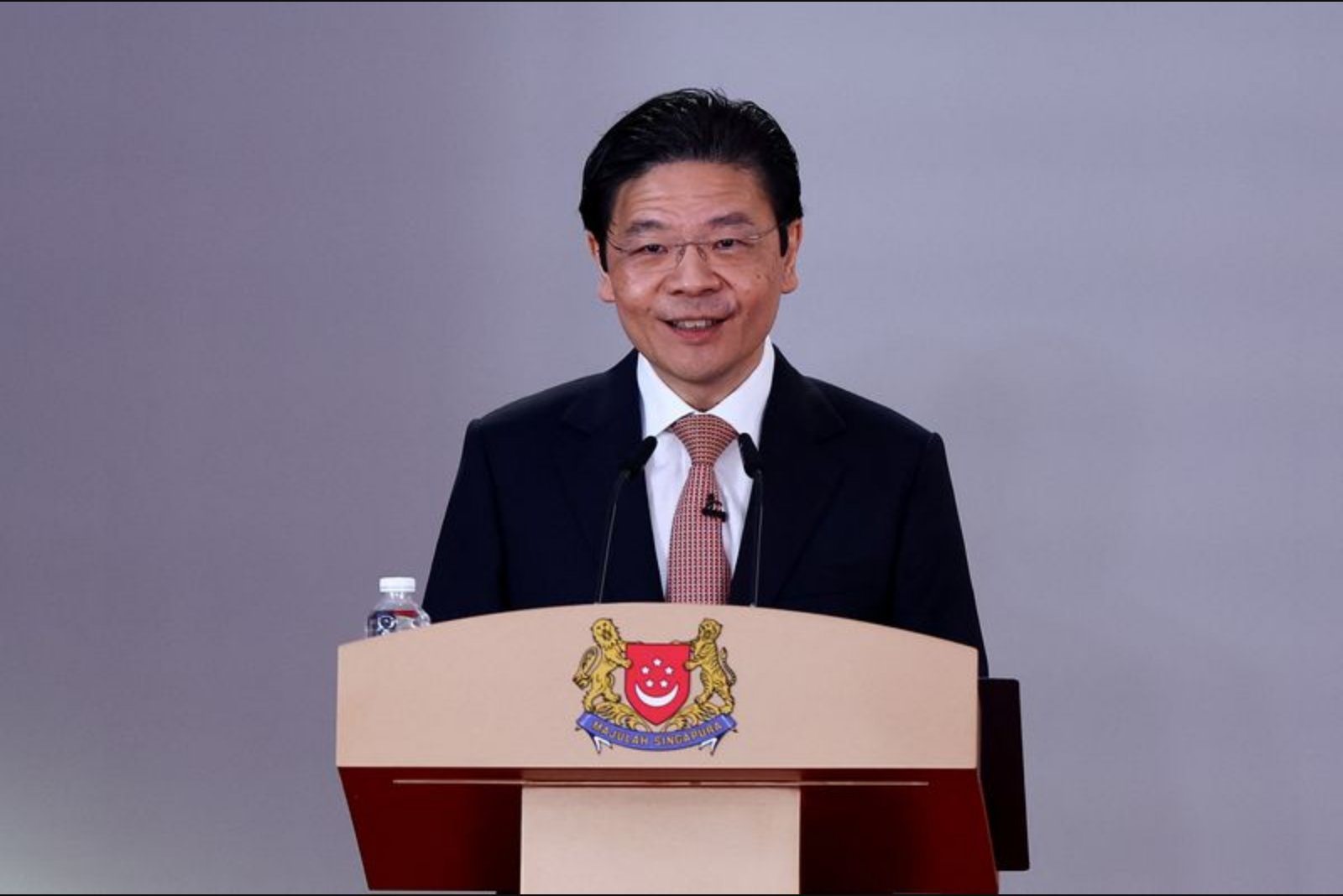
Singapore expects to record a budget surplus of S$8.5 billion for the fiscal year starting April 1, 2026, a figure equivalent to about 1% of gross domestic product, Prime Minister Lawrence Wong said in his budget address on Thursday.
The projected surplus for FY2026 is notably smaller than the S$15.1 billion surplus, or 1.9% of GDP, anticipated for the current fiscal year. Wong, who also serves as finance minister, said the government expects both revenues and expenditures to continue increasing, with the likelihood of higher corporate tax receipts from fiscal 2027 onward.
Addressing parliament, Wong cautioned that the global economy faces renewed strains from trade tensions and other shocks. He said the worst fears around tariffs imposed by U.S. President Donald Trump did not materialise in 2025, but warned the international system was likely to face sharper tests in the year ahead.
"Events in just the first month of 2026 have already been of exceptional scale and consequence. They have increased geopolitical tensions worldwide," Wong said.
Wong highlighted recent macro data showing Singapore's full-year GDP growth for 2025 reached 5.0%, a better-than-expected outcome. While some of that momentum carried into 2026, he described the broader outlook as more moderate. The trade ministry has put 2026 growth between 2% and 4%, and Wong said the government's long-run ambition is for growth to remain toward the higher end of a 2% to 3% range over the next decade.
In his address, Wong also flagged an array of risks that could weigh on future performance. "The years ahead will be beset by uncertainties - from geopolitical tensions to cyber threats and climate risks," he said, linking those concerns to the economic and security planning the government will pursue.
AI agenda and sector priorities
The prime minister announced that he will chair a new AI council to steer Singapore's national approach to artificial intelligence. The council's remit will include reviewing regulatory frameworks, creating capacities for companies to trial AI innovations, and directing AI missions to transform selected sectors.
Wong identified advanced manufacturing, connectivity, finance and healthcare as focal areas for AI-driven transformation, and said the government will coordinate research and development, regulation and investment promotion to support that strategy.
Defence posture and technology investment
On defence spending, the government expects expenditures to remain at about 3% of GDP but signalled readiness to increase outlays if circumstances demand. Wong said Singapore must be prepared to defend itself and outlined an emphasis on unmanned systems and drone development as areas of study and investment.
"History has taught us a hard lesson: no one will come to our rescue if Singapore faces a crisis."
Wong said the government will invest decisively in defence capabilities, including exploring drone technologies and other unmanned systems.
For reference, the exchange rate cited in the budget address was $1 = 1.2619 Singapore dollars.