
A fresh Jefferies analysis, published Monday, of over 700 data centres across Europe argues that common sustainability metrics can be misleading unless interpreted alongside physical and operational characteristics. The report warns investors that headline Key Performance Indicators such as Power Usage Effectiveness (PUE) require context on asset age, facility scale and geography to reveal true long-term value.
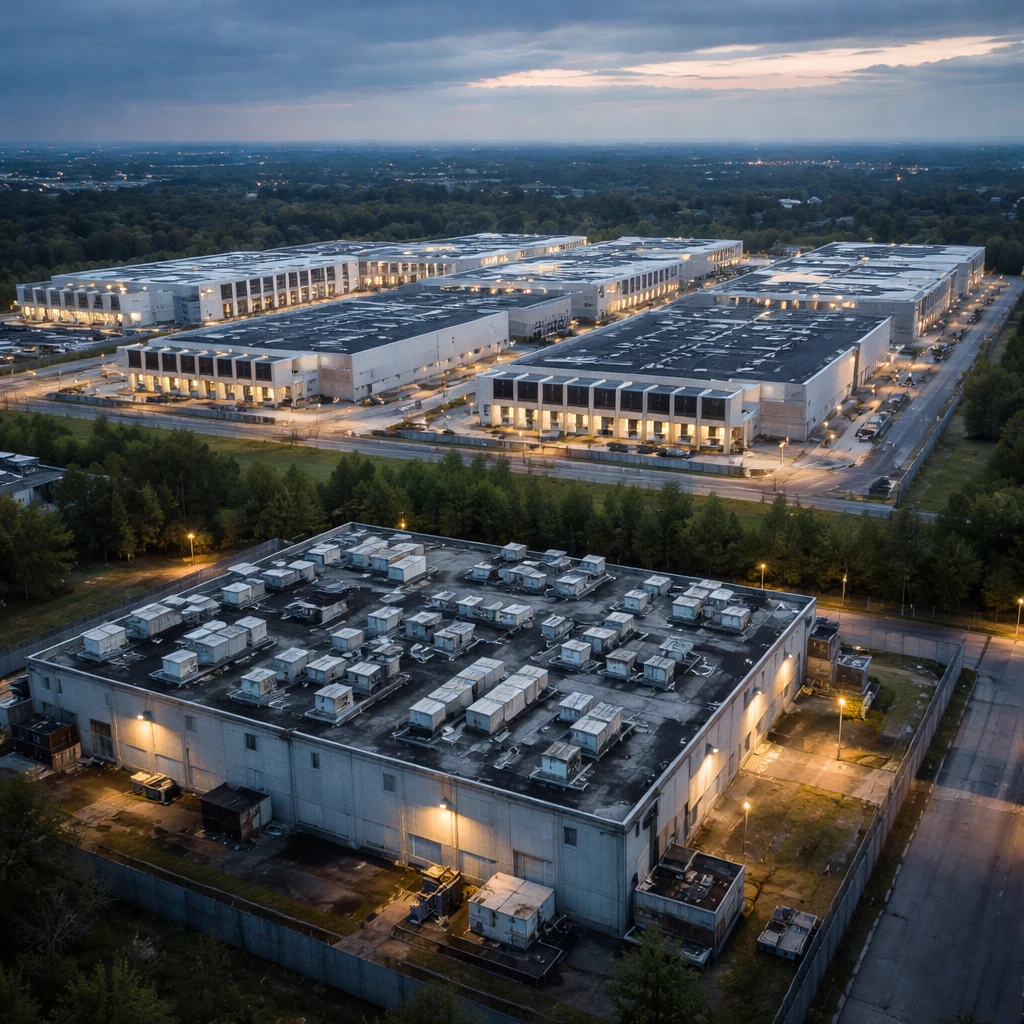
Jefferies finds a pronounced performance gap linked to scale. Very large facilities regularly outstrip smaller sites on efficiency measures, driven by integrated infrastructure designs and more disciplined operational controls. The report notes that small, often legacy, facilities tend to have fragmented layouts and rely on older air-cooling systems, which limits their ability to match the efficiency of larger peers.
In practice, the data imply that a site's physical footprint has become an observable predictor of both environmental and financial performance. Operators and investors should therefore treat size as a material factor when assessing sustainability metrics and long-term operating costs.
The lifecycle dynamic and retrofit importance
Asset age, Jefferies reports, plays a nuanced role in sustainability outcomes. Newly constructed centres, defined as 0-3 years old, usually display the best Water Usage Effectiveness (WUE) because they incorporate modern closed-loop cooling architectures. However, peak energy efficiency as measured by PUE is not commonly achieved in the first years of operation; rather, PUE improvements tend to materialize in years 4-6 once mechanical systems have "bedded in" and controls are fully optimised.
After roughly six years of operation, performance typically declines as mechanical components age and older design elements become increasingly difficult to adapt to contemporary standards. The report stresses that the ability to execute an effective retrofit pathway - integrating modern cooling technologies and smarter power sourcing - is decisive in determining whether a facility remains a competitive asset or becomes structurally inefficient.
Partitioning the market, Jefferies identifies Enterprise-Campus sites as current leaders in the sector. By contrast, Colocation-Single facilities, which are often older and managed by third parties, frequently fall behind because of poor part-load efficiency and legacy system constraints.
Renewable accounting and incoming regulation
Jefferies also scrutinises common industry disclosures around renewable energy. The report finds that roughly 70% of the more than 700 reporting EU data centres state they use total renewable power, but about 70% of those rely on Guarantees of Origin (GoOs) as the basis for that claim. Jefferies highlights that GoOs do not necessarily align the timing or location of generation with consumption, which can give a misleading impression of on-site or contemporaneous renewable supply.
Looking ahead, the European Commission is expected to move from basic data collection to active regulation within the next 12 to 18 months. Part of this shift includes creating an EU-wide rating scheme and testing Minimum Performance Standards (MPS) with operators. Jefferies notes the new standards are likely to incorporate adjustments for climate and water stress in order to create more comparable benchmarks across diverse geographies.
Tighter rules on hourly energy matching and water usage reporting, the report cautions, will probably increase capital expenditures (CAPEX) and operating expenses (OPEX) for lagging facilities while improving financing conditions for assets already aligned with the anticipated labels. As the EU readies stricter transparency thresholds, emphasis is moving away from whether KPI figures appear favourable toward whether operator targets and accounting methods are credible.
Implications for investors and operators
Jefferies' analysis suggests that investors should interrogate headline KPIs with a focus on size, age and retrofit capability. For operators, the findings underscore that investing in modern cooling systems and predictable power sourcing pathways can materially affect both sustainability performance and the cost of capital as regulatory frameworks evolve.
The report frames the current environment as an "efficiency trap" for market participants who accept superficial KPI disclosures without examining the underlying physical and operational drivers. In that context, the ability to demonstrate credible, future-proofed performance may become a significant determinant of asset value in the European data centre market.