
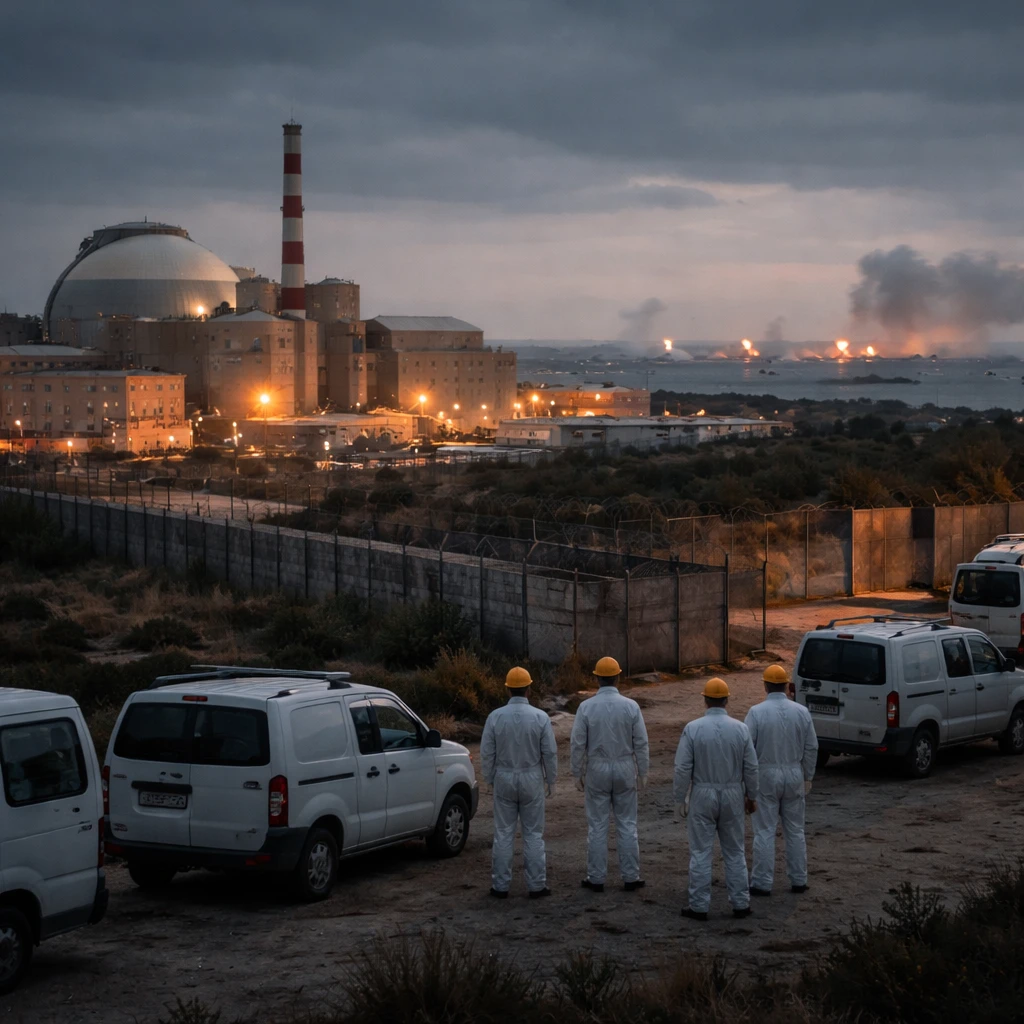
Russia's state nuclear operator Rosatom has signaled a partial withdrawal of personnel from the Bushehr nuclear power plant in response to intensifying violence in the surrounding area. Company head Alexey Likhachev said explosions can now be heard a few kilometers from the plant's protective perimeter, creating a direct threat to the Russian-built facility, according to comments he made to the Russian state news agency TASS.
Likhachev said Rosatom may evacuate up to 200 employees from Bushehr. The company already removed roughly 100 non-essential staff from the site, leaving the balance of approximately 700 Russian specialists who are assigned to the plant.
Built by Russia, the Bushehr plant is described by Rosatom as a key element of the cooperative nuclear energy relationship between Moscow and Tehran. The latest developments underscore the operational pressures that arise when security conditions near a nuclear facility deteriorate.
From an operational perspective, the announced withdrawals reflect a prioritization of personnel safety where nearby combat or violent incidents are close enough to be audibly evident. The clarification that non-essential staff have already been taken off-site points to staged contingency measures rather than an immediate full closure or shutdown of plant operations.
Rosatom's comments indicate that the security situation around Bushehr is dynamic and that additional personnel moves may follow if the intensity of fighting increases. The company has not provided further detail in the statements reported, and any subsequent actions appear to depend on how the threat evolves in the coming hours and days.
What is known and not known
- Known: Rosatom intends to evacuate up to 200 employees and has already moved about 100 non-essential staff from the Bushehr site.
- Known: Approximately 700 Russian specialists work at the plant.
- Known: Explosions are audible a few kilometers from the plant's protective perimeter and the threat is increasing as conflict intensifies, according to Rosatom's head.
- Not known from the available statements: specific timelines for further evacuations, the current operational status of the reactor units, and any exact security measures being implemented on-site beyond staff movements.
The information released by Rosatom is concise and focuses on personnel safety and the proximity of violent incidents to the facility. Further updates would be required to assess longer-term operational consequences or any technical impacts to the plant.