
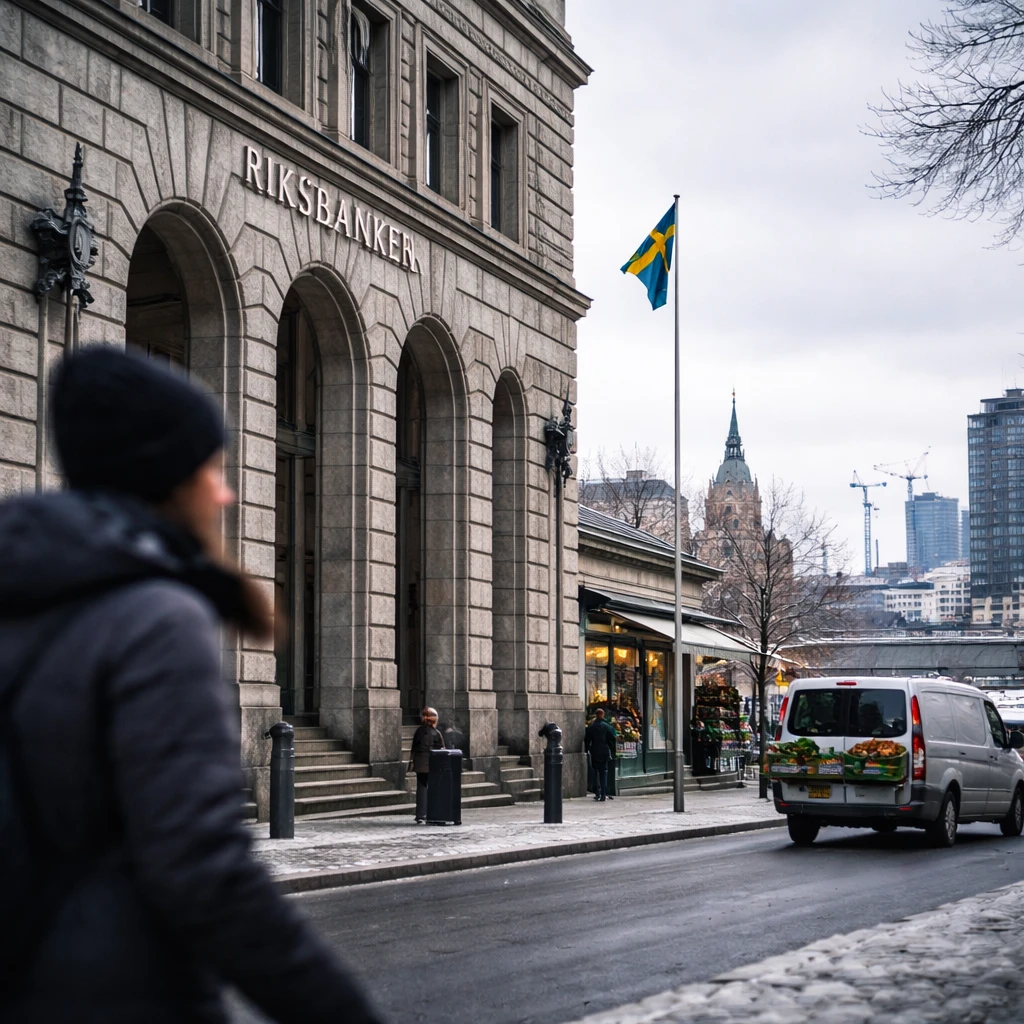
The Riksbank is widely expected to leave its policy rate at 1.75% this week, and analysts at Citi argue the Swedish central bank will likely treat the recent jump in inflation driven by energy costs as a mostly external, possibly transitory shock rather than a trigger for immediate policy action.
Citi economist Giada Giani outlined a view that the Riksbank will pursue what she described as a "deliberately balanced communication" - one that preserves the possibility of future rate cuts and hikes while refraining from reacting hastily to the energy-driven uptick in headline inflation. The bank, she says, is likely to avoid implementing fresh tightening on the basis of what it sees as largely temporary forces.
Giani highlighted several factors that support a more cautious response from the central bank. Before the energy shock, inflation in Sweden had been running well below the 2% target. Prior forecasts cited by Giani pointed to CPIF at 0.9% in 2026, with core inflation projected to be even lower. While rising energy prices are expected to lift headline inflation, these analysts still see underlying price pressures remaining subdued.
Recent readings on core inflation have also surprised on the downside, a development that bolsters the case for the Riksbank to refrain from premature tightening. Policymakers had already been contemplating cuts earlier in the year, supported by a stronger krona and fiscal policy moves, including a planned VAT cut on food. "The upcoming increase in inflation should allow more time for the Riksbank to assess the nature and persistence of the inflation shock," Giani wrote.
Structural characteristics of the Swedish economy further justify a more measured approach, according to the note. Swedish inflation is generally less sensitive to oil price swings than inflation in the euro area, and the Riksbank has historically weighted growth risks more heavily in its decisions, producing what Giani terms a "structurally more dovish reaction function than others." This posture, she suggests, is particularly relevant given signs the recovery may still be fragile - monthly GDP fell in both December and January.
On balance, Giani expects the central bank to signal an extended pause in policy. She observes that "the bar for both rate cuts and hikes is quite high." In her view, rate reductions could become an option if economic activity weakens further. By contrast, additional tightening would probably require either a renewed rise in core inflation or a sustained depreciation of the krona - outcomes she regards as unlikely at present.
Implications for markets and the economy
The Riksbank's likely stance - holding the policy rate and emphasizing careful assessment - has implications for currency markets, consumer-facing sectors, and fixed-income investors. A continued focus on growth risks and the muted outlook for core inflation could temper near-term volatility in rates and support stability in the krona, while a VAT cut on food and a stronger currency are factors that had already helped shape policymakers' thinking on easing earlier in the year.