
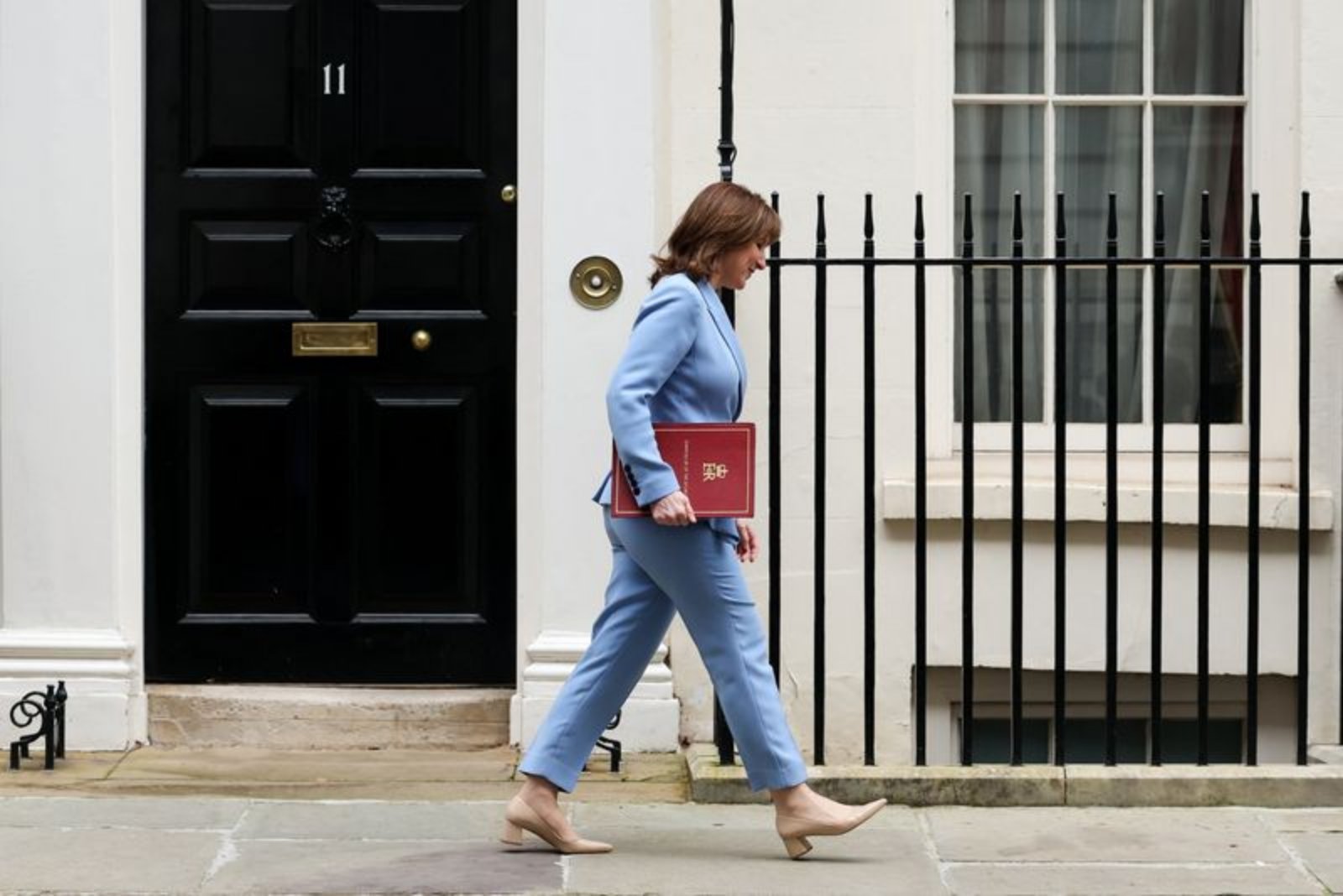
LONDON, March 3 - In a measured address to lawmakers on Tuesday, finance minister Rachel Reeves framed her budget update around stability and predictability, offering no major policy surprises as investors fretted about the fallout from renewed conflict in the Middle East.
Reeves said fresh assessments from Britain’s fiscal watchdog showed both inflation and public borrowing would be lower than earlier projections, but she also highlighted a downward revision to the economy’s near-term growth prospects. The Office for Budget Responsibility has trimmed its growth forecast for this year to 1.1% from a previous estimate of 1.4%.
Those numerical projections may be overtaken if the wider economic consequences of the U.S.-Israeli war against Iran continue to unfold. Market concerns tied to that conflict have sent yields on British government debt sharply higher as investors price in a potential global surge in energy costs.
Reeves sought to set the tone for her economic approach in the face of mounting uncertainty. "This government has the right economic plan for our country, a plan that is even more important in a world that in the last few days has become yet more uncertain," she told parliament. "It is incumbent on me and on this government to chart a course through that uncertainty, to secure our economy against shocks and protect families from the turbulence that we see beyond our borders."
Stability and investment as central themes
The finance minister emphasized predictability in fiscal policy and the need for continued infrastructure investment, casting stability as essential to economic growth. Reeves criticized the prior Conservative administration for the inflationary pressures and higher interest rates that followed its tenure, noting the UK has seen rates reach a 15-year high.
Reeves is betting that a consistent policy environment - after a decade of political turbulence triggered by the Brexit vote - can prompt businesses to commit to new investment. She faces pushback from employers who argue that higher taxes and additional costs introduced by her government are constraining hiring.
In the coming weeks, Reeves said the government will publish plans to deepen post-Brexit trading arrangements with the European Union and will present reforms designed to tackle a sharp rise in youth unemployment.
Market reaction and energy-driven risks
Financial markets reacted to the changing geopolitical backdrop earlier on Tuesday, with government bond yields rising for a second consecutive session amid worries that a sustained doubling in gas prices could prevent the Bank of England from cutting interest rates this year. Benchmark wholesale gas prices, which account for the largest single component of Britain’s domestic energy price cap, have doubled this week. If that surge endures it could lift the next energy price cap setting for the July-to-September period.
Oil prices have climbed about 15% recently, a move that has prompted calls from some motoring groups for the government to reverse a planned end to the current fuel duty freeze, which is expected to lapse in September.
Higher inflation within the UK relative to other major economies has constrained the Bank of England’s ability to reduce borrowing costs as quickly as central banks elsewhere. That persistent inflationary gap also increases the government’s expense on inflation-linked bonds, adding to fiscal pressures.
Political context and fiscal rules
Reeves’ budget update arrives amid political strains for Labour leader Keir Starmer following his party’s loss in a recent parliamentary by-election. Questions about the party’s political standing have intensified ahead of local elections in May, which are being watched as a barometer of public support.
Despite political headwinds, Reeves reiterated her commitment not to enact major fiscal changes outside of a full budget, which is scheduled for the autumn. In positioning her approach, she highlighted available fiscal room. The Office for Budget Responsibility’s new figures show Reeves has 23.6 billion pounds of so-called headroom for meeting her main fiscal target.
At the time of her last comprehensive budget statement in November, that fiscal flexibility was estimated at almost 22 billion pounds. The exchange rate referenced in the update was $1 = 0.7510 pounds.
Outlook and constraints
Reeves’ plan centers on delivering predictability and protecting households from external shocks, but the resilience of that strategy will be evaluated by how long energy price pressures and market unrest persist. If the recent rise in gas and oil prices continues, it could complicate the Bank of England’s policy path and raise the government’s debt-servicing bills, particularly on inflation-linked securities. The coming weeks are likely to determine whether the fiscal and monetary policy settings can remain on their current trajectories or will require adjustment.