
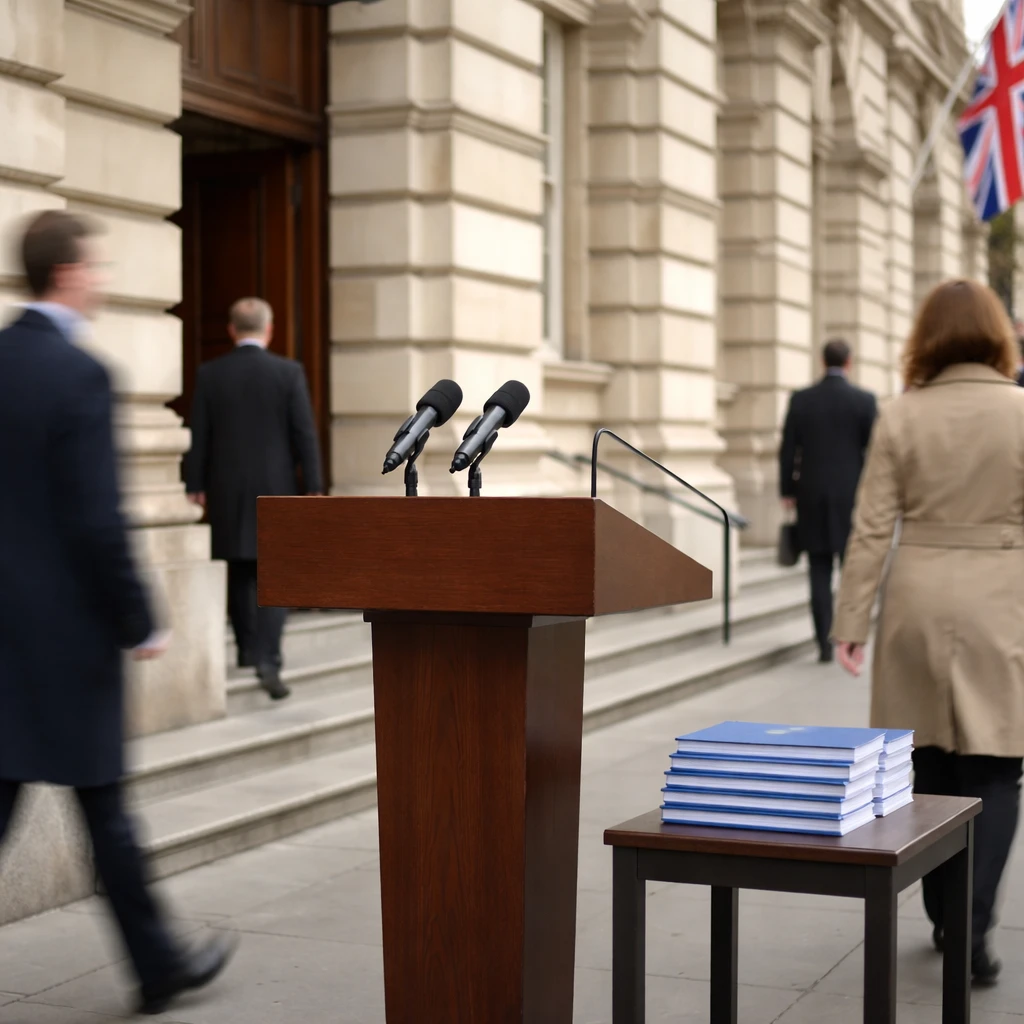
Summary: Rachel Reeves is scheduled to deliver a Spring Budget update next week that will set out the Office for Budget Responsibility's latest economic and public finance forecasts. The finance minister wants the occasion to pass without major policy shocks, with the government intending to reserve its main fiscal decisions for the full budget in November. The OBR is expected to lower its short-term projections for economic growth and inflation and to publish updated public borrowing figures, but it will not reassess how much fiscal space Reeves has left to meet her targets.
What Reeves will present
In parliament, Reeves will lay out the OBR's refreshed projections that underpin spending and tax plans. Those projections are expected to show weaker short-term growth and lower inflation than previously forecast. The OBR will also release its updated estimates for public borrowing, which form a core input to the government's fiscal strategy.
Notably, the OBR will not be asked to re-evaluate how much "headroom" remains under the government's fiscal rules. Reeves has said she wants to concentrate on a single major fiscal event each year - the comprehensive budget statement scheduled for the autumn - and has signalled this update should be low profile.
How much room remains?
In its November assessment, the OBR judged that the government had almost 22 billion pounds of headroom - cited alongside a dollar equivalent of $30 billion - to remain within its fiscal targets. That figure was more than double an earlier estimate but is small by historical standards. Market commentators and analysts who track the numbers estimate that the headroom has barely moved since November.
That limited margin means Reeves could face pressure to raise taxes further or to pare back spending in future if the economy weakens more than expected, if public spending rises, or if other developments increase borrowing needs.
Why Reeves prefers a low-key update
Each of Reeves' three previous fiscal events - two full budgets and a March update - was preceded by intense speculation about possible tax increases. Similar concerns before the November full budget were cited as a factor in weak economic growth in late 2025. Reeves and the prime minister are seeking to avoid repeating that dynamic, hoping a routine Spring Forecast will reassure businesses and encourage households to spend some of the savings they have accumulated.
Political backdrop and leadership risks
The government's ability to deliver a calm fiscal environment is complicated by political instability. Reeves and Prime Minister Keir Starmer campaigned on a promise to end the upheaval associated with Brexit, but the prime minister's standing appears fragile after low poll ratings, a number of policy reversals, and lingering controversy from his decision more than a year ago to appoint Peter Mandelson as U.S. ambassador despite Mandelson's ties to Jeffrey Epstein. Upcoming votes - an election this Thursday for a parliamentary seat and local elections in May - will further test Starmer's position. The article's source material also notes it is unclear whether Reeves or Starmer will still be in their posts when some of the larger budgetary pressures arise.
What to expect in the autumn
Bigger fiscal choices are likely to land in Reeves' full budget in November. By that time, it should be clearer whether the government is on track to meet its fiscal rules or will need to adjust taxes or spending. Several explicit pressures could force that adjustment.
One potential headwind is the recent sharp fall in net migration to Britain, which could slow overall economic growth and affect tax receipts. Another is increased defence spending: the prime minister has said Britain should accelerate defence investment, and reports have suggested he might advance a target to raise defence outlays to 3% of economic output. The OBR has quantified that policy as costing an additional 17 billion pounds a year.
Other new demands on the budget include funding reforms to Britain’s special educational needs programme. Collectively, these items would add to the fiscal burden and could consume much of the limited headroom the OBR recorded in November.
Implications for markets and households
Reeves' hope for a subdued update is aimed at stabilising business investment decisions and household spending patterns. A low-key Spring Forecast could reduce short-term policy uncertainty. But the underlying fiscal constraints and growing spending demands mean investors, public services, and defence contractors will be watching the November budget closely for concrete changes in taxation and public spending priorities.
Exchange rate note: The OBR's November headroom estimate included a conversion into dollars at a rate showing $1 = 0.7407 pounds.
This article presents the facts and projections that Reeves and the OBR will be discussing in the Spring Budget update, and outlines the known fiscal pressures that could require larger decisions later in the year.