
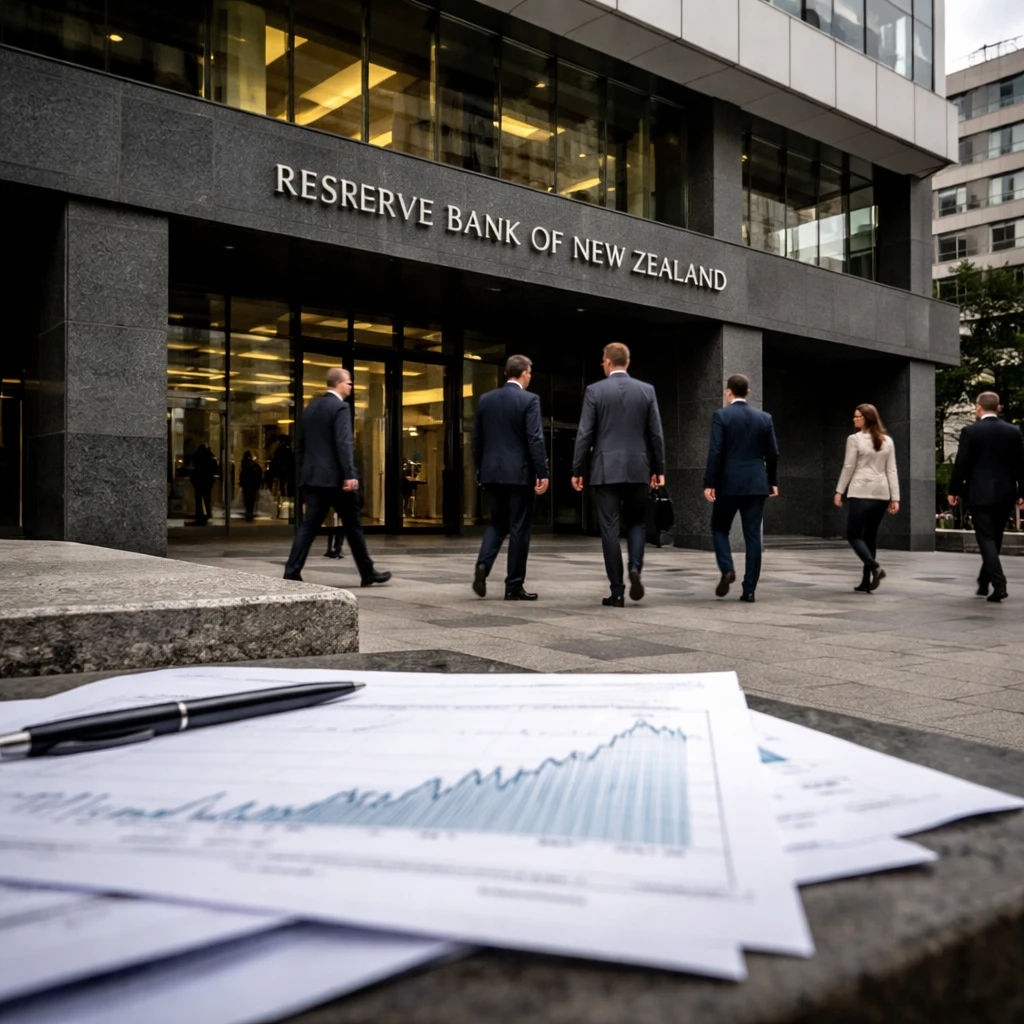
New Zealand's central bank signalled on Thursday that headline inflation should fall back to the policy target this quarter, while also making clear it remains ready to tighten policy earlier if a stronger recovery prompts broader price-setting by firms.
The Reserve Bank of New Zealand kept its official cash rate (OCR) at 2.25% on Wednesday, saying monetary policy would remain accommodative for some time. Governor Anna Breman, in her first OCR decision since taking office in December, told a parliamentary committee the bank was not planning rate hikes unless there was an increase in inflationary pressure and the economy picked up.
Breman noted that headline inflation, which was 3.1% in the last quarter, was too high but was driven mainly by volatile tradable components. She said those items should drop out of the data and bring inflation back within the 1% to 3% target band this quarter.
"If it is another quarter when inflation is above the target band and if it is clearly very volatile items and we have good reasons to believe that they will fall out the data, we might not need to tighten sooner," Breman said.
However, she cautioned that if higher inflation proved to reflect changes in firms' price-setting behaviour - which would suggest a stronger economy going forward and the capacity to bear higher interest rates - the bank would "act and talk about tightening earlier." Breman described the committee's discussions as centring on how businesses may adjust pricing as the recovery unfolds and emphasised the uncertainty involved.
She added: "It is uncertain, and we have to be humble in saying that we can’t know with 100% certainty exactly how firms will behave in the cycle."
The Monetary Policy Committee's updated OCR track included some chance of a rate increase by the end of the year, a projection that market participants read as more dovish than anticipated. Swap markets revised expectations: contracts are now fully pricing a rate hike in December, shifting from pricing a rise in October before the decision to hold rates.
Committee members voiced differing views on the timing of withdrawal of stimulus. One member said that if the economy recovers as projected, monetary support might be removed earlier than currently signalled. Another member warned that moving too quickly to raise rates could inadvertently encourage businesses to lift prices further.
Overall, the bank's stance reflects a balancing act between a nascent recovery and inflation that remains above target. The RBNZ is projecting a return to target driven by falling volatility in tradable prices, while reserving the right to respond more swiftly if underlying inflation pressures broaden with stronger economic growth.
Key points
- The RBNZ kept the OCR at 2.25% and expects headline inflation to return to the 1%-3% target band this quarter.
- Governor Anna Breman said rate hikes are not planned unless inflationary pressures increase and the economy strengthens; the bank is prepared to act earlier if firms change price-setting behaviour.
- Market-implied timing for a rate hike shifted to December from October after the decision; the revised OCR track left open the possibility of a year-end rise.
Risks and uncertainties
- Persistence of higher inflation due to changes in firms' pricing behaviour - could prompt earlier tightening and affect borrowing costs across the economy.
- Timing of economic recovery - if the rebound is stronger than expected, members noted stimulus could be withdrawn sooner, affecting sectors sensitive to interest rates such as housing and business investment.
- Policy misstep risk - raising rates too quickly may encourage firms to increase prices further, which would complicate the inflation outlook and hit consumer-facing industries.