
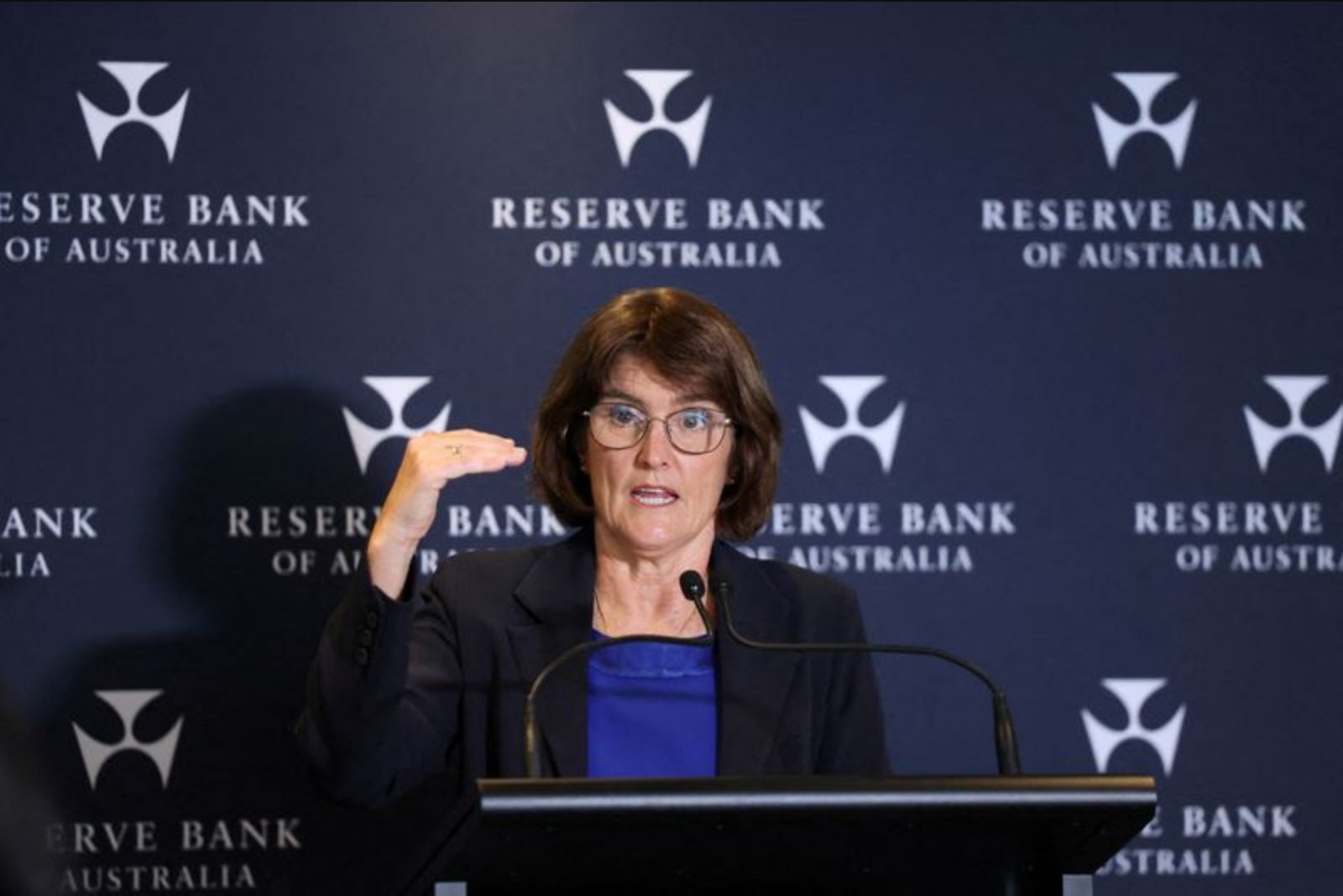
Sydney - The Reserve Bank of Australia indicated it remains prepared to raise interest rates if inflation does not ease, the bank's governor said on Thursday after the central bank implemented its first rate increase in two years last week.
Governor Michele Bullock told lawmakers that while the board is ready to take additional action should inflation become entrenched, it is not currently clear that further rises will be required. "If we need to go up further because inflation is entrenched, the board will do so because that is its primary mandates," Bullock said when questioned by lawmakers.
Last week the RBA lifted its cash rate by a quarter point to 3.85%, undoing one of three reductions made in the previous year. The move marked the central bank's first increase in two years.
Underlying inflation accelerated to 3.4% in the last quarter, the fastest pace in just over a year, and the RBA's own forecasts anticipate it reaching 3.7% during the year. Those projections are based on a technical assumption that includes a little more than one additional tightening this year.
However, Bullock emphasised the limits of forecasting. She said that because of the uncertainties inherent in forecasting, it is not yet possible to say definitively whether further rate rises will be necessary. Policymakers, she added, will be watching incoming data closely to determine the appropriate path.
Market pricing currently indicates roughly a 75% probability that the cash rate will be lifted to 4.10% at the RBA's May meeting, a shift traders expect could follow the publication of first-quarter inflation data.
Context and implications
The RBA's statement reinforces a conditional approach to policy: the bank has shown its willingness to tighten further if inflationary pressures persist, but it is signalling that any additional moves will depend on how economic data evolve. The central bank's forecasts incorporate the assumption of modest additional tightening, but officials have highlighted forecasting uncertainty as a reason for caution.
Officials will be particularly attentive to upcoming inflation releases and other indicators of domestic price pressures as they assess whether the recent increase will be sufficient to put inflation on a downward path.
Reporting note: The remarks reflect the governor's comments to lawmakers and the RBA's recent policy action and forecasts.