
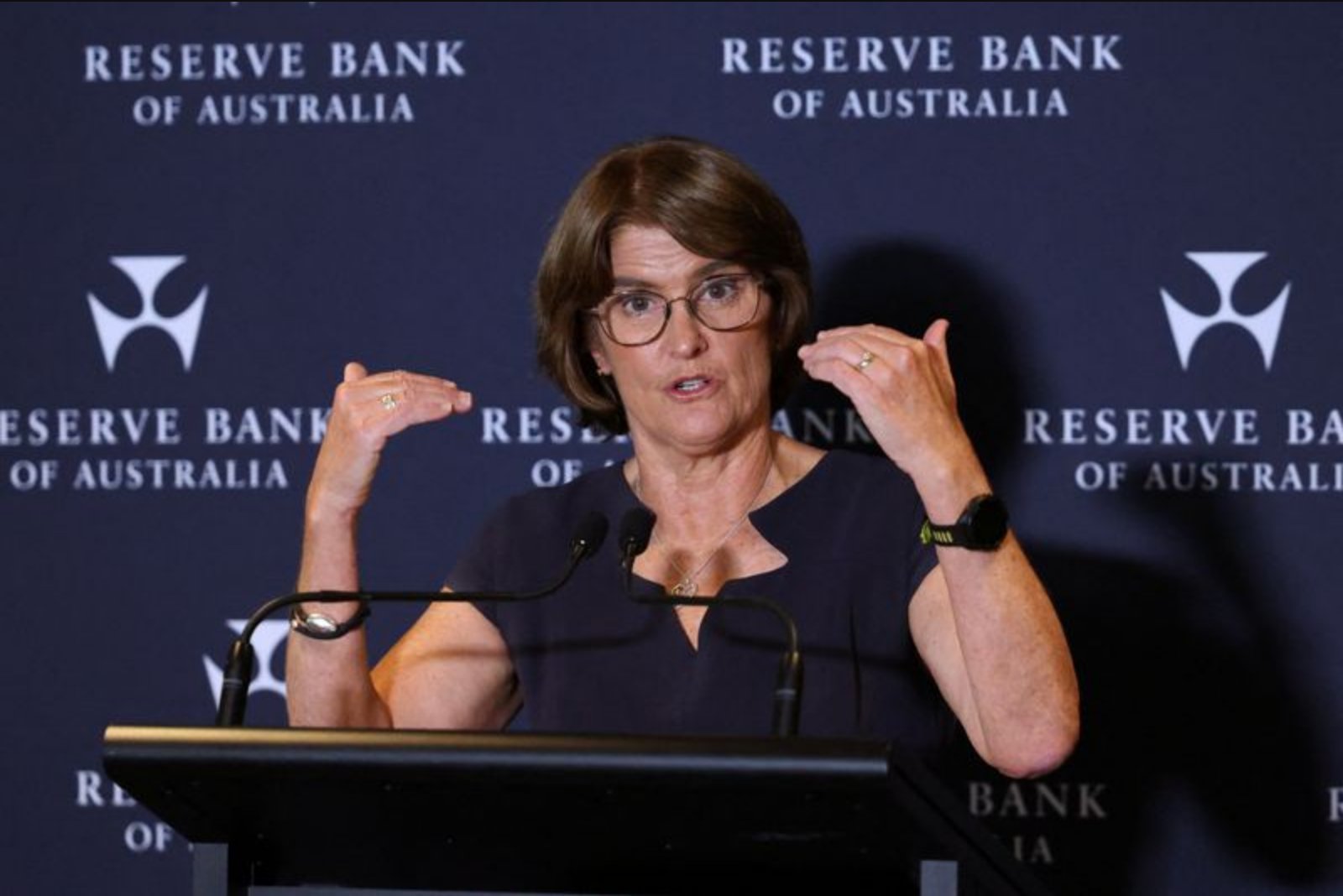
The Reserve Bank of Australia raised its cash rate by 25 basis points to 4.1% at the conclusion of its March policy meeting, marking a second straight monthly hike and pushing the official rate to a 10-month high. The board said the move was necessary amid a global environment made more volatile by an intensifying conflict in the Middle East and a fresh oil shock.
Governor Michele Bullock said the board's decision was tightly contested, reflecting a choice about timing rather than the need for further tightening. She said: "We had a very robust conversation over the past two days about whether we should hold until May" to allow for additional data and greater clarity on the Middle East conflict. "The board decided raising the cash rate was the right call... If we do not act, these price pressures will spread and the eventual adjustment will be harder."
The RBA's move kicked off a key week for major central banks, with the Federal Reserve and the European Central Bank widely expected to leave interest rates unchanged. Policymakers noted the U.S.-Israeli strikes on Iran have unleashed an oil shock that further complicates the outlook for inflation.
Close vote and market reaction
The rate increase was approved by a 5-4 margin, the most closely divided vote since the bank began publishing voting tallies. Following the announcement, the Australian dollar rose 0.2% to $0.7088 as Governor Bullock outlined the arguments behind the narrow decision. Three-year government bond futures pared earlier losses and were off just 2 ticks at 95.41.
Markets had placed about a 75% probability on a hike after senior RBA officials had described the meeting as "live," reflecting persistent inflation above the bank's 2%-3% target band and a still-hot labour market. After the decision, traders assigned roughly a 40% chance of another increase in May, and a move by August to 4.35% was fully priced in.
Domestic data and official commentary
Domestic indicators have underpinned the RBA's stance. Headline consumer price inflation stood at 3.8% in January, while the core measure reached a 16-month high of 3.4%, moving in the wrong direction for the central bank's target. The unemployment rate remained at a historic low of 4.1% and the economy expanded 2.6% year-on-year in the December quarter, the fastest annual growth in almost three years and well above the RBA's estimate of potential growth at 2%.
Belinda Allen, head of Australian economics at the Commonwealth Bank of Australia, argued that domestic conditions alone supported the decision. She said: "The domestic data flow alone justified a rate hike today," adding that "new complications have arisen adding to the inflation challenge... Excess demand needs to slow to bring inflation back to target and protect against second order impacts from higher inflation (from the Iran war)."
Policy path and previous easing
The RBA's recent tightening reverses part of the gentler path it took during the initial surge in inflation. Interest rates had previously peaked at 4.35% early in the prior year before three cuts reduced the cash rate to 3.6%. The combination of renewed inflationary pressure from the second half of last year and the new international shock has pushed the bank back into tightening mode, beginning with a hike last month and followed by this week's move to 4.1%.
The bank's February forecasts already projected headline inflation reaching 4.2% by mid-year; those projections were made prior to the fresh oil shock caused by the Middle East fighting. Oil prices holding above $100 a barrel were cited by the bank as a channel that skews inflation risks to the upside.
Sentiment and forward guidance
Consumer sentiment has softened amid the geopolitical spillover and higher prices. An ANZ survey released on the day of the RBA decision showed sentiment at its lowest level since early 2020, when the first pandemic lockdowns were announced.
Analysts and economists noted the split vote increases uncertainty about the near-term path of policy. Luci Ellis, chief economist at Westpac, observed: "With the board already split, a follow-up hike in May looks less certain," while remaining committed to her own view of a May move after hearing Governor Bullock's explanation for the vote. She added: "Whether the conflict in the Middle East is still ongoing and how it evolves from here will be crucial."
Implications
The RBA's decision highlights the intersection of strong domestic demand, a tight labour market and an externally driven commodity shock. Those factors collectively raise the risk that inflation will remain above the target band for longer, prompting further policy action if conditions do not abate. Markets and households will be watching incoming data and developments in the Middle East closely as the central bank weighs the timing of any additional tightening.