
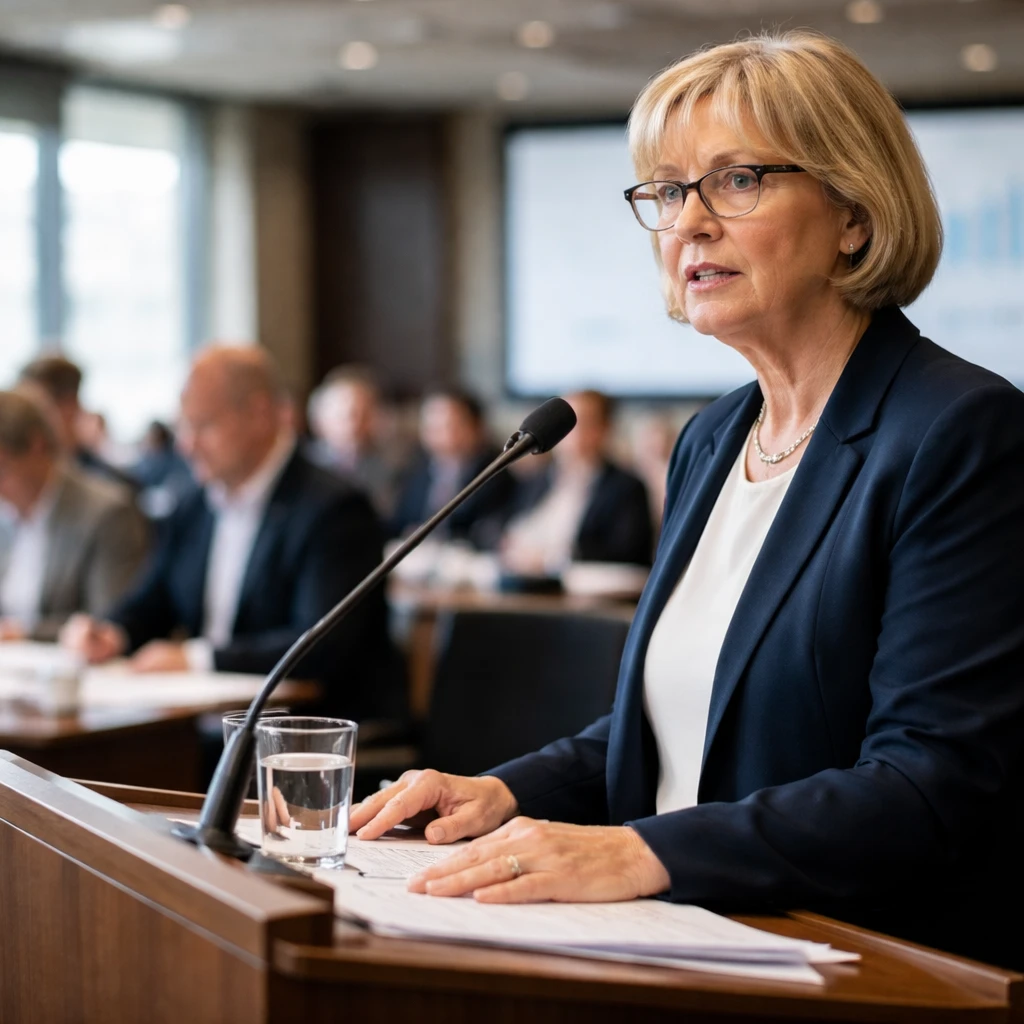
Reserve Bank of Australia Governor Michele Bullock said on Tuesday that the central bank could move on interest rates before first-quarter inflation data are available, and she cautioned that energy-driven shocks from an escalating Middle East conflict could add to domestic inflationary pressure.
Asked about the RBA's March 17-18 meeting, Bullock emphasized that the board is not bound to make decisions solely on the basis of quarterly inflation prints, noting that both inflation and employment are currently "tight." She described the March meeting as active, saying: "It will be a live meeting... the board will be actively looking at whether or not it needs to move more quickly."
Bullock also warned that higher energy costs resulting from the U.S.-Iran conflict risk reinforcing inflation in Australia. She said: "With a supply shock occurring in a situation where we already have high inflation I think there is a risk that inflation expectations may start to move."
The central bank raised its cash rate by 25 basis points in February as part of efforts to counter what it describes as a potential late-2025 rebound in inflation. Officials see core inflation moving back above the RBA's 2% to 3% annual target range this year, and the bank has signalled it now expects inflation to decelerate more slowly than previously thought.
On the RBA's dual mandates of inflation and employment, Bullock said policymakers could have taken a harder line against inflation earlier, though she added that a more aggressive response at that time would itself have produced higher inflation. She indicated that, at present, the RBA is placing less emphasis on employment and sees inflation as the more immediate policy risk.
Turning to technological change, Bullock commented on artificial intelligence and its near-term labour market impact, saying there "hadn’t been a lot of job losses from AI yet," and that this situation is expected to persist over the next 12 months. She acknowledged the longer-term uncertainty, saying that "ultimately" some sectors may experience job losses from AI and that it is not yet clear how the technology will generate new jobs.
The governor's remarks underline the RBA's readiness to act at a meeting where the board will closely scrutinize incoming information, including geopolitical developments that can affect energy prices and inflation expectations. Policymakers face a balance between containing inflation and monitoring employment outcomes, while also assessing the uncertain labour-market implications of AI.