
Overview
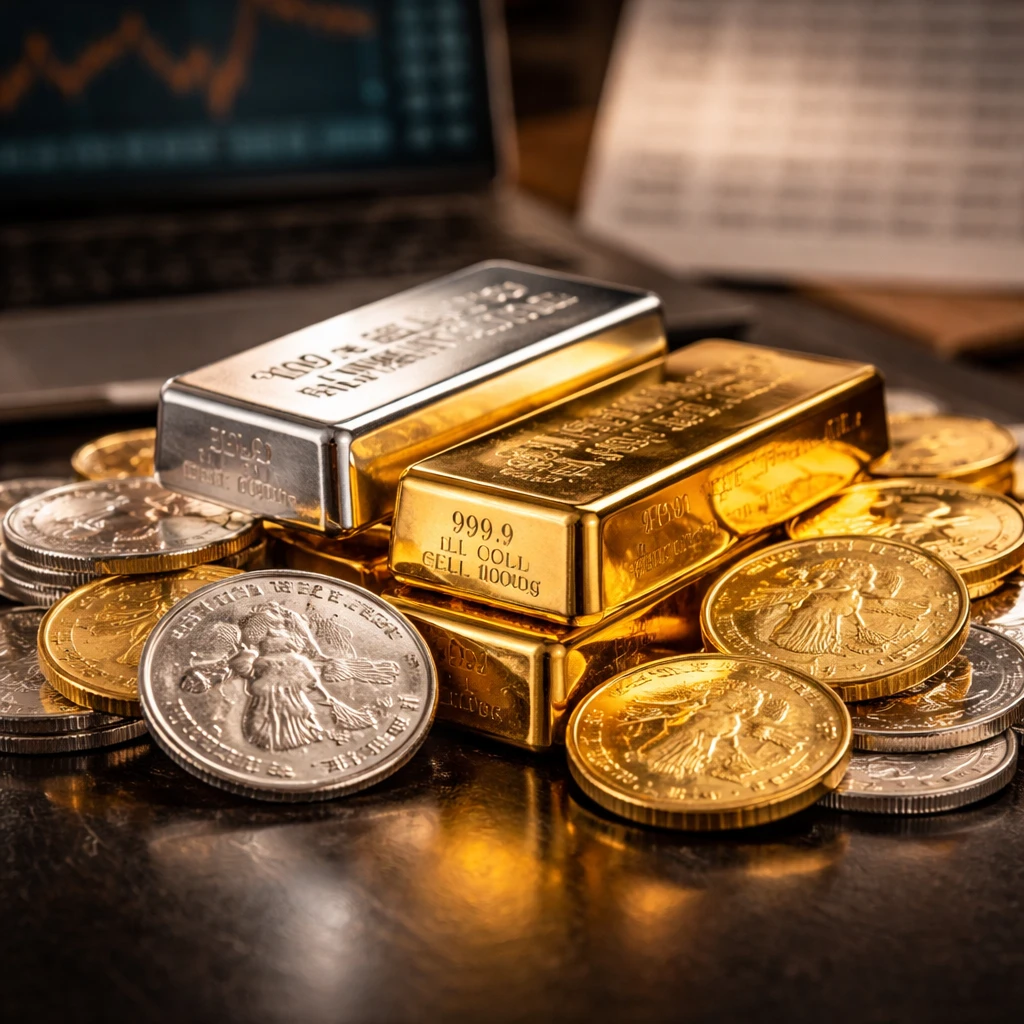
Gold and silver strengthened on Wednesday after U.S. government bond yields declined in response to data indicating that retail sales in December were flat. The data reinforced signs of a softer economic tone, which eased near-term rate pressure and gave investors additional incentive to buy metals that do not pay interest.
Market moves and prices
Spot gold inched 0.3% higher to $5,038.73 per ounce by 0059 GMT. U.S. gold futures for April delivery rose 0.6% to $5,060.60 per ounce. Silver also rebounded, with spot silver climbing 1% to $81.49 per ounce after a decline of more than 3% in the prior session.
Other precious metals tracked higher as well: spot platinum increased 0.6% to $2,098.78 per ounce, while palladium gained 0.2% to $1,712.25.
Why yields matter
U.S. Treasury yields fell after a run of economic releases pointed to a possible cooling in activity, a dynamic that can reduce the opportunity cost of holding non-yielding assets like gold and silver. Falling yields typically lower the financing cost for holding metals and are often accompanied by broader macro signals that favor precious metals.
Economic data driving the move
U.S. retail sales were unexpectedly unchanged in December as households pulled back on purchases of motor vehicles and other big-ticket items. That moderation in spending could set consumer outlays and the broader economy on a slower growth trajectory heading into the new year.
Federal Reserve Bank of Cleveland President Beth Hammack said on Tuesday that the U.S. central bank does not face an urgency to alter the current stance of interest rates this year, describing the outlook for economic activity as "cautiously optimistic."
Investors are pricing in at least two 25-basis-point cuts in 2026, with the first cut expected in June. Expectations for lower rates tend to support prices of non-yielding bullion.
Near-term focus
Market participants are awaiting the U.S. non-farm payrolls report for January and additional inflation figures due on Friday for further clues on the Federal Reserve's policy path. These releases could alter rate expectations and, by extension, precious metals' performance.
Flows and demand
Industry data showed that Indian investors significantly increased purchases of gold exchange-traded funds in January as prices rose amid heightened geopolitical risk, with ETF inflows into gold surpassing flows into equity funds for the first time.
Data schedule (GMT)
- 0130 - China PPI, CPI year-on-year, January
- 1330 - U.S. Non-Farm Payrolls, January
- 1330 - U.S. Unemployment Rate, January
- 1330 - U.S. Average Earnings year-on-year, January