
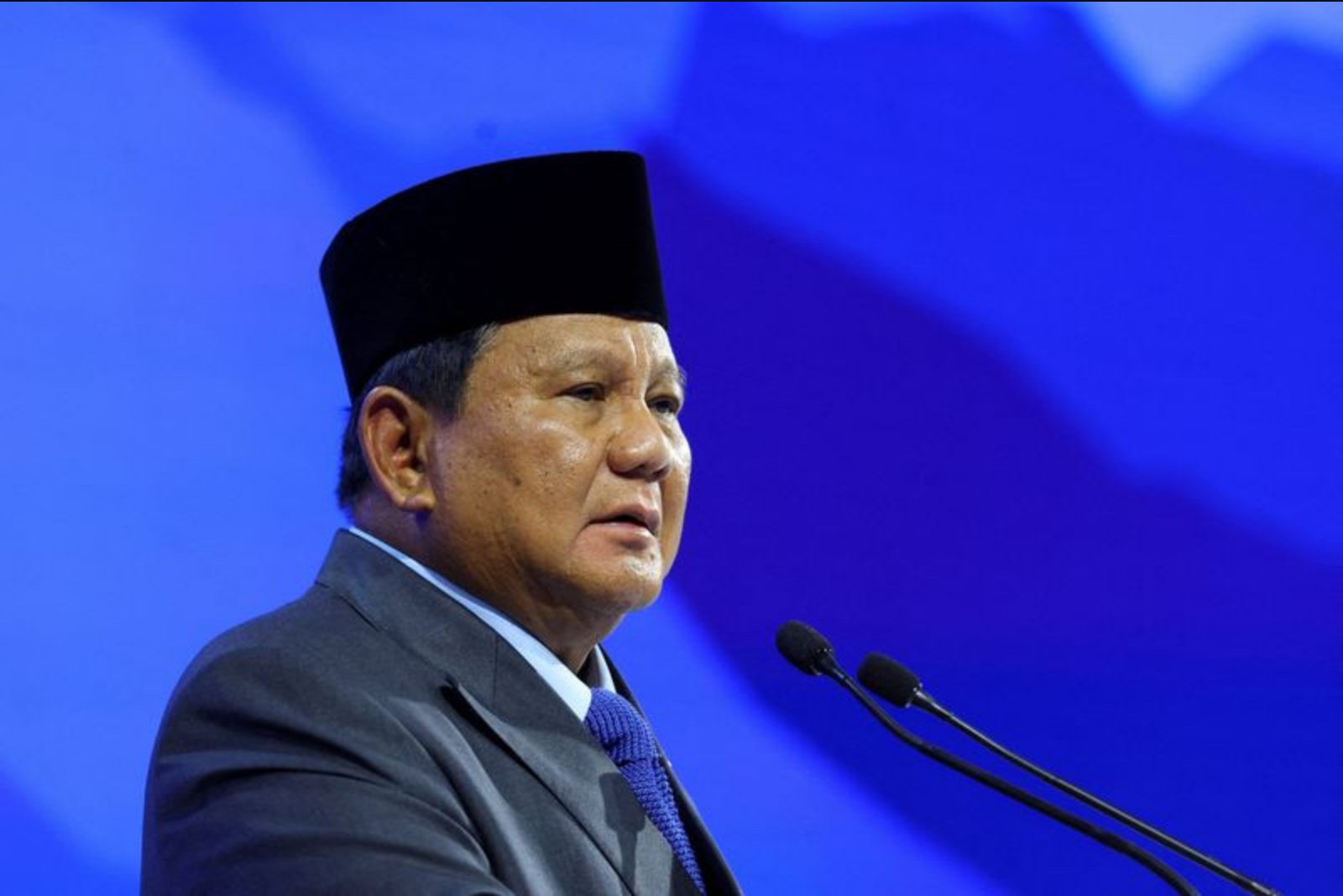
Inside President Prabowo Subianto’s administration, policymakers are maintaining a firm commitment to a suite of high-profile spending initiatives aimed at lifting growth markedly, despite recent market turbulence and warnings from international financial institutions.
Indonesia, a $1.4 trillion economy and major supplier of global commodities, has seen investor confidence decline in recent months as markets reassessed the fiscal implications of the government’s promises. Central to the debate are several headline programmes, including a $20 billion free meals scheme and a range of measures intended to stimulate rural economies across the archipelago.
Late last month, an announcement from index compiler MSCI triggered a sudden revaluation of Indonesia’s equity markets, erasing roughly $120 billion in market capitalisation. That move sparked a stream of commentary and notes from international banks, brokers and institutional investors who had been privately concerned about fiscal trajectory and market governance.
Within days of the MSCI action, Moody’s revised its rating outlook for both Indonesian sovereign debt and corporate issuers to negative, signalling heightened concern about the country’s fiscal path. The agency explicitly pointed to the government’s emphasis on public spending as a driver of fiscal risks, given Indonesia’s limited revenue base.
Three sources familiar with internal government discussions told Reuters that the administration does not intend to abandon its broader fiscal and growth commitments. "We are at a point of no return as those have become government programmes," one source said, speaking on condition of anonymity because they were not authorised to speak publicly.
Fiscal stance and official responses
Prabowo’s team points to the 2025 fiscal deficit figure of 2.92% as evidence of disciplined fiscal management, noting it remains below the statutory 3% ceiling. Prabowo’s spokesperson Prasetyo Hadi emphasised the government’s confidence, saying: "We will boost government spending as much as possible at the beginning of the year."
Yet internal messaging suggests that meeting the administration’s growth objectives may take precedence over strict adherence to deficit constraints. A second source said that, while the government still values the 3% limit, officials could pursue higher revenues or reallocate spending elsewhere rather than scale back the programmes they deem essential to achieving faster growth.
That stance follows a personnel shift at the top of economic policymaking last year, when long-serving Finance Minister Sri Mulyani Indrawati - noted for tight fiscal oversight - was replaced by Purbaya Yudhi Sadewa, described in the sources as a pro-growth economist.
Why the administration is sticking with the strategy
Those close to policy deliberations say the current expansion, while tangible, has not produced enough job creation to satisfy a rapidly growing workforce in the world’s fourth most populous nation. The administration’s focus, according to one internal source, is on rapid, early-year disbursement of funds to create visible growth effects and to address social needs.
Former senior government aides and outside economists interpret the approach as a deliberate break with the post-1990s orthodoxy in Jakarta. Yanuar Nugroho, a former senior aide to the previous president, said Prabowo intends to "boost the economy as quickly and as much as possible."
But not all outside observers see the strategy as sustainable. Arianto Patunru of the Australian National University’s Indonesia Project warned that the administration’s policies, driven by an 8% growth target, could reverse many reforms instituted after the Asian financial crisis of the late 1990s. He argued that the set of flagship programmes - including the free meals policy, cooperative initiatives, a housing plan and an initiative called Danantara - place sizeable pressure on the budget and may be counterproductive for long-term growth.
Investor unease and market implications
Market participants have expressed concern about the government’s apparent populist tilt. Alan Siow, co-head of emerging market corporate debt at fund manager Ninety One, characterised the fiscal approach as populist and said investors are wary when governments deploy expansive fiscal measures without clear financing plans. "They’re saying all the right things, but not doing all the right things," he added, indicating a gap between rhetoric and action on fiscal safeguards.
Analysts note that delivering sustained 8% growth would require either a substantial increase in deficit spending or a step-change in tax revenues. Thomas Pepinsky, a professor of government and public policy, said accomplishing that goal would need large-scale state support that could only be financed through a much higher deficit or through significant revenue reforms. He warned that such moves would likely require political compromises that could weaken investor confidence.
Global asset flows add urgency to the policy debate. As interest rates in developed markets move, capital has been flowing into emerging markets, and a reclassification by index providers could have material effects. Goldman Sachs has estimated that if MSCI’s concerns are not resolved, a downgrade of Indonesia from emerging market to frontier status could prompt as much as $7.8 billion in capital outflows.
Where the risks lie
Investors and rating agencies are focused on several vulnerabilities tied to the current policy mix:
- Fiscal risk from higher public spending relative to a weak revenue base, as highlighted by Moody’s when it lowered the outlook to negative; this has direct implications for sovereign and corporate bond markets.
- Market-structure and governance concerns that prompted MSCI’s action and led to large equity market devaluations, which affect foreign portfolio flows and domestic investor confidence.
- Policy continuity risks stemming from a shift in economic leadership and priorities, notably the replacement of a fiscal disciplinarian finance minister with a pro-growth economist, which may alter investor perceptions about fiscal prudence.
Despite these concerns, officials close to the administration continue to frame global institutions’ nervousness as misplaced and maintain that policy will be guided by domestic growth imperatives rather than external pressure.
Outlook
The administration’s commitment to major social programmes and an ambitious 8% growth target sets up a high-stakes test of Indonesia’s fiscal and institutional capacity. With recent credit outlook changes and equity market shocks fresh in investors’ minds, the government’s next fiscal choices - whether to raise revenues, reallocate spending or accept higher deficits - will be closely watched by markets.
For now, the message from inside the presidential circle is clear: the core programmes are entrenched and unlikely to be abandoned, even as global institutions and investors raise alarms about the fiscal and market consequences of that strategy.