
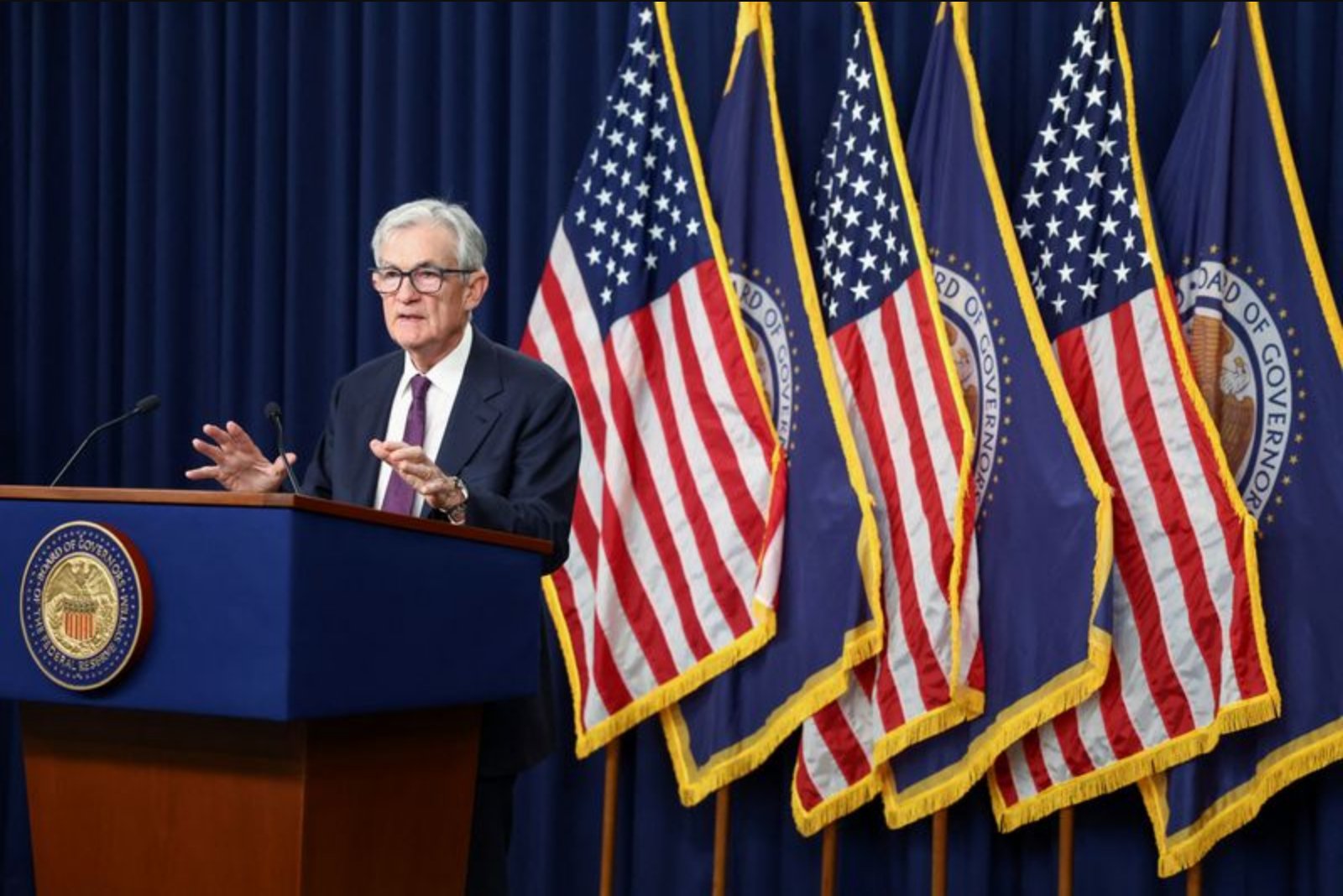
Federal Reserve Chair Jerome Powell’s decision about whether to retain a seat on the Federal Reserve Board of Governors after his term as chair ends has emerged as a pivotal variable in shaping the tenure of Kevin Warsh should he become the next Fed chair. Powell made a public statement on Wednesday that he would not depart the central bank until a criminal inquiry led by U.S. Attorney Jeanine Pirro is "well and truly over with transparency and finality," and he said he had not yet made up his mind about remaining in a governor’s seat that runs until 2028 - a term that would extend well into Warsh’s potential leadership.
The timing and tenor of Powell’s remarks came as the Fed left interest rates unchanged for the second time this year. His comments frame a set of political and institutional questions about how the central bank will function if a recently nominated chair - Kevin Warsh - arrives while his predecessor may still be present on the Board.
At the core of the issue is a balance between institutional continuity and the design of the Federal Reserve. Several Republican senators who have previously supported Powell have linked their willingness to move forward on Warsh’s confirmation to the status of Pirro’s investigation. Senator Thom Tillis of North Carolina and others have said they will not confirm Warsh until that probe is no longer active. That sequence of events would likely mean Powell’s stated prerequisite for leaving the Fed is satisfied before any new chair takes office, according to Mark Spindel, chief investment officer at Potomac River Capital and co-author of a political history of the Fed.
"If the legal issues are resolved and Tillis stands down, (and) Kevin is confirmed, I believe Jay will retire," Spindel said. "I think he would be respectful of the incoming chair."
Spindel framed the possibility that the confirmation delay engineered by senators like Tillis could serve to both protect Powell and spare Warsh from the awkward position of assuming control of an institution with a well-regarded predecessor still occupying a governor’s seat.
But the dynamics go beyond a single investigation or a single senator. There are active, separate pressures on the Federal Reserve that shape Powell’s calculation about whether to remain. The administration has pursued an effort to remove Fed Governor Lisa Cook - a matter now before the U.S. Supreme Court - and Treasury Secretary Scott Bessent has floated ideas such as requiring residency for regional Fed bank presidents. Those initiatives, together with other public statements, could influence Powell if he concludes it is necessary to remain in order to protect the institution or the independence of monetary policymaking.
Analysts differ on how likely it is that the Fed will end up with what some commentators have called "two popes" - a situation in which a former chair remains on the Board while a new chair is in office. Some observers see that outcome as improbable, expecting the investigation to close, Warsh to be confirmed by the Senate, and Powell to depart. Others suggest a scenario in which Powell uses the uncertainty around his decision as leverage.
In two detailed notes, Derek Tang of LH Meyer argued that Powell’s immediate source of leverage is the fact he has not decided whether to remain. That open-ended posture, Tang wrote, could be intended to induce more cautious behavior from the White House. If real threats to the Fed’s institutional independence remain as Warsh takes over, Tang said Powell could reasonably choose to stay on until after the U.S. midterm elections in November, when changes in congressional composition might alter the political landscape. He could stay even longer if those risks continue through his governor term, which extends to 2028.
Yet Tang and other commentators also point out that Powell’s staying would not be a guaranteed solution. Other governors could depart, creating new vacancies for the administration to fill and potentially weakening Powell’s influence despite his continued presence on the Board.
Observers underscore another tension: there is no clear modern precedent for a former Fed chair remaining on the Board while a successor serves. The only comparable episode cited occurred in the 1950s, when outgoing Chair Marriner Eccles was asked by President Harry Truman to remain on the Board to assist with post-war economic management - a different historical context and set of institutional pressures than those at play today.
Vincent Reinhart, chief economist at BNY Investments and a former head of the Fed’s monetary affairs division, warned that Powell’s decision to remain could be read as confrontational. In his view Powell staying on the Board would put him at odds with a new chair, the White House and the Senate that confirmed that new chair. Reinhart said such a posture would effectively signal the Fed’s old guard is prepared to defend institutional norms aggressively.
Powell remaining "is confrontational ... to the new chair and to the White House and to the Senate who confirmed the new chair. Powell staying is basically the old guard announcing they’re going to the mattresses," Reinhart said.
The normative practice at the Fed has been for chairs to leave their governor seats after their term as chair concludes - a practice that reflects respect for the institution’s design. The Fed is structured so the chair’s four-year alignment often tracks presidential cycles, while governors serve staggered 14-year terms meant to insulate them from short-term political pressures. Departing a governor’s seat upon leaving the chair is part of that unwritten convention.
Supporters of Powell’s potential decision to remain argue that his presence could function as a counterweight if the central bank faces undue political pressure. Christopher Hodge, chief U.S. economist at Natixis CIB, said Powell staying could "be a beneficial counterpoint if the Fed was being unduly influenced by political factors." Hodge added that the administration has shown a willingness to use available tools to influence the Fed, and that such attempts may not end under a new chair.
At the same time Hodge stressed his belief in the institution’s guard rails. He said once Warsh is confirmed by the Senate, the new chair will be largely outside the president’s immediate political control and will be motivated by how history remembers his leadership. Hodge said Warsh, when installed, will likely employ that independence to pursue the policy course he deems appropriate.
For the markets and for policy observers, Powell’s eventual choice raises fundamental questions about the balance between continuity, independence and political accountability at the Fed. If Powell retires in short order after Warsh is confirmed, the transition would follow the conventional pattern and likely limit internal tensions. If Powell elects to remain, the central bank would face an unusual governance arrangement, with potential implications for how monetary strategy is perceived and how internal debates are managed.
How events unfold will depend on a handful of moving pieces: the progress and outcome of the Pirro investigation, the choices of key senators such as Tillis, the resolution of legal and administrative challenges including the case involving Governor Lisa Cook, and any policy or structural proposals from the administration that might alter the composition or authority of Fed leadership roles. Those variables collectively form the context in which Powell will determine what he believes is "best for the institution and for the people we serve."
Powell’s public framing of his decision - tying it to both institutional stewardship and the condition of an ongoing investigation - places the Fed’s future leadership and its institutional independence at the center of an unfolding political contest. The outcome will have consequences for how the central bank navigates both near-term political pressures and the long-standing norms designed to insulate monetary policymaking from short-term political influence.