
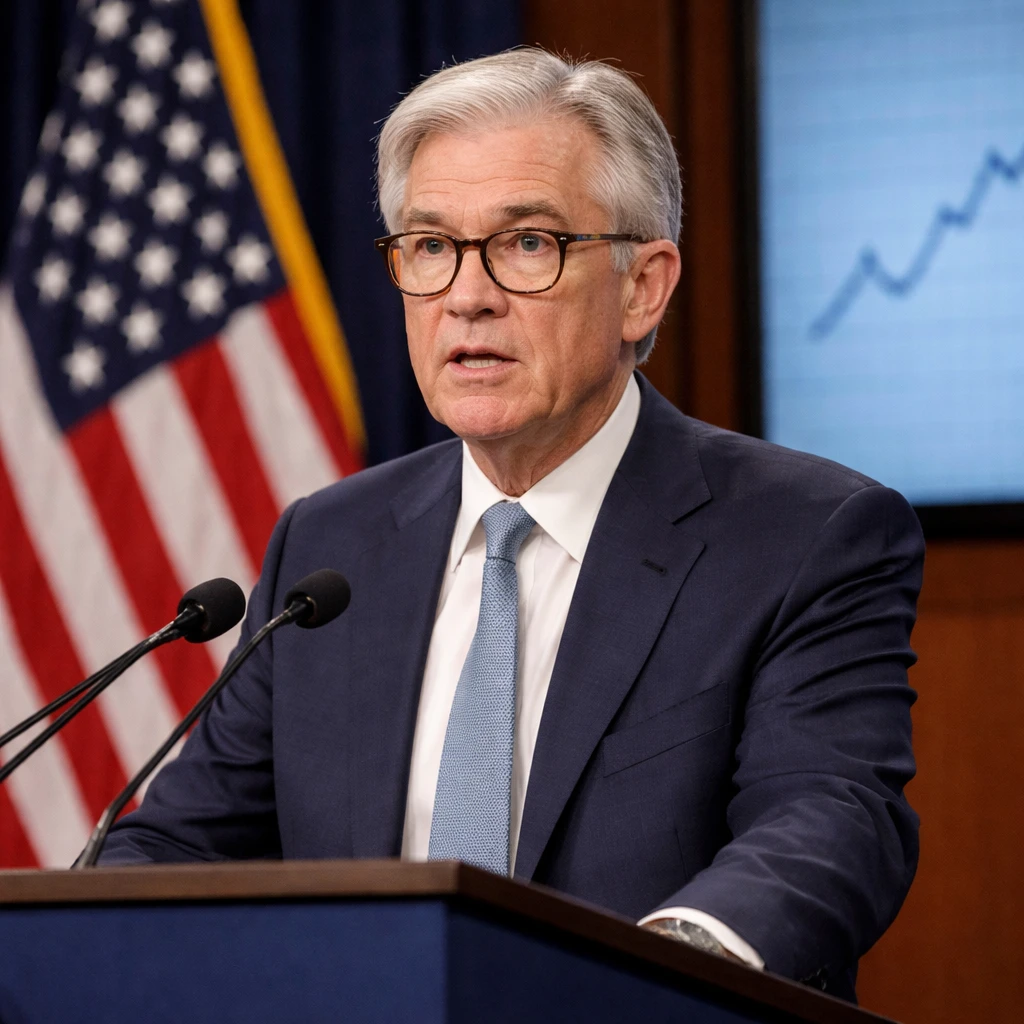
Federal Reserve Chair Jerome Powell said that inflation readings for December were probably still higher than the central bank's 2% objective, with the core personal consumption expenditures index estimated at 3%.
Speaking at a press conference after the Federal Open Market Committee meeting, Powell pointed to the goods sector as the primary source of elevated inflation readings. He said goods inflation has been "boosted by the effects of tariffs," while noting that "disinflation appears to be continuing in the services sector."
Powell emphasized that "most of the overrun in inflation is from tariffs, not demand," adding that core PCE excluding the tariff effects on goods is "running just a bit above 2%," which he described as "a healthy development on inflation." He said he expects the tariff-related impact on goods prices to peak and then recede this year, characterizing tariffs as "likely to be a one-time price increase."
The Federal Reserve opted to keep its target range for the federal funds rate at 3.50%-3.75% at this meeting, interrupting a streak of three consecutive 25-basis point rate cuts. The decision drew two dissents from Governors Stephen Miran and Christopher Waller.
On the broader economy, Powell described U.S. economic activity as on "firm footing" and judged the present stance of monetary policy to be "appropriate" and supportive of progress toward the Fed's dual goals. He observed that the housing sector remains weak but said that the adverse effects from the government shutdown should be reversed within the quarter.
Addressing labor market developments, Powell said employment may be stabilizing. He noted that slowing job growth reflects both a decline in the labor force and a clear softening in labor demand.
On the policy outlook, Powell indicated the federal funds rate is "within range of plausible estimates of neutral" and could be at the "higher end of range of neutral." He said the Fed is "well positioned to determine extent, timing of additional rate adjustments," but stressed that policy is "not on a preset course" and that decisions will be made on a "meeting-by-meeting basis."
Powell also reported "broad support" among committee members, including non-voting participants, for holding rates steady at this meeting. He reiterated that the committee will continue to monitor the relevant goal variables and "let the data light the way."
Implications and context included in the Fed's message
- Powell's remarks tie much of the current inflation overrun to tariff-driven goods prices rather than domestic demand.
- The Fed's pause in cutting rates ended a short series of rate reductions and featured two dissents.
- Policymakers signaled a data-dependent approach, noting the policy rate sits near estimates of neutral.