
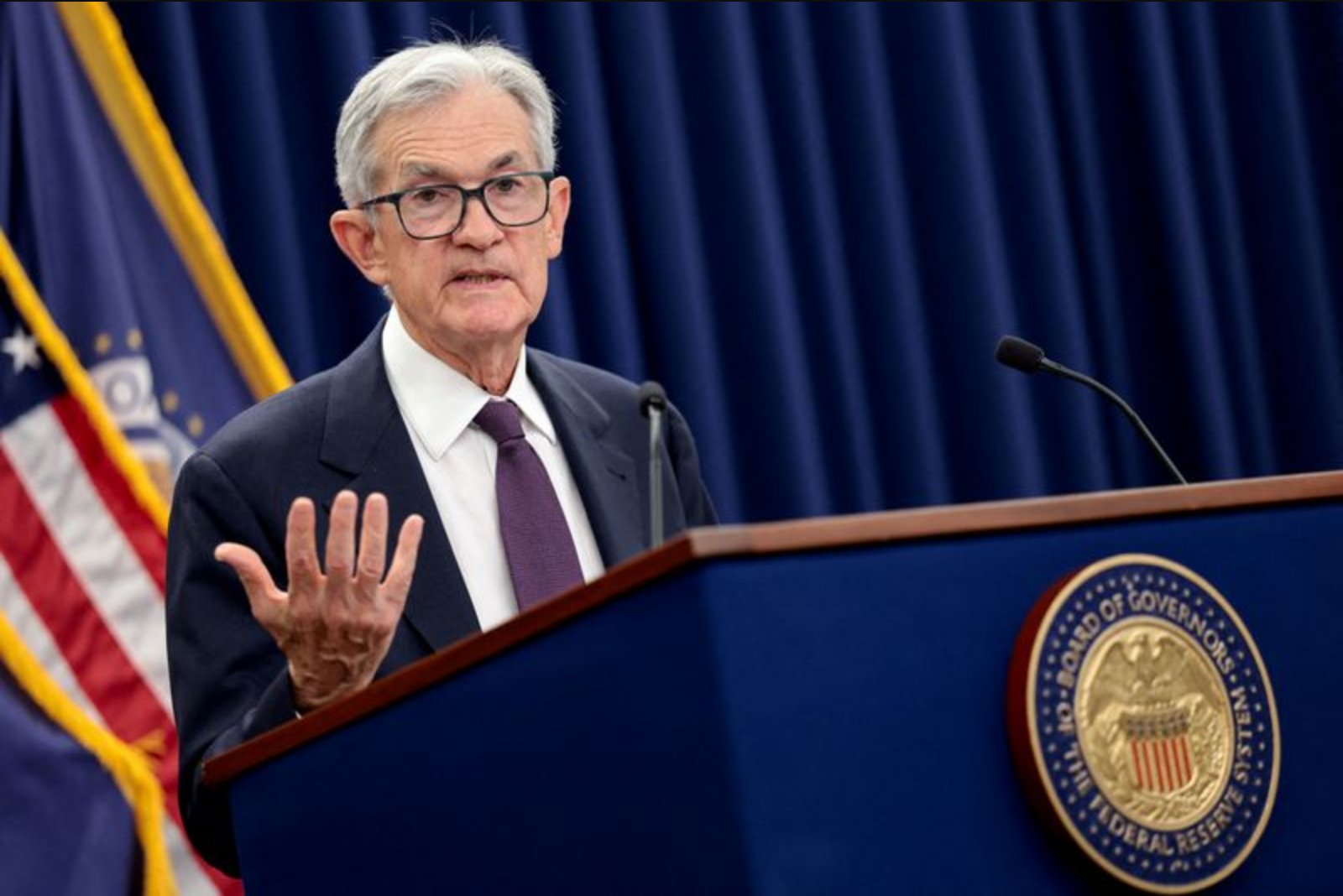
Federal Reserve Chair Jerome Powell outlined significant hurdles the U.S. central bank faces in bringing inflation back to its 2% objective, citing both tariff-driven price increases and surging energy costs tied to the Iran war as key sources of uncertainty.
Speaking at a press conference following the conclusion of the Fed’s most recent two-day policy meeting, Powell said the central bank must see a tangible reduction in core inflation this year as the one-time effects of tariffs implemented during the Trump administration filter through the economy.
Powell reiterated that the Fed’s preferred gauge of inflation remains well above the central bank’s target - at about 3% - and stressed that tariffs account for a substantial portion of that elevation. "Some big chunk of that, between a half and three-quarters is actually tariffs, so we’re looking for progress on that," he said.
On the mechanics of tariff impacts, Powell described the Fed’s expectation that tariffs produce a one-time increase in prices rather than a persistent year-after-year rise, with the effect diminishing over time. He added, however, that uncertainty over future tariff rates complicates the outlook.
Earlier moves trimmed U.S. tariff rates somewhat after the U.S. Supreme Court struck down the broad global duties enacted under an emergency law, but the administration that enacted those duties intends to replace them with other tariffs, including levies on goods from 16 major trading partners under an unfair trade practices law. Powell cautioned that, because it took roughly two years for the post-COVID-19 inflation spike to ease, policymakers must remain humble regarding how long it will take for tariff-related inflationary pressure to fully pass through the economy.
Energy costs - and how the Fed treats them - were another prominent focus of Powell’s remarks. Asked what level oil prices would need to reach from their current level above $100 per barrel before the Fed would consider raising interest rates to counteract further inflationary pressure, Powell declined to specify a numeric threshold. Instead he said succinctly: "We’re prepared to do what needs to be done."
Powell emphasized that the Fed is monitoring how increases in diesel, jet fuel and other petroleum-based inputs affect headline inflation and whether those moves begin to "leak into core" inflation measures. He acknowledged uncertainty about the magnitude and duration of the Iran war-driven energy price spike: "We just don’t know how big this will be and how long it lasts," he said, adding that the shock "may or may not be something that really makes a big imprint on the U.S. economy. We’re just going to have to wait and see."
Whether the Fed will treat the energy-driven inflation as a temporary phenomenon - and therefore "look through" it - hinges in part on progress in reducing core inflation as tariff impacts fade. Powell noted that this prerequisite has not yet been satisfied. "The question of whether we look through the energy inflation doesn’t really arise until we have kind of checked that box," he said.
Powell’s comments underline the dual challenge the Fed faces in distinguishing between transitory shocks and more persistent inflationary forces. The interplay between tariff-related price jumps and potential pass-through from higher petroleum input costs will be central to the central bank’s policy calculus in the months ahead.