
Economy June 3, 2026 09:26 AM

Poland's Central Bank Sees Smaller Inflation Impact from Middle East Conflict

Governor says rates are appropriate for now as inflation, currency, and labor market show relative stability

By Caleb Monroe

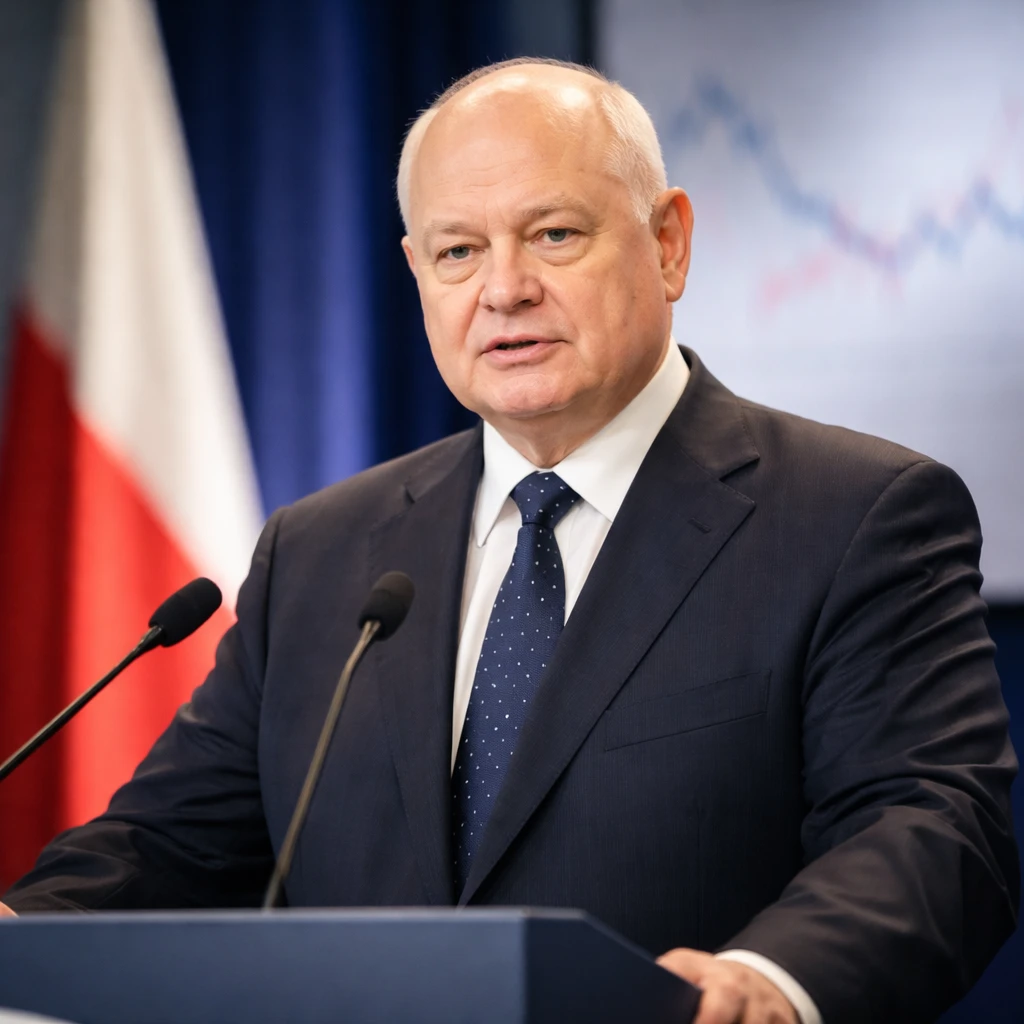
Poland's central bank governor, Adam Glapinski, said on Wednesday that the inflationary shock tied to the Middle East conflict has been less pronounced than originally feared. He indicated that current interest rates are appropriate, the probability of a rate hike has fallen since last month, and that future policy moves will be driven by incoming data. Glapinski also reported that inflation is under control, the zloty is stable, and labor market tightness has eased. The central bank will continue monthly monitoring of these conditions.

Poland's Central Bank Sees Smaller Inflation Impact from Middle East Conflict

Key Points

  • Inflation shock from the Middle East conflict has been less severe than expected - impacts monitoring of price pressures and consumer-facing sectors such as retail and consumer goods.
  • Current interest rates are judged appropriate, with reduced odds of an increase versus last month - relevant for fixed income markets and banking sector margins.
  • Governor reported the zloty is stable and the labor market has become less tight - important for exporters, currency-sensitive businesses, and labor-intensive industries.

Poland's central bank governor, Adam Glapinski, said on Wednesday that the inflation shock related to the Middle East conflict proved smaller than initially expected, and that the present level of interest rates remains appropriate.

Glapinski noted a reduced likelihood of a rate increase compared with the prior month and emphasized that forthcoming decisions on interest rates will depend on incoming data. He characterized inflation as being under control and described the zloty as stable. The governor also observed a softening in labor market tightness.

In outlining the bank's approach going forward, Glapinski said that the institution will monitor developments on a month-to-month basis. That cadence, he suggested, will guide how policymakers react to fresh information on price dynamics, currency stability, and employment conditions.

The remarks underscore a cautious stance: while the central bank judges current rates appropriate, it is keeping the option of adjustments open and contingent on evolving indicators. The governor's assessment linked directly to the specific shock from the Middle East conflict and its measured effect on inflationary pressure.

Taken together, the comments point to three clear lines of focus for the central bank - inflation trends, currency behavior, and labor market conditions - all tracked closely and reassessed regularly. Glapinski's statements convey that the central bank views current conditions as manageable but will remain attentive to any changes reflected in monthly data.


Contextual note: The central bank's posture as described by the governor reflects an emphasis on data-dependence and ongoing monitoring rather than a fixed path for policy.

Risks

  • Future rate decisions remain contingent on incoming data - economic sectors sensitive to interest rates, such as housing and corporate borrowing, face uncertainty.
  • If inflation dynamics shift again, policy could change - consumer discretionary and retail sectors could be affected by tighter monetary policy.
  • Monthly monitoring implies short-term volatility in policy expectations - financial markets and currency traders may experience heightened sensitivity to new monthly indicators.

More from Economy

Market Resilience Amidst Sector Shifts: Dow and Russell 2000 Reach New Heights Jun 4, 2026 Australian house price momentum to slow to four-year low as borrowing costs bite Jun 4, 2026 Kevin O’Leary Scales Back Utah Data Center Plan Amid Lawmaker Concerns Jun 4, 2026 Fed's Daly Says AI Could Exert Downward Pressure on Prices Over Several Years Jun 4, 2026 Putin Says Moscow Willing to Make Concessions if Kyiv Reciprocates Jun 4, 2026