
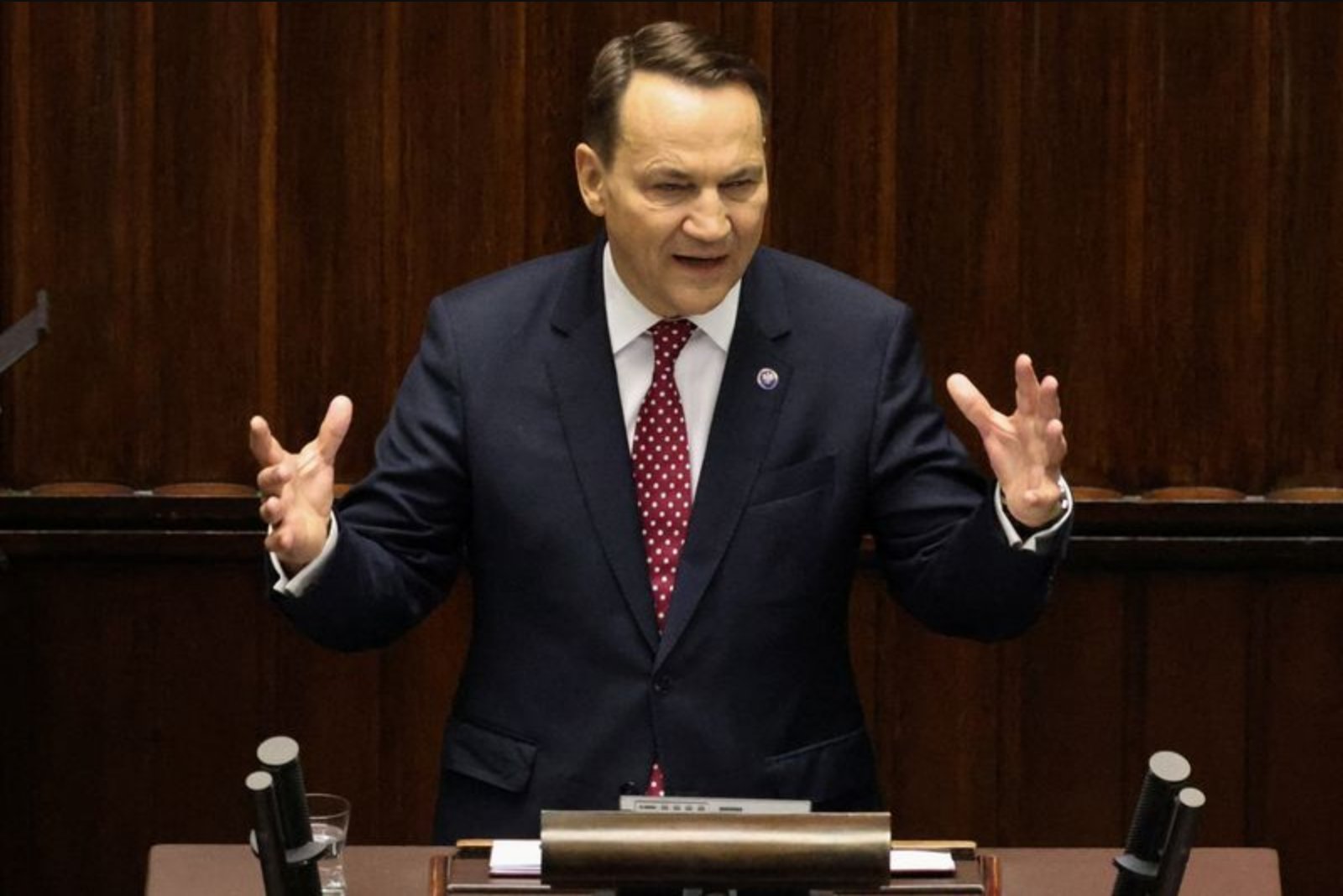
Poland continues to regard the United States as its principal military partner, but Warsaw will not be a passive follower, Foreign Minister Radoslaw Sikorski told lawmakers in parliament on Thursday. In a speech that outlined both a firm commitment to the transatlantic relationship and clear limits to Poland's acquiescence, Sikorski said the country would stay a loyal ally - "but we cannot be suckers."
The remarks came in the context of what Sikorski described as significant uncertainties in U.S. policy under President Donald Trump, a backdrop that the pro-EU government led by Prime Minister Donald Tusk must navigate carefully. Sikorski said the government recognises the importance of the transatlantic bond for Poland's national security, while also registering concern about evolving American priorities.
He called on Europe to assume a larger share of responsibility for its own security and stressed the centrality of European unity in confronting strategic threats. "The threat to the sovereignty and security of the Republic of Poland comes from one direction - from the East, not the West... The hour has struck for Europe. Either we stand united, or we will be consumed by greater powers," Sikorski told parliamentarians.
Sikorski provided a financial estimate to illustrate the scale of the challenge facing NATO's eastern defences. He said defending NATO's eastern flank against a possible Russian aggression would cost at least 1.2 trillion euros, an amount he noted is roughly 24 times Poland's defence budget. He used that comparison to suggest that current financial and military aid provided to Ukraine is substantially lower than the potential cost of any war between Russia and the Atlantic alliance.
Within Poland's political landscape, Sikorski acknowledged broad agreement that the United States is the most important guarantor of national security. He also pointed to domestic political differences over the U.S.: members of Prime Minister Tusk's government have been critical of President Trump, while the nationalist opposition - described as more pro-MAGA - along with President Karol Nawrocki hold more sympathetic views toward Trump.
For reference on currency conversions cited in the discussion, the exchange rate given was $1 = 0.8467 euros.
Context and implications
- Poland affirms its strategic reliance on the United States while asserting a need for reciprocal respect in the alliance.
- Sikorski's figures underline the potential fiscal scale of defending NATO's eastern territories and the burden this could place on European and transatlantic resources.
- Domestic political divisions shape Poland's posture toward U.S. policy, complicating a unified national message on transatlantic relations.