
Economy March 20, 2026

Pentagon Sends Additional Warships and Thousands of Marines to Middle East Amid Iran Tensions

New deployments add to recent U.S. forces in the region as administration weighs measures involving Kharg Island and the Strait of Hormuz

By Caleb Monroe
Pentagon Sends Additional Warships and Thousands of Marines to Middle East Amid Iran Tensions

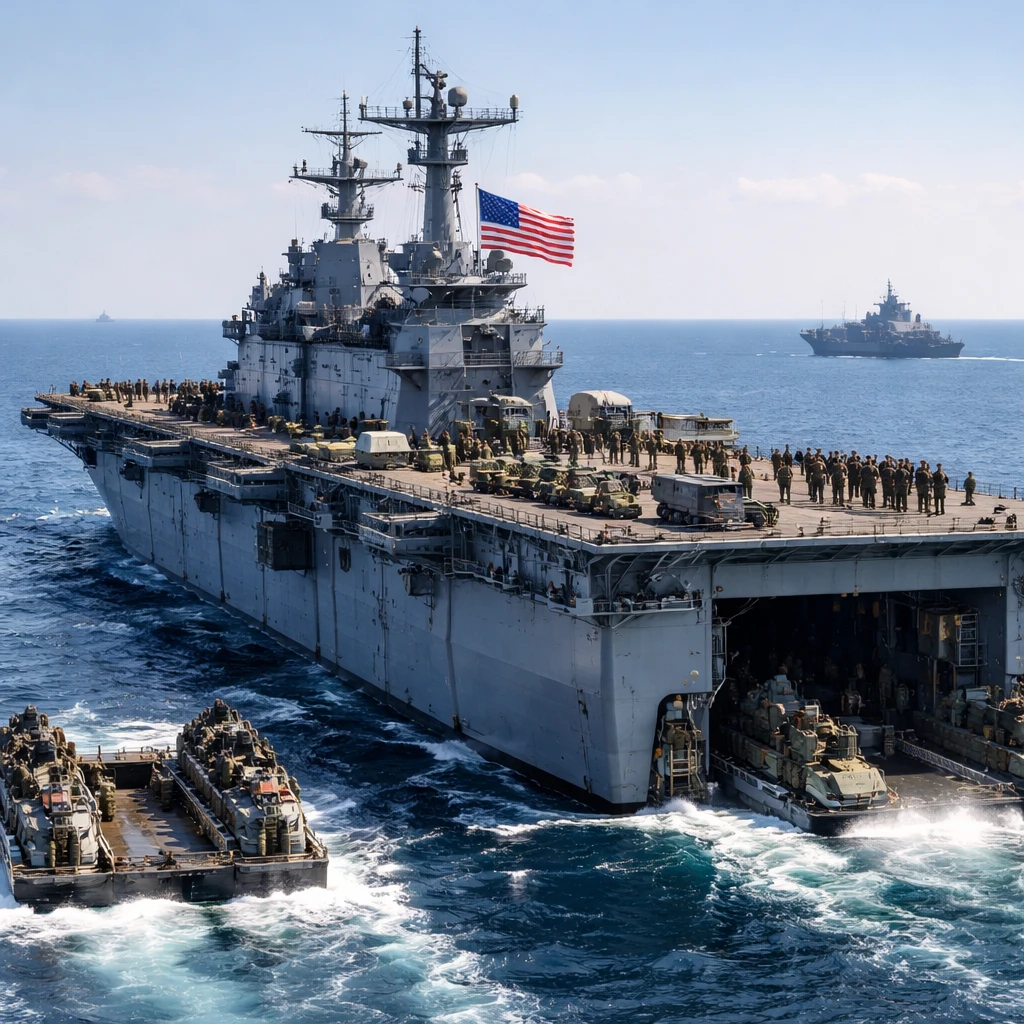
U.S. defense officials report that the Pentagon is dispatching three warships and roughly 2,200 to 2,500 Marines to U.S. Central Command in the Middle East, marking a second significant Marine deployment within a week. The move follows President Trump's public statement that he does not intend to send American ground forces into Iran and comes as the administration considers options involving Iran's Kharg Island and the Strait of Hormuz.

Key Points

  • The Pentagon is dispatching three warships and roughly 2,200 to 2,500 Marines to U.S. Central Command in the Middle East, drawn from the USS Boxer amphibious ready group and the 11th Marine Expeditionary Unit.
  • This marks the second major Marine deployment in the past week, following the earlier transfer of the Japan-based USS Tripoli and the 31st Marine Expeditionary Unit to the region.
  • The administration is reported to be considering plans related to Kharg Island and the Strait of Hormuz, a development that can affect defense and energy sectors and pressure regional maritime activity.

The Pentagon is moving three U.S. warships and thousands of Marines into the Middle East, U.S. officials told the Wall Street Journal, adding to American military presence in the region at a time of heightened tensions with Iran.

Defense sources said the force slated for Central Command includes an amphibious ready group centered on the California-based USS Boxer and the 11th Marine Expeditionary Unit. The number of Marines assigned to the deployment is estimated at roughly 2,200 to 2,500. U.S. Central Command has overall responsibility for American military operations across the Middle East.

This shipment of forces represents the second major Marine movement to the region within a short span. Earlier this week the Pentagon sent the Japan-based USS Tripoli together with the 31st Marine Expeditionary Unit to the same theater of operations.

Officials made clear that the new deployments are occurring even as President Trump publicly stated he did not intend to order American ground troops into Iran. That statement came one day prior to the reported dispatch of the Boxer group and the additional Marines.

Separately, reports earlier cited by Axios indicate the Trump administration is reviewing plans that could involve seizing or imposing a blockade on Iran's Kharg Island as a way to pressure Tehran to reopen the Strait of Hormuz. Those deliberations were described in previous reporting and are part of the broader set of measures under consideration.

The sequence of troop and ship movements, together with the administration's ongoing policy discussions, has resulted in multiple U.S. deployments to the region within a limited period. Officials have not provided additional operational details beyond the units named, the estimated number of Marines, and the ships involved.


Context and next steps

At present, the publicly reported information centers on the units being sent, their estimated strength, and the fact that these movements follow earlier deployments. The administration's reported deliberations regarding Kharg Island and the Strait of Hormuz were described in separate reporting and remain matters under consideration.

Reporting is based on statements attributed to U.S. officials and prior reporting cited by media outlets.

Risks

  • Potential for increased regional military presence to raise tensions in the Middle East; this has implications for defense-related companies and government spending.
  • Consideration of actions involving Kharg Island and the Strait of Hormuz introduces uncertainty for energy markets and maritime transport that rely on the waterway.
  • Public statements by the president ruling out ground troops in Iran contrast with the movement of large Marine contingents, creating uncertainty about future operational decisions and policy direction.

More from Economy

Moscow Offered to Stop Sharing Intel with Tehran in Return for U.S. Halt on Ukraine Briefings Mar 20, 2026 Trump Labels NATO Allies 'Cowards' Over Reluctance to Support Strait of Hormuz Operation Mar 20, 2026 U.S. Justice Department Opens Criminal Inquiry Into President Petro Over Alleged Drug Connections Mar 20, 2026 Brazil's Treasury Reduces Cash Cushion as Market Support Rises Mar 20, 2026 SoftBank Announces Plans for Large-Scale AI Campus in Ohio Fueled by Natural Gas Mar 20, 2026