
Economy March 10, 2026

Pentagon Says About 140 U.S. Service Members Wounded Over 10 Days of Iran-Linked Fighting

Most injuries described as minor; eight service members reported seriously wounded and receiving highest-level care

By Caleb Monroe
Pentagon Says About 140 U.S. Service Members Wounded Over 10 Days of Iran-Linked Fighting

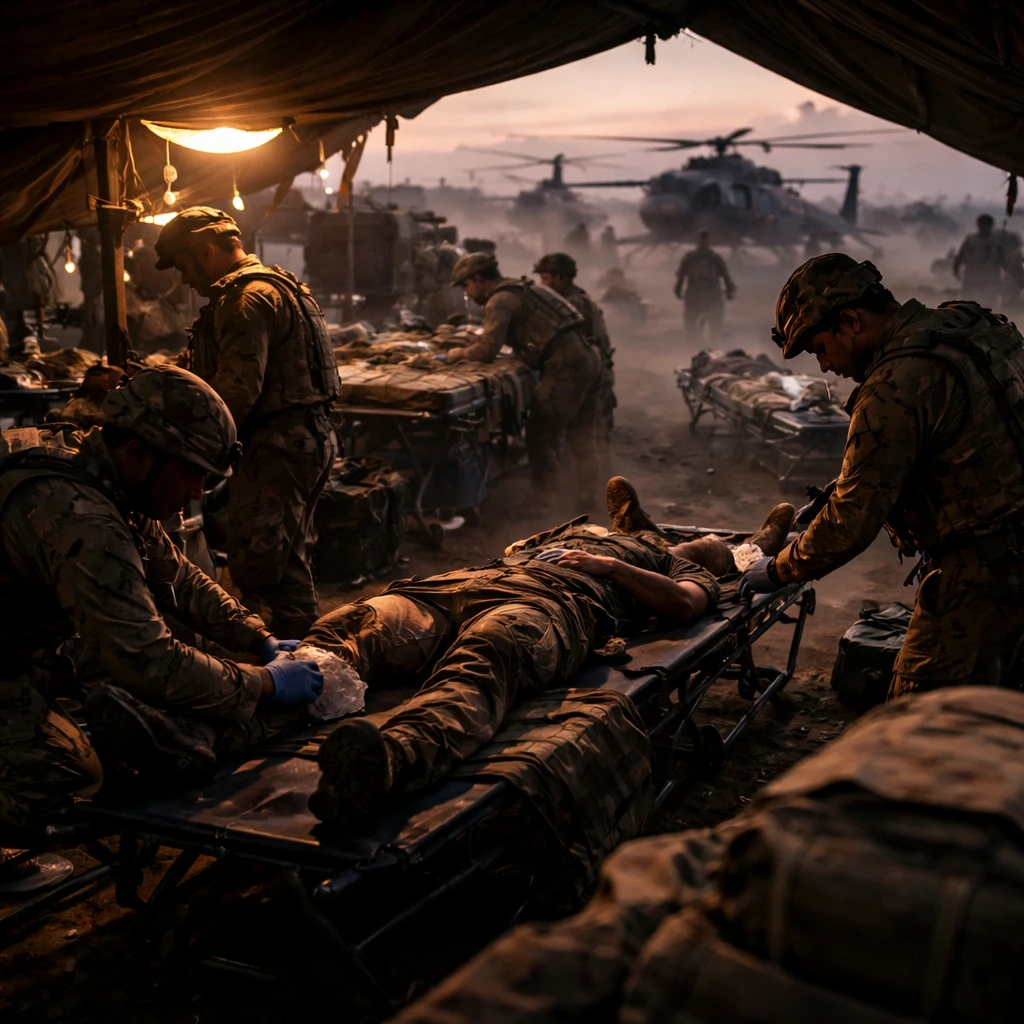
The Pentagon confirmed that roughly 140 U.S. service members were wounded over a 10-day period of hostilities tied to Iran. Officials said the majority of injuries were minor and that 108 personnel have returned to duty; eight service members remain seriously wounded and are receiving top-level medical attention. U.S. military officials also reported a drop in Iranian strike activity as American forces target weapons stocks and missile launchers, while Iran has attacked a variety of civilian and diplomatic sites and damaged oil infrastructure.

Key Points

  • Approximately 140 U.S. service members wounded over a 10-day period; 108 have returned to duty.
  • Eight service members are seriously wounded and are receiving the highest level of medical care.
  • Iran launched strikes on U.S. bases and a range of civilian and diplomatic targets, including oil infrastructure; U.S. strikes on weapons stocks and missile launchers have coincided with a sharp fall in Iranian strike frequency.

The Pentagon on Tuesday confirmed that approximately 140 U.S. service members were wounded during 10 days of sustained conflict involving Iran. The department said most of those injured sustained relatively minor wounds and that 108 of the affected service members have already returned to duty.

"Since the start of Operation Epic Fury, approximately 140 U.S. service members have been wounded over 10 days of sustained attacks," Chief Pentagon spokesperson Sean Parnell said in a statement.

According to Pentagon officials, eight service members are classified as seriously wounded and are receiving the highest level of medical care. Officials have not released details about the specific nature of those injuries. The Pentagon noted that external reporting had previously indicated a larger casualty figure, and White House Press Secretary Karoline Leavitt said Tuesday that a published figure of 150 wounded was "within that ballpark."

Defense officials underscored that it was not yet possible to determine the exact types of injuries for all wounded personnel. The statement noted that traumatic brain injuries are commonly seen after blast exposure, but the Pentagon said it could not confirm whether such injuries are included in the current casualty counts.

The Pentagon also described broader operational developments in the conflict. Iran has carried out retaliatory strikes since the conflict escalated on Feb. 28, striking U.S. military bases and carrying out attacks on diplomatic missions in Arab Gulf states, hotels, airports, and oil infrastructure. U.S. military action, officials said, has focused on bombing Iranian weapons inventories and targeting missile launchers, which the Pentagon says has led to a sharp decrease in the number of Iranian strikes since the outset of the war.

The scale and variety of strikes on civilian and energy-related targets were highlighted by Pentagon statements detailing damage to oil infrastructure and attacks on non-military sites. Officials emphasized the ongoing nature of operations and the continuing effort to assess and treat wounded personnel while degrading the adversary's strike capability.

Risks

  • Uncertainty about the types and severity of injuries - officials have not confirmed whether traumatic brain injuries are included, complicating medical and recovery outlooks. This uncertainty affects military readiness and personnel recovery timelines.
  • Continued attacks on oil infrastructure and other civilian sites raise the potential for energy market disruption, as damage to oil facilities can influence supply risk in affected regions.
  • The situation remains operationally fluid - while Iranian strike frequency has fallen according to Pentagon statements, the ongoing military campaign and retaliatory strikes sustain risk for further escalation or sustained disruptions to regional security and logistics.

More from Economy

Atlanta Fed Seeks Nationwide Candidate Pool to Replace Bostic Mar 10, 2026 Iran conflict adds volatility to Brazil’s budget forecasting as March review nears Mar 10, 2026 White House Says U.S. Did Not Escort Tankers Through Strait of Hormuz Mar 10, 2026 Major European investors push back on volatile rate expectations as energy-driven inflation fears spike Mar 10, 2026 UBS Sees U.S. on Edge of AI-Led Growth, But Recovery Is Narrowly Focused Mar 10, 2026