
The Pentagon on Monday provided detailed briefings on a joint U.S.-Israeli campaign against Iran identified as Operation Epic Fury. Defense Secretary Pete Hegseth characterized the mission as "the most lethal, most complex and most precise aerial operation in history," and said it began at 01:15 Eastern Standard Time on Saturday under direct presidential orders.
According to briefers, General Caine said U.S. Central Command, led by Admiral Brad Cooper, initiated action at 9:45 a.m. local Tehran time. The stated aims of the operation include destroying Iran's offensive missile systems, eliminating missile production capabilities, degrading the country's naval and security infrastructure, and preventing progress toward nuclear weapons capability.
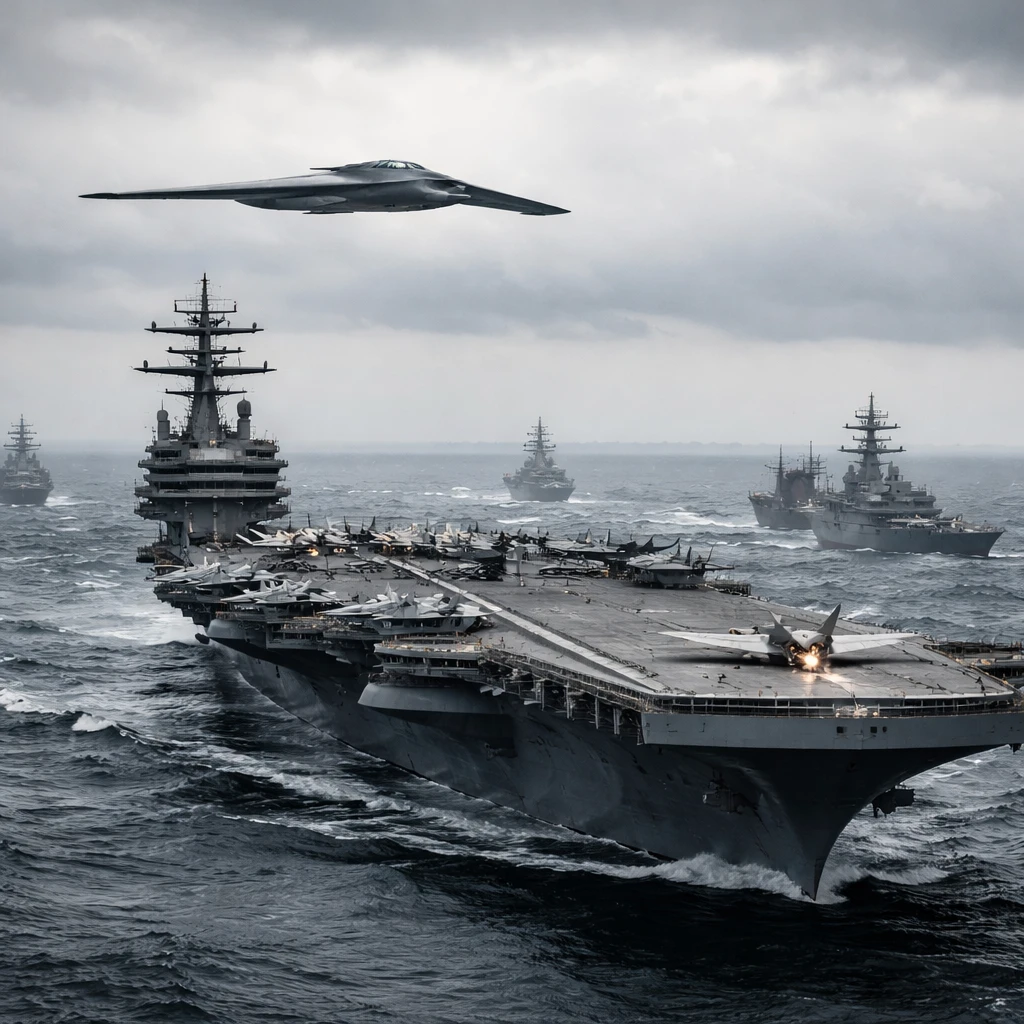
Officials reported that the initial 24-hour phase of the campaign struck more than 1,000 targets. Over the first 57 hours since the operation commenced, the combined force executed hundreds of land- and sea-based missions and delivered tens of thousands of pieces of ordnance. The operation has made use of B-2 bombers, unmanned systems, a range of missile platforms and classified assets, the briefers said.
Hegseth and General Caine described the effort as the culmination of planning that in some cases stretched months or years. They said the opening phase concentrated on Iranian command-and-control facilities, naval forces, ballistic missile launch sites and intelligence infrastructure.
Strategically, the operation included a broad repositioning of forces in the region during the 30 days leading up to the action. The deployment encompassed thousands of service members across all branches, hundreds of fourth- and fifth-generation fighters, dozens of aerial refueling tankers, and two carrier strike groups - the Lincoln and the Ford - with their embarked air wings. The briefers said assets from the Army, Navy, Marine Corps, Air Force, Space Force, Coast Guard and reserve components were integrated under combatant commands.
At 3:38 p.m. on the preceding Friday, U.S. Central Command received the final authorization from the president to commence Operation Epic Fury, according to the Pentagon. The initial kinetic and non-kinetic movements included actions by U.S. Cyber Command and U.S. Space Command. The first maritime strikes came from U.S. Navy Tomahawk missiles, which engaged Iranian naval targets along the country's southern flank. Ground forces employed precision standoff weapons in coordination with air and sea fires.
One high-profile element of the campaign involved American B-2 bombers conducting a 37-hour round trip from the continental United States to strike underground facilities in southern Iran. The operation also made extensive use of remotely piloted platforms and other strike assets described as classified.
Hegseth said the United States had previously attempted diplomatic avenues, but alleged that Iran declined to negotiate and used the interval to rebuild missile stocks and restart nuclear programs. He framed the operation as a response to what he described as decades of Iranian aggression against American forces and interests, citing Iranian-backed attacks on U.S. embassies and roadside bombings in Iraq and Afghanistan that killed thousands of American service members.
Defense officials confirmed four U.S. service members have been killed in the operation to date, with additional injuries reported. Hegseth said the four fatalities occurred when a ballistic missile struck a fortified tactical operations center. He expressed condolences to the families of the fallen. Separately, General Caine reported the loss of three U.S. Air Force F-15 E aircraft overnight in the region; he said the crews survived and that the cause of those losses was not hostile enemy fire, and that the matter is under investigation.
Hegseth said the operation is not intended to enact regime change, though he acknowledged that the Iranian regime has changed as a result of the strikes. He added that Iran has retaliated by launching missiles and unmanned aerial systems at civilian targets in neighboring countries, including hotels, airports and apartment buildings.
Israel has participated heavily in the campaign, flying hundreds of sorties against hundreds of targets as part of the combined effort, officials said. Hegseth characterized Israel as a capable partner and noted that it has specific mission objectives within the joint operation. He also made a direct comment about an earlier action, saying Israel "did a great job in the conduct of the killing of the Ayatollah."
Regional and naval air defenses have been active and coordinated with U.S. forces. Patriot batteries and Navy destroyers deployed by the United States have executed intercepts; officials said these systems have intercepted hundreds of ballistic missiles aimed at U.S. forces, allied partners and regional stability. Air defense batteries in Qatar, the United Arab Emirates, Kuwait, Jordan and Saudi Arabia were reported to have joined the defensive effort alongside U.S. systems.
General Caine said the combined strikes achieved local air superiority in the affected areas. He emphasized the scale and integration of the effort, with the combined force having launched hundreds of missions from both sea and land-based platforms across the theater.
On force posture, officials described the recent repositioning of thousands of servicemembers and assets to the region, including the carrier strike groups, fighters and tankers cited earlier. They declined to provide detailed troop numbers, saying specifics would risk compromising operational security. When directly asked whether American ground forces were operating inside Iran, Hegseth responded "no," and declined to outline future actions.
The Pentagon stated the operation will continue until its stated objectives are achieved. General Caine said operational activities will remain active across the theater and globally as required.
Key points
- Operation Epic Fury began at 01:15 Eastern Standard Time on Saturday by presidential order, with U.S. Central Command reporting initiation at 9:45 a.m. Tehran time. The initial 24-hour phase struck more than 1,000 targets and the campaign has delivered tens of thousands of ordnance over 57 hours.
- The campaign has been a multi-domain effort involving B-2 bombers, Tomahawk missiles, drones, Patriot batteries, carrier strike groups and coordinated regional air defenses. The U.S. repositioned thousands of personnel and hundreds of aircraft and tankers in the 30 days preceding the operation.
- Confirmed U.S. losses include four service members killed when a ballistic missile hit a fortified tactical operations center, additional injuries, and the loss of three F-15 E aircraft whose crews are safe; Patriot and naval systems have intercepted hundreds of incoming ballistic missiles.
Potentially affected sectors - Based on the operational assets and activities described, sectors likely to be implicated include defense and aerospace manufacturers, maritime and naval logistics, and air operations and refueling support services.
Risks and uncertainties
- Escalation risk - The operation has provoked Iranian missile and drone responses and strikes on civilian targets in neighboring countries, creating the potential for further regional escalation that could affect military and civilian infrastructure.
- Force and platform attrition - The confirmed losses of aircraft and personnel, and the requirement to sustain extensive sorties and munitions deliveries, highlight risks to force readiness and logistical sustainment over a prolonged campaign.
- Operational security and intelligence gaps - Officials declined to disclose troop numbers and future plans, and several aspects of the campaign involve classified assets; limited public information increases uncertainty about campaign duration and next steps.
Note: This article reflects details provided by Pentagon officials during briefings and does not include material beyond those statements.