
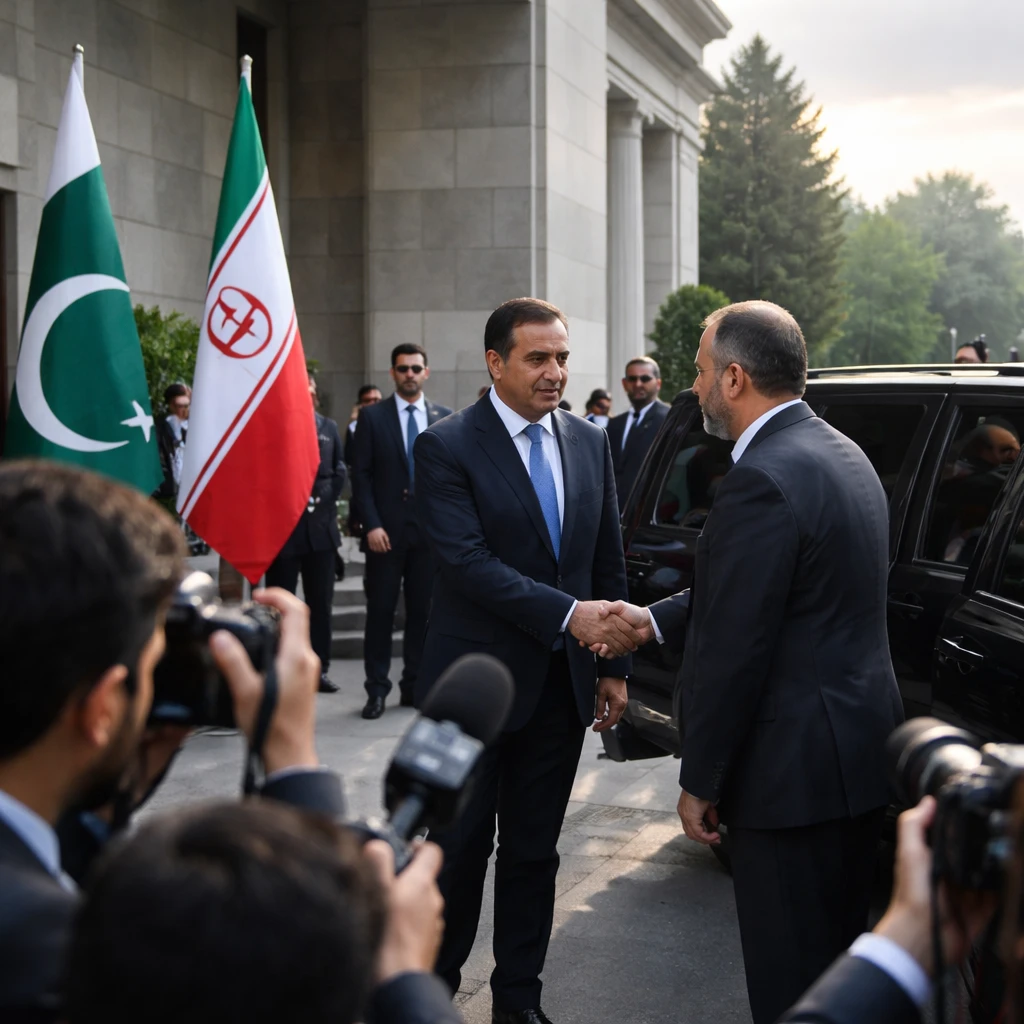
Pakistan's Interior Minister Mohsin Naqvi is preparing to travel to Tehran as part of an ongoing diplomatic push to bridge differences between Iran and the United States, Iran's state news agency IRNA reported.
The trip comes after Naqvi held two meetings with Iran's interior minister, Eskandar Momeni, on the margins of the Shanghai Cooperation Organization interior ministers' meeting in Kyrgyzstan. A source close to the Pakistani minister said Naqvi returned to Lahore after the regional gathering and planned to depart for Tehran from an eastern Pakistani city.
These engagements are not Naqvi's first trips to Iran this year. He has made multiple visits, including in April and in late May, holding talks with senior Iranian figures such as President Masoud Pezeshkian and Foreign Minister Abbas Araghchi. Those visits form part of a stepped-up diplomatic effort that Islamabad launched following a proposal by Pakistani Prime Minister Shehbaz Sharif for a two-week ceasefire between Iran and the United States in April 2026.
Islamabad has taken on a visible mediating role between the two adversaries. According to IRNA, secret talks between Iranian and U.S. delegations held in Islamabad concluded without an agreement after 21 hours of intensive negotiations. In the aftermath of that impasse, senior Pakistani officials have continued to make repeated, targeted visits to Tehran in an effort to keep channels of communication open.
There are signs that the diplomatic exchanges are attempting to move toward a more formal arrangement. Iran's Foreign Ministry spokesperson, Esmaeil Baqaei, told IRNA that the two sides are in the final stages of drafting a memorandum of understanding aimed at ending the conflict. The report did not provide further details on the content or timeline of that draft.
At the same time, the diplomatic effort faces significant obstacles. The U.S. military reported that it shot down four Iranian drones and intercepted seven missiles headed toward Bahrain and Kuwait, illustrating the volatile security backdrop. On the diplomatic front, an adviser to Iran's supreme leader told CNN on Friday that "Negotiations are at a deadlock." The adviser added that "A potential peace deal between the United States and Iran hinges on the Trump administration agreeing to release $24 billion in frozen Iranian assets."
U.S. President Donald Trump voiced a degree of optimism on Friday, saying in an interview on NBC News' Meet the Press that he expects the conflict to conclude soon. He also asserted that U.S. action had significantly weakened Iran's military capacity, stating that, percentage-wise, Iran maintains "maybe 21%, 22% of their missiles."
Complicating prospects for a comprehensive settlement are ongoing hostilities elsewhere in the region. Iran has insisted that fighting between Israel and Iran-backed Hezbollah must end before a formal U.S.-Iran peace agreement can be finalized, adding another layer of regional interdependence to an already complex negotiation.
Summary
Mohsin Naqvi's planned visit to Tehran continues Pakistan's active mediation between Iran and the United States, following earlier high-level meetings and secret talks in Islamabad that ended without agreement. While Iranian officials report progress toward a memorandum of understanding, recent military interceptions and public statements from key actors highlight persistent obstacles to a final settlement.
Key points
- Pakistan is playing a central mediating role, with Interior Minister Mohsin Naqvi making repeated visits to Tehran and meeting Iranian counterparts.
- Secret negotiations between Iranian and U.S. delegations in Islamabad ended after 21 hours without a deal, yet officials say a draft memorandum of understanding is in late-stage preparation.
- Military incidents, including the U.S. shooting down four Iranian drones and intercepting seven missiles, and regional fighting involving Iran-backed Hezbollah continue to complicate diplomacy.
Risks and uncertainties
- Security escalations - Ongoing military exchanges and missile or drone incidents could derail negotiations and affect regional stability, with implications for defense and energy markets.
- Frozen assets impasse - The adviser to Iran's supreme leader cited release of $24 billion in frozen Iranian assets as a condition for a deal, creating a financial and political obstacle that could stall progress and affect banking or sovereign asset discussions.
- Regional conflict spillover - Continued fighting between Israel and Iran-backed Hezbollah is cited by Tehran as a prerequisite to a final agreement, introducing interlocking regional dynamics that make conclusion of a U.S.-Iran peace pact uncertain.