
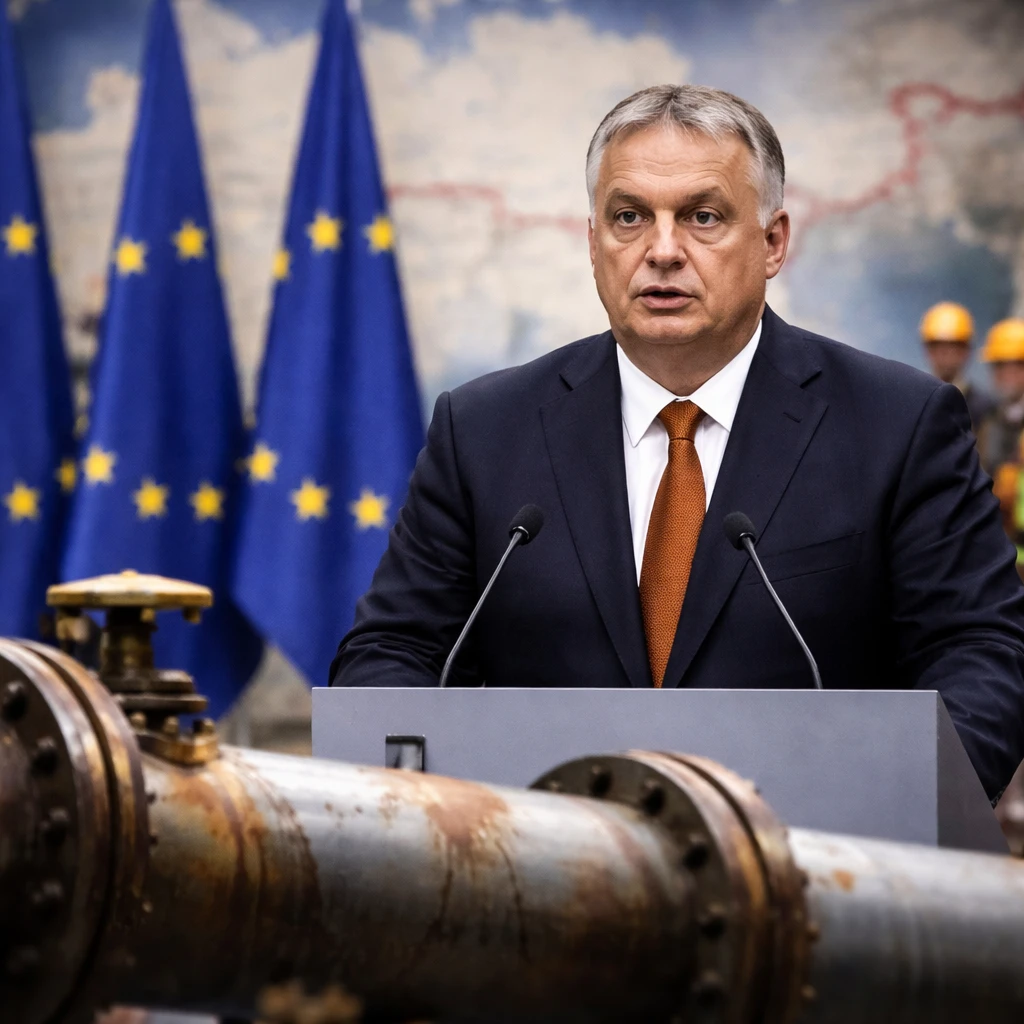
Brussels briefing - Hungarian Prime Minister Viktor Orban said on Thursday that he will not back a proposed €90 billion aid package for Ukraine until oil shipments through the Druzhba pipeline are fully restored.
Speaking ahead of a European Union leaders summit in Brussels, Orban reiterated that his country’s support hinges exclusively on the resumption of pipeline flows. He dismissed other considerations as irrelevant to his decision.
Hungary, with backing from Slovakia, has placed a veto on the release of loans that Ukraine requires in the coming months. The two countries are withholding approval until Kyiv is able to restore the Druzhba pipeline, which sustained damage in a Russian drone strike in late January.
Orban described the situation as existential for Hungary, a landlocked nation that relies on the pipeline, and emphasized that his stance is not motivated by political calculations.
The Druzhba pipeline has been the target of repeated attacks since Russia launched a full-scale invasion of Ukraine five years ago, with the infrastructure having been hit more than 20 times. Ukrainian President Volodymyr Zelenskiy said last week that the most recent damage is more severe than earlier incidents and that repairs could consequently take longer.
By linking approval of the EU aid package to the restoration of oil flows, Hungary and Slovakia effectively block financial assistance that Kyiv has identified as necessary in the near term. The veto affects planned loan disbursements intended to support Ukraine in the coming months.
What remains clear - The position expressed by Budapest is narrowly focused on the operational status of the Druzhba pipeline as the condition for backing the aid package. The arguments presented by Hungarian officials emphasize national supply concerns rather than broader political bargaining, according to Orban’s statements.
Outlook - At this stage, the timeline for repairs and the timing of any decision to release the blocked funds depend on the pace of restoration work on the pipeline and on continued diplomatic developments among EU members and Ukraine.