
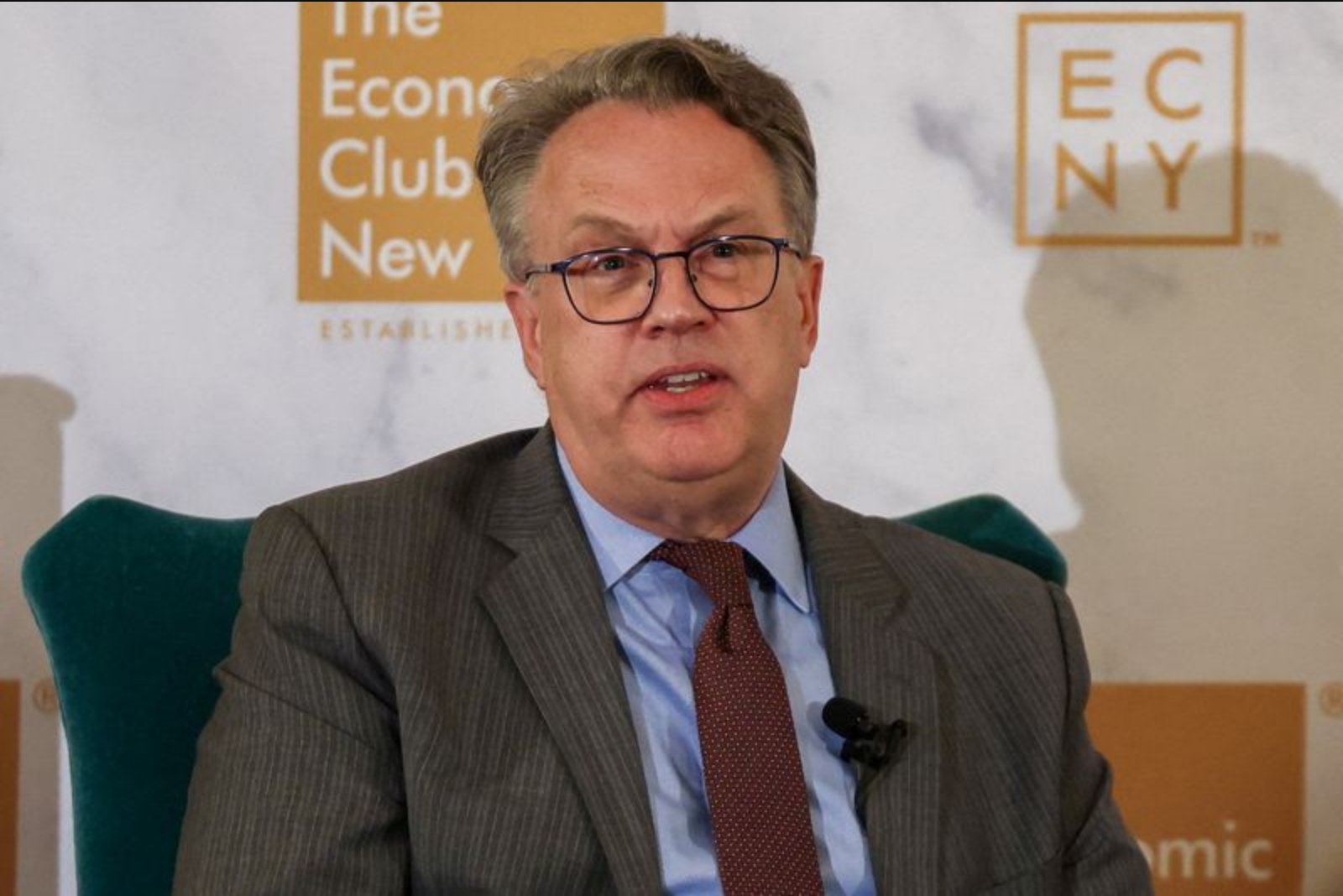
New York Federal Reserve Bank President John Williams said on Thursday that current central bank policy is properly aligned with the economic outlook, even as he expects inflation to remain high in the near term before moderating later in the year.
Speaking at the Reykjavík Economic Conference in Iceland, Williams said: "Right now monetary policy for the Fed is, is right where we want it to be." He characterized policy as "slightly restrictive" and said the central bank is "taking a longer view…we are well positioned to continue to learn what happens with the conflict, with other data, before we need to make a decision" on moving interest rates.
Williams, who serves as vice-chair of the Federal Open Market Committee, reiterated that the committee faces scenarios in which rates could be moved either up or down. He added that persistently high inflation would warrant a tightening of policy, but stressed that such a condition has not materialized.
He attributed near-term upward pressure on prices to two specific shocks: "President Donald Trump’s sharp import tax increases" and an energy shock stemming from the war in the Middle East. On the path for inflation he said: "I think in the next few months we’re going to see, continue to see very elevated inflation with (personal consumption expenditures) inflation around close to four, around 4%, core inflation above 3% like we’re seeing today."
Williams qualified that these effects could be transitory as tariff impacts fade and the energy disruption eases, noting it is possible that price pressures could peak within the coming months.
Financial markets broadly expect the Fed to hold rates steady for a period, though traders have begun to consider the prospect of a rate increase from the current federal funds target range of 3.5% to 3.75%. Williams acknowledged that inflation pressures have been above the Fed's target for years and said there is now greater concern that the recent shocks could destabilize inflation expectations and lead to additional upward pressure on prices.
On inflation expectations, he said that short-term expectations have risen - a reaction he described as unsurprising given recent developments - while longer-term expectations remain stable. He emphasized the importance of maintaining stable longer-term expectations as a core objective for the Fed.
Turning to broader economic conditions, Williams described the U.S. economy as "solid" and said "the underlying labor market is doing quite well."
This assessment frames a cautious, data-dependent policy stance: officials can tolerate near-term elevation in inflation driven by identifiable shocks while preserving optionality to respond if inflation proves more persistent than expected.