
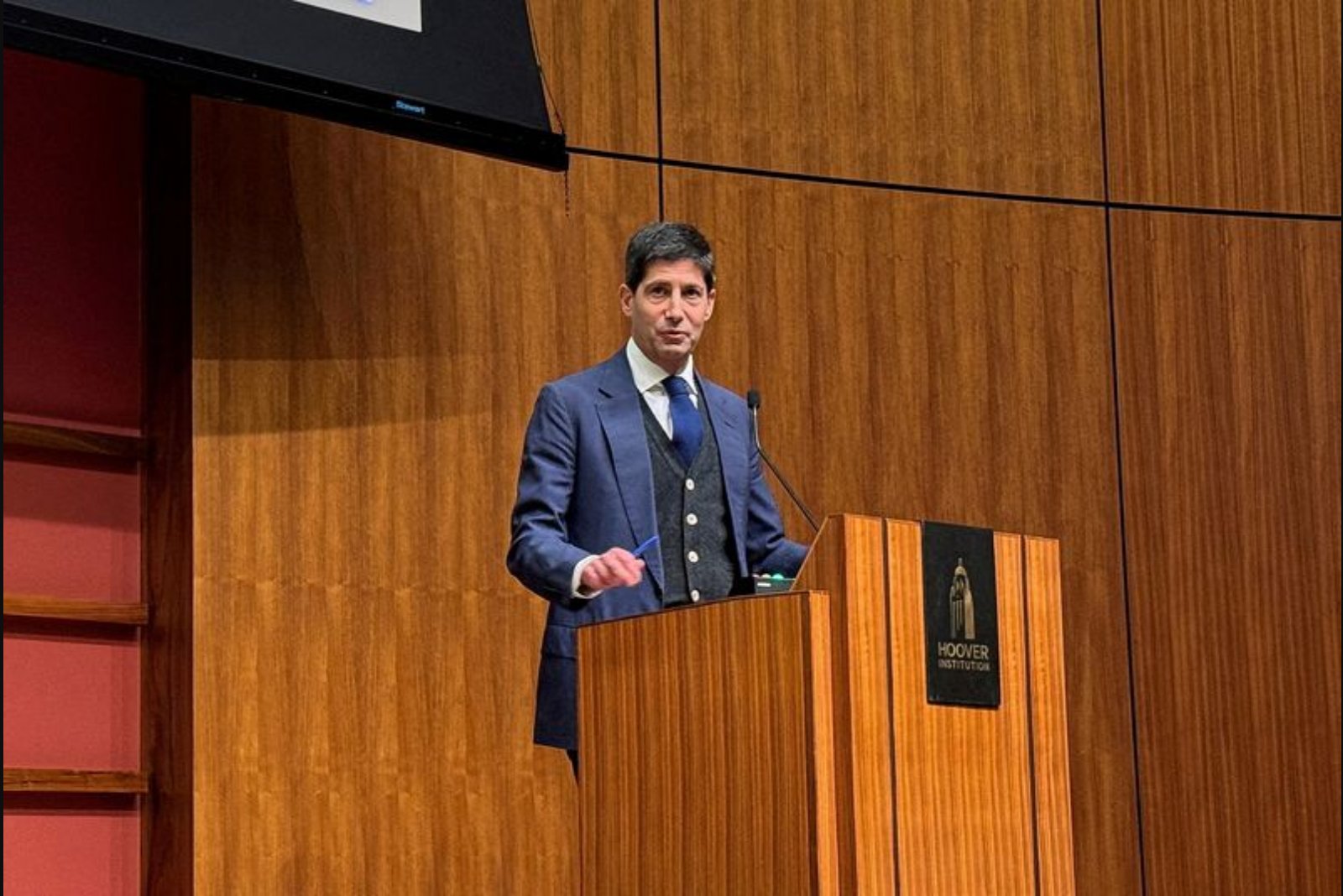
President Donald Trump identified Kevin Warsh, a former Federal Reserve governor, as his intended successor to Jerome Powell four weeks ago, but the White House has not yet forwarded the formal nomination paperwork to the Senate that would begin the official confirmation process. That interval between announcement and formal filing is uncommon in the modern era of Fed appointments and has heightened uncertainty around an already politically fraught transition at the U.S. central bank.
Since 2010 there have been only two instances in which nominees for the Fed chairship and other seats on the Board of Governors experienced a gap longer than four weeks between the White House announcement and the formal submission of materials to the Senate. The relative rarity of that delay underlines the unusual nature of the present pause in the Warsh process.
The specific reason for the extended pause in moving Warsh’s nomination through the administrative steps required to begin Senate consideration has not been publicly explained. However, one clear obstacle has emerged in the form of a pledge by Republican Senator Thom Tillis. Tillis has said he will block any Fed nomination as long as a Department of Justice investigation into Powell remains open. The probe concerns Powell’s testimony to Congress about renovations to the central bank’s Washington building.
Tillis has characterized the inquiry as frivolous and as a form of intimidation by the administration, which has openly expressed its dissatisfaction with Powell for not implementing interest rate cuts as swiftly or as deeply as the president would prefer. That public disagreement between the White House and the Federal Reserve over monetary policy priorities has added an additional layer of political tension to the confirmation process.
Observers of the confirmation process have noted the resulting standoff. Derek Tang, an analyst with forecasting firm LH Meyer, described the lack of movement on Warsh’s nomination as striking and pointed to Tillis’ stance as a significant impediment. "The White House seems no closer to overcoming the Tillis block: that the senator won’t let any nominee for the Fed get past the Senate Banking Committee unless and until the Powell probe goes away," Tang said.
The White House did not immediately respond to a request for comment about the timeline. Previously, White House officials had characterized Warsh as eminently qualified and expressed a desire to work with the Senate to confirm him quickly. Treasury Secretary Scott Bessent has said that the Republican-led Senate Banking Committee agreed to proceed with a confirmation hearing once Warsh is formally put forward.
Republican members of the committee, including Senator Tillis, have publicly described Warsh as a qualified pick for the Fed’s top role. Yet committee arithmetic matters: without Tillis’ vote to advance Warsh’s nomination out of the Banking Committee, the narrow Republican majority on the panel would be unable to overcome unified Democratic opposition and move the nomination to the full Senate for consideration.
Requests for comment from Warsh and from Fed spokespersons were declined.
The Powell probe and its procedural consequences
Chair Jerome Powell disclosed in January that the Department of Justice has opened an inquiry into his testimony to Congress related to building renovations. Powell described the investigation as part of what he labeled the administration’s "threats and ongoing pressure" on the Fed to cut interest rates.
The Fed has sought to resist the subpoenas associated with the inquiry, asking a judge to quash them, according to reporting. The central bank declined to comment on that report. The existence of the probe has introduced an additional political dynamic into the confirmation process for any prospective Fed leader, particularly given the president’s public insistence that his appointees favor faster or deeper rate cuts.
Timing and its implications for policymaking
Time is a practical constraint. There are 11 weeks remaining until the scheduled end of Powell’s current term as Fed chair on May 15. That window is shorter than the time it took many of the Fed’s current governors to progress from nomination to Senate confirmation in their own cases. While not necessarily prohibitive - the Senate demonstrated its ability to move swiftly last fall when it confirmed a nominee within two weeks - a protracted delay in Warsh’s confirmation would leave the nominee and the central bank in a state of operational and political limbo.
That limbo would be particularly acute as the Fed approaches its June policy meeting, scheduled for June 16-17, which is widely viewed as the earliest likely occasion for a serious debate about, if not an actual decision to implement, a rate cut. A drawn-out confirmation process would therefore coincide with a critical policy deliberation period for the central bank.
Board composition and internal dynamics
It is expected that Warsh would be nominated to fill the seat currently occupied by Stephen Miran, whose term expired on January 31 but who may remain in office until his successor is confirmed. The move would essentially replace one governor who supports rate cuts with another who similarly advocates for lower rates, but it would leave Trump-appointed members one seat short of a majority on the Fed’s seven-member Board of Governors.
The president has pursued other aggressive actions targeting the composition of the Fed. He has made an effort to remove another governor, Lisa Cook, alleging misrepresentations on mortgage applications. Cook denies any wrongdoing and is contesting the removal in a case that is pending before the Supreme Court. Powell attended oral arguments related to that case in January and described it as "the most important legal case in the Fed’s 113-year history" because of its implications for the central bank’s independence.
Options for Powell and the consequences of staying
Powell could, if he chooses, remain on the Federal Reserve Board as a governor beyond the end of his chairmanship and serve until at least January 31, 2028. He has not committed to leaving the board when his term as chair expires, a position that diverges from the practice of nearly all of his predecessors, who left the board when their chair terms ended. Such a decision by Powell would be extraordinary and would signal deep concern about the central bank’s capacity to operate independently of short-term political considerations.
The reasons cited for that concern are grounded in actions and statements documented in the unfolding process: the president’s explicit condition that prospective nominees back rate cuts, and the administration’s unprecedented pressure on central bank leaders, including the DOJ inquiry into Powell. Nevertheless, if Powell were to remain on the board, he would likely draw sharp criticism from the White House and other observers who would view such a move as a partisan effort to block the president’s ability to appoint a new governor.
Leadership at the Federal Open Market Committee
Even in the scenario where Powell stays on as a governor, institutional norms within the Federal Open Market Committee would likely lead to Warsh being chosen to chair the policy-setting panel. Such an outcome would create a delicate working relationship: Warsh would need to marshal support from a divided committee for the rate cuts he has signaled he wants to pursue while sharing the policymaking table with the person who previously led the central bank.
The combination of an unresolved DOJ inquiry, a pledged Senate blockade, and a compressed timeline ahead of key policy meetings has created a period of pronounced uncertainty about the Fed’s near-term leadership and the institutional capacity to navigate contested policy choices without the appearance or reality of political interference.