
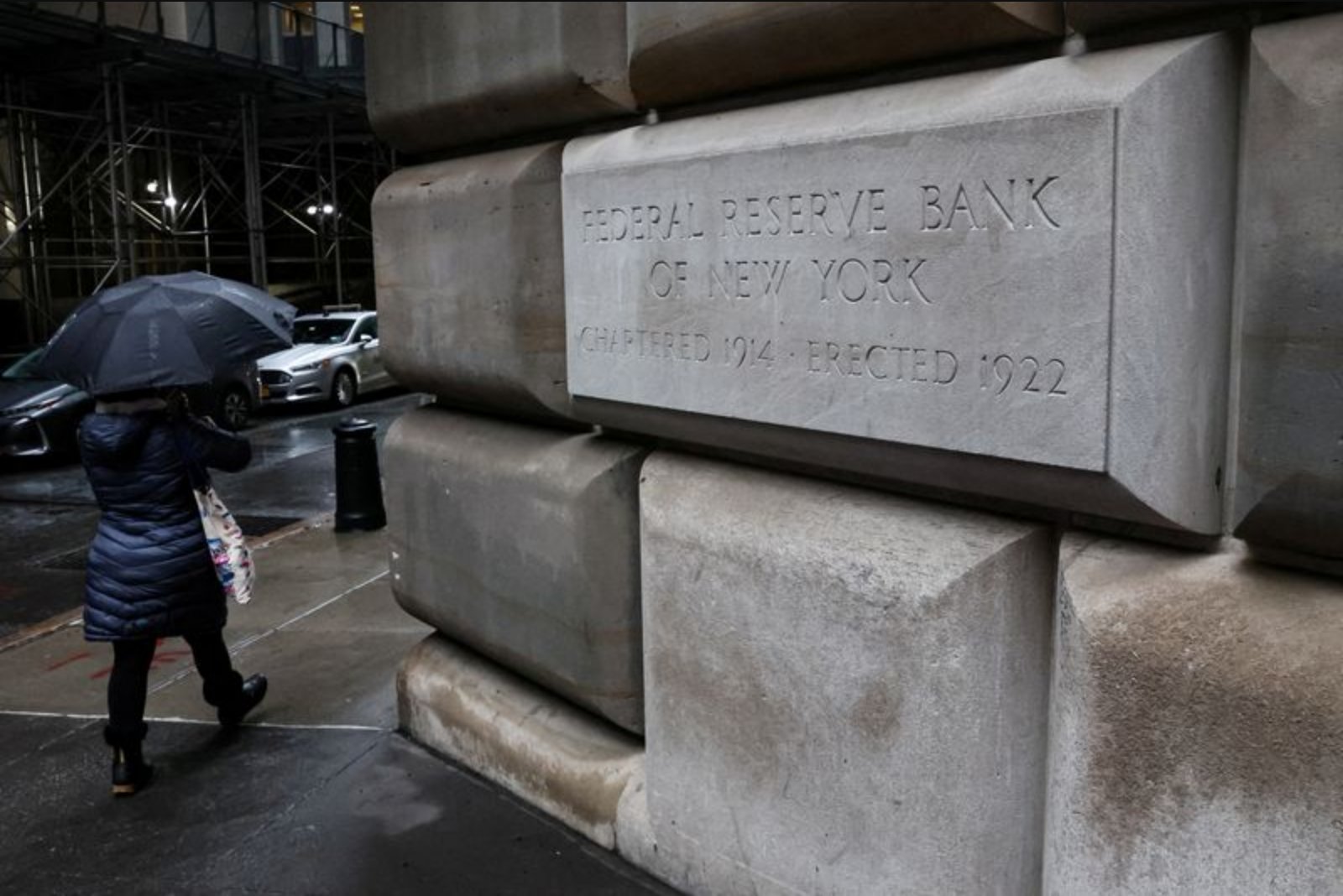
The New York Federal Reserve reported that U.S. household credit troubles edged higher in the fourth quarter of 2025, with strains concentrated in specific parts of the mortgage market and a marked deterioration among student loan borrowers.
Economists at the regional Fed bank noted that, when judged against long-run standards, mortgage performance remains sound. In a blog post accompanying the quarterly household debt release they said: "overall, mortgages continue to perform well by historical standards and have risen recently only after having reached artificially low levels during the (COVID-19) pandemic." On average, 1.3% of mortgages moved into serious delinquency over the past year, a share the Fed said "looks very similar to the averages observed outside of the period around the 'Great Recession'" nearly two decades ago.
Despite that overall resilience, the report highlighted a faster deterioration in mortgages located in lower-income communities and in regions where labor-market conditions or housing markets are weakening. The Fed economists wrote that "in lower-income areas and in areas experiencing worsening labor markets or housing market conditions, we are seeing mortgage delinquencies grow at a fast pace."
The broader data point to an economy that continues to perform reasonably well at an aggregate level while exposing growing fragility among lower-income households. The report said higher-income households appear to be supporting consumption and the broader expansion, buoyed by rising asset values. As Fed Chair Jerome Powell put it during a post-meeting press conference: "We know that higher-income households ... tend to own real estate and tend to own stocks ... and securities, and those assets have been going up in value, and increases in wealth do support spending over time." He added that lower-income households are being forced to "economize" their spending.
Quarterly flows and delinquency measures
The New York Fed's flow data showed mortgage transitions into serious delinquency at 1.4% in the fourth quarter, up from 1.09% in the closing three months of 2024. For all forms of borrowing, the transition rate into serious delinquency rose to 3.3% in the fourth quarter, compared with 1.7% in the final quarter of 2024.
On an aggregate basis, 4.8% of outstanding loans were classified as being in some form of trouble in the fourth quarter, up from 4.5% in the third quarter. A researcher at the New York Fed characterized the overall patterns this way during a conference call: "We would characterize overall that delinquency rates have, especially for non-mortgage debt, that they’ve really stabilized or leveled off."
Student loans the most stressed category
Student loans stand out as the segment with the most acute stress. The New York Fed reported that 9.6% of student loan balances were three months or more delinquent, a reflection of resumed payment reporting after an extended pandemic forbearance period. The flow of student loans into serious delinquency shot up to 16.2% in the quarter, compared with just 0.7% in the final three months of 2024.
Those figures imply a rapid reappearance of student loan payment difficulties in the data as repayment reporting returned.
Aggregate debt levels and composition
Total household debt stood at $18.8 trillion at the end of the fourth quarter, an increase of $191 billion, or 1%, from the prior quarter. Over the course of 2025, total borrowing rose by $740 billion. Since the end of 2019, before the pandemic, total household debt has increased by $4.6 trillion.
Balances in key consumer credit categories also rose in the quarter. Student loan balances reached $1.7 trillion in the final three months of 2025, up $11 billion from the prior quarter. Credit card balances increased to $1.3 trillion, a rise of $44 billion from the third quarter. Auto loan balances were $1.7 trillion at the end of the quarter, up $12 billion from the prior period.
The New York Fed's account underscores a split in the household sector: wealthier households appear to be cushioning aggregate spending through gains in assets that support consumption, while lower-income households face greater pressure from a slowing labor market and high living costs. Within credit categories, non-mortgage debt measures have generally stabilized, but student loan delinquencies and mortgage troubles in vulnerable areas are clear points of concern.