
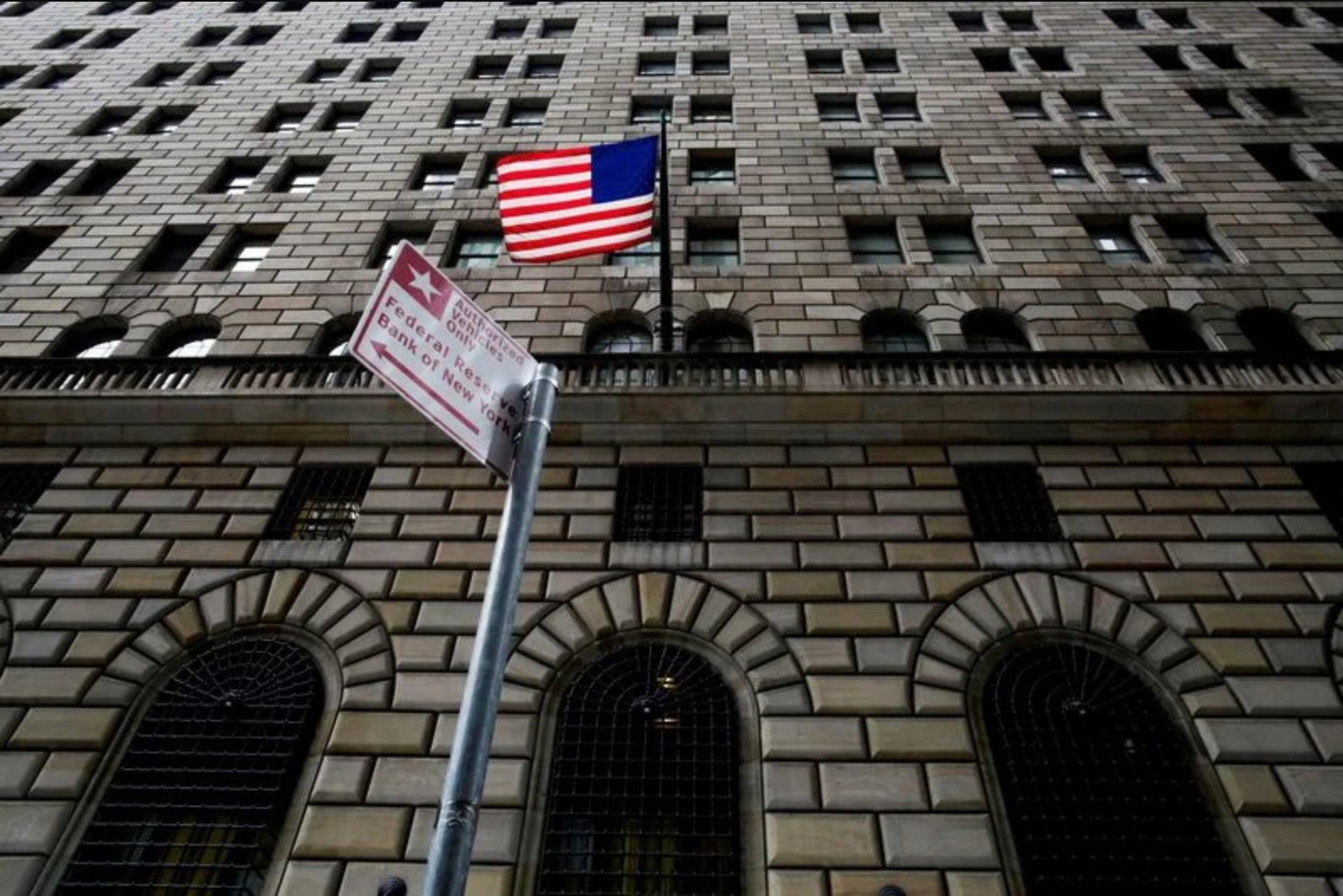
The New York Federal Reserve reported on Thursday that global supply-chain pressures persisted in May, driven by the conflict in the Middle East and associated interruptions to trade. The regional Fed bank's latest Global Supply Chain Pressure Index (GSCPI) declined modestly to 1.77 from an unrevised 1.82 in April, but the reading remains close to values observed in the latter part of 2022.
Fed researchers and officials point to the U.S.-backed war with Iran and the resulting shutdown of the Strait of Hormuz as central factors restricting the movement of oil and other goods that underpin the global economy. Those disruptions, the New York Fed noted, resemble the supply-chain strains seen during the COVID-19 pandemic that helped precipitate a large surge in inflation that has not been fully resolved.
Data from other sources align with the New York Fed's assessment. The Institute for Supply Management's factory sector survey, released earlier in the week, highlighted growing difficulties for manufacturers in sourcing necessary inputs and reported rising prices that respondents linked to the war.
"One of the things that worries me ... is the supply chain disruptions" tied to the conflict, New York Fed President John Williams said last week, drawing a direct comparison to the strain the pandemic placed on global trade.
Williams acknowledged that inflation remains very elevated at present, but he reiterated his view that price pressures should ease once the conflict ends and trade flows return to normal. That judgment contrasts with market expectations that sustained high inflation could prompt further rate increases.
Earlier last month, Boston Fed President Susan Collins warned of mounting risks if shipments through the Strait of Hormuz do not resume soon.
"If shipments through the Strait do not resume soon, global economic strains, which are already high, especially in Asia, will intensify, and this would increase knock-on effects on global supply chains and exacerbate inflationary pressures, as well as adverse effects on the domestic economy," she said.
The supply-chain problems tied to the war have complicated the Federal Reserve's policy outlook. Policymakers are widely expected to maintain the benchmark fund rate in a 3.50 percent to 3.75 percent range at their June 16-17 meeting. Financial markets, though, have been pricing in the possibility that persistently high inflation could eventually force the Fed to lift rates further.
In an interview with Yahoo Finance on Wednesday, Williams said he did not currently see a need to change the Fed's policy rate. That stance is not universal among regional Fed officials. Cleveland Fed President Beth Hammack cautioned on Tuesday that policymakers may have to consider raising rates if inflation pressures fail to ease, noting that inflation has run above the Fed's 2 percent target for years.
Hammack also stressed that supply-chain disruptions are likely to continue for some time.
"What I’ve heard from business contacts, particularly in the energy sectors, is that even if the Strait was opened tomorrow, it’s going to be months before we actually rebuild that flow of oil," she said.
Those assessments underline the transmission channels through which the Middle East conflict is affecting the global economy: bottlenecks in shipping and energy distribution feed into higher input costs for manufacturers and broader price pressures, which in turn influence central bank deliberations about interest-rate settings.
While the GSCPI's small decline from April to May could be read as a stabilization, the index's absolute level and commentary from regional Fed officials and industry surveys point to ongoing challenges. For now, the confluence of war-related trade disruptions and elevated inflation complicates the path to disinflation and remains a critical variable for markets and policymakers.
Readouts and data cited in this article:
- New York Fed Global Supply Chain Pressure Index: 1.77 in May, down from 1.82 in April.
- Institute for Supply Management factory sector survey: rising difficulties obtaining inputs and rising prices tied to the war.
- Federal Reserve policy expectations: benchmark rate anticipated to remain in a 3.50%-3.75% range at the June 16-17 meeting.