
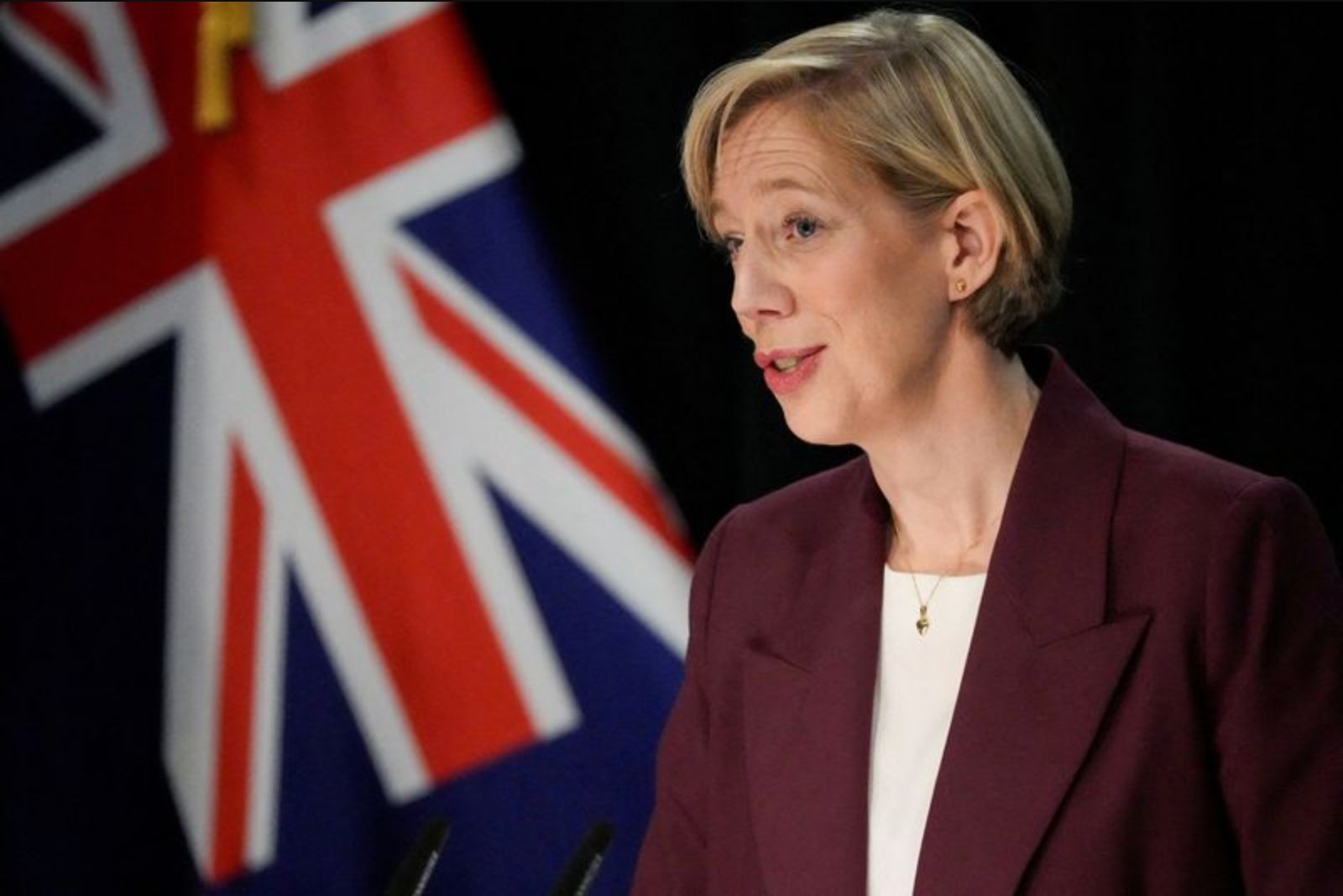
New Zealand's central bank leadership entered a new phase on Wednesday as Governor Anna Breman presided over her first monetary policy meeting, focusing on clearer communications and a cautious policy stance amid a tentative economic recovery.
Breman, a 49-year-old Swedish national who took office in September last year after a global search that identified 300 candidates, kept the Reserve Bank of New Zealand's official cash rate (OCR) unchanged at the meeting. The decision was widely anticipated, and the central bank used the occasion to temper market expectations for an imminent rate rise, stressing that policy settings must remain accommodative while the recovery remains fragile.
Press conference and communications
At her debut post-decision briefing, Breman delivered a roughly 10-minute slide presentation. The use of visual material and a longer format marked a departure from her predecessor's more restrained opening statements. Observers noted the difference. Jarrod Kerr, chief economist at Kiwibank, described the new governor's public presentation in positive terms.
"New Governor, Anna Breman, made her mark with an exceptionally simple, well delivered, statement and OCR track. Something which in the past, as recently as November, has not been well executed," said Kerr.
The emphasis on clarity in messaging appears intended to avoid the communication missteps that attracted criticism under the previous leadership.
Policy stance and economic outlook
Breman characterised the New Zealand economy as being in the early stages of a recovery but acknowledged that many households do not yet feel the benefits. She framed the decision to hold the OCR as supportive of that recovery while maintaining the objective of bringing inflation back to target.
"We want to keep the OCR on hold to support the recovery while ensuring that inflation falls back to target," Breman said.
She signalled that a further tightening of policy is not planned until there is clearer evidence of rising inflationary pressures and a stronger economy.
"We’re not planning on hiking the OCR until we see more inflationary pressures and a stronger economy," Breman said.
Operational changes and governance issues
The bank also announced an operational change to its policy calendar, increasing the number of scheduled monetary policy meetings from seven to eight in the coming year. Breman said the adjustment responds to criticism that a long summer break had previously made policy communication less clear.
The governor's arrival followed a period of heightened scrutiny of the central bank. Her predecessor resigned suddenly in March last year amid intensified criticism of the bank's management of the economy. Under that leadership, the bank was criticised by politicians and analysts for injecting billions of dollars of stimulus during the pandemic and was later tasked with engineering a recession through high interest rates to rein in inflation.
Independence and external pressures
Breman's appointment has taken place against a backdrop of rising political pressure on central bank independence globally. She was publicly rebuked by New Zealand's foreign minister last month after signing a statement alongside other global central bank chiefs in support of Federal Reserve Chair Jerome Powell, who has reportedly been threatened with a criminal indictment. The Reserve Bank later said Breman signed the statement because she strongly believes in central bank independence.
In her presentation on Wednesday she made a concise reference to risks to central bank independence as part of a broader set of global vulnerabilities.
"In the medium-and-longer-term unsustainable fiscal dynamics in some countries and pressure on central bank independence could also be a cause for concern," she said.
Cultural and communications shifts
Breman did not open her briefing with a Maori greeting or use the Maori name for the Reserve Bank, Te Putea Matua, marks that had been a feature of her predecessor's briefings. Under the previous governor, the central bank had placed Maori heritage and language at the centre of its operations, driving visible changes to branding and to how the bank approached policy and communication.
At her first New Zealand media briefing after taking the role, in September, Breman said she wanted to learn more about the Maori economy and New Zealand's culture. Her public remarks on Wednesday did not include Maori language, representing a departure from the prior practice.
Background and personal notes
Breman brings prior central banking experience, having served on the Swedish central bank's executive board in 2019, where she contributed to decision-making on monetary policy, financial stability, and national payments systems. She became First Deputy Governor at that central bank in 2022.
On a personal note, Breman is married with two teenage daughters. She has spoken positively about her family's move, saying they are enjoying life in New Zealand and joking about the nation's enthusiasm for rugby.
"I’m here with my family now and we’re really happy to be here," she said. "We think it is a lovely place to live. People are really friendly."
The meeting reaffirmed a cautious policy approach under the new governor, with a priority on clearer public communication and an operational tweak to increase the frequency of policy meetings. Those moves will be watched by markets, households, and firms as the recovery progresses.