
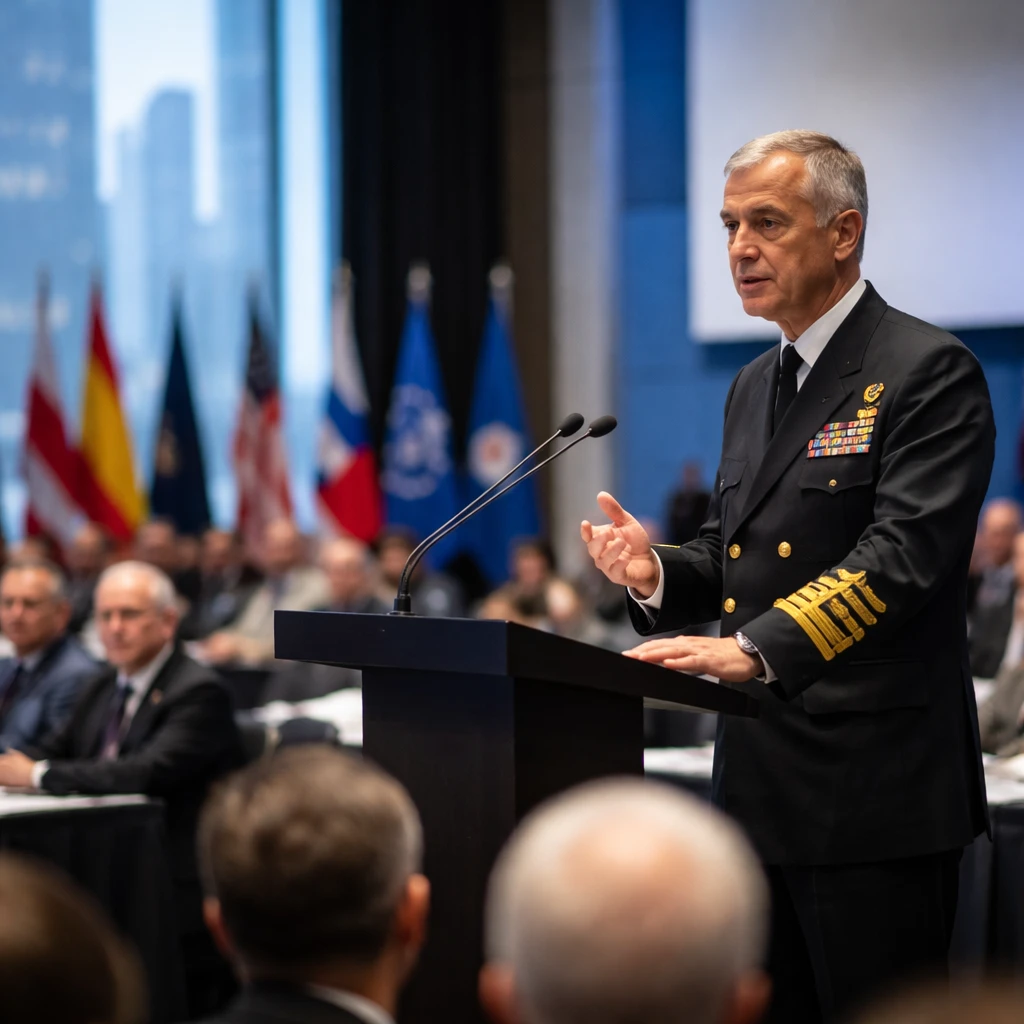
Admiral Giuseppe Cavo Dragone, chair of the NATO Military Committee, told attendees at the Shangri-La Dialogue in Singapore that NATO is advancing toward the elevated defense spending objectives agreed by members and will meet capability targets set out in the alliance’s planning process.
"We have a NATO defense planning process to give us the capability that we need, and we will acquire that in time" to reach a combined spending level of 5% of GDP, Cavo Dragone said in an interview at the security forum.
The remarks came in the wake of sharp public comments by U.S. Defense Secretary Pete Hegseth at the same event, where he urged European allies to shoulder more of their security responsibilities and to rely less on Washington. Despite the strong rhetoric coming from the U.S. defense official, Cavo Dragone characterized the military relationship between NATO and the United States as steady.
"As a military side, we don’t have any drama going on" with the U.S., he said, seeking to downplay concerns that political statements were undermining operational cooperation.
Cavo Dragone also addressed worries over recent incursions by Russian drones into allied airspace, including an incident he noted struck a residential building in Romania on Friday. He counseled caution in responding to such events.
"NATO should not overreact," he said, underscoring a preference for measured military and political responses rather than escalatory moves.
European governments have reacted to repeated calls from President Donald Trump for greater national defense outlays by increasing military budgets and updating defense investment plans. At last year’s NATO summit, all members except Spain agreed to channel 3.5% of GDP into core defense expenditures with a further 1.5% allocated to related security measures, creating a combined target that totals 5% of GDP.
Several allies, Germany among them, have since accelerated their spending schedules as they prepare for the next NATO summit in Ankara, according to Cavo Dragone’s comments. The alliance’s defense planning framework is intended to shape capabilities over time to meet the agreed objectives.
Still, NATO has faced heightened uncertainty in recent months tied to discussions in Washington about troop levels in Europe and adjustments to military resources available to the theater during crises. European officials have voiced concerns about the speed and timing of some announcements from U.S. policymakers, though alliance leadership says members remain aligned on strategic aims.
Investors and market participants continue to watch defense spending commitments across NATO closely. The expectation of larger military budgets is anticipated to support demand for weapons systems, military vehicles, munitions and a range of defense technologies, which could influence procurement programs and related industrial activity.
The comments from Cavo Dragone at the Shangri-La Dialogue aimed to reassure both military planners and political leaders that NATO’s processes and collective decisions will guide capability acquisition and spending - and that operational cooperation with the United States is intact despite public disagreements at the diplomatic level.