
Economy March 20, 2026

Nagel: ECB Must Act If Energy-Driven Inflation Sparks Second-Round Effects

Bundesbank chief warns that sustained higher inflation expectations would require tightening even as ECB holds rates steady

By Maya Rios
Nagel: ECB Must Act If Energy-Driven Inflation Sparks Second-Round Effects

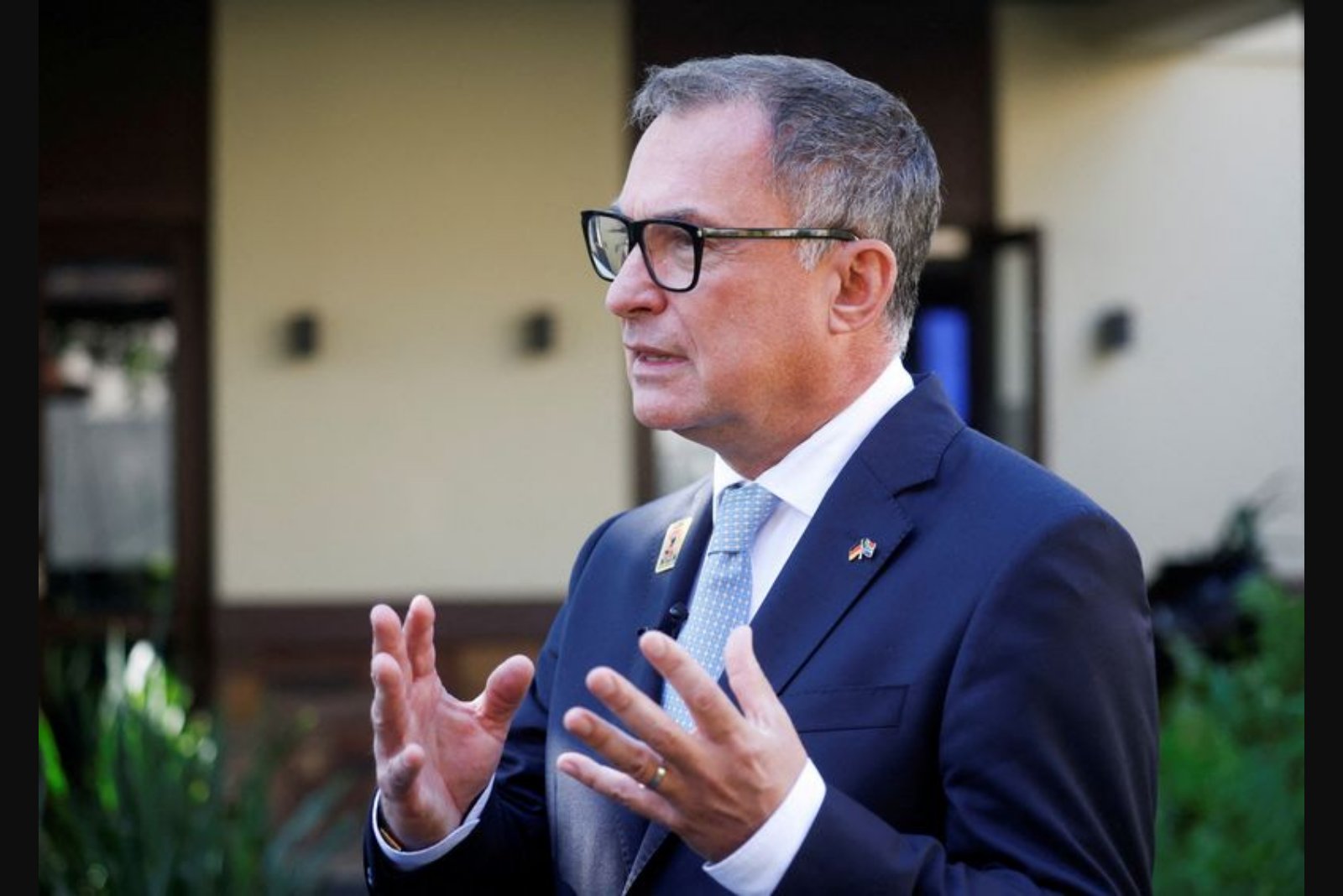
Bundesbank President Joachim Nagel cautioned that a sharp rise in energy prices could spread inflation across Europe and that the European Central Bank should tighten policy if that leads to so-called second-round effects or lifts longer-term inflation expectations above target. The ECB left interest rates unchanged this week but upgraded its inflation outlook and highlighted geopolitical risks tied to the U.S.-Israeli war on Iran, prompting markets to price in additional rate hikes this year.

Key Points

  • A sharp increase in energy costs could spread inflation beyond energy components and into the broader European economy, according to Bundesbank President Joachim Nagel - impacting energy and utilities sectors and inflation-sensitive markets.
  • The ECB left interest rates unchanged but raised its inflation projections and highlighted risks from the U.S.-Israeli war on Iran, which has increased market bets on further policy tightening this year - relevant to financial markets and fixed income.
  • Nagel emphasized that while short-term energy-driven inflation cannot be prevented by monetary policy, the ECB must act if second-round effects and higher medium-term inflation expectations emerge - a concern for wage setters and service-sector pricing.

Bundesbank President Joachim Nagel said on Friday that a pronounced increase in energy costs has the potential to push inflation beyond energy-related items and into the wider European economy, and that the European Central Bank must be prepared to tighten policy if those broader, second-round effects materialize.

Nagel’s remarks came after the ECB opted to keep interest rates on hold on Thursday while lifting its projections for inflation and flagging elevated price risks associated with the U.S.-Israeli war on Iran. That combination has strengthened market expectations for at least two further rate increases this year.

While Nagel did not directly call for an imminent rate rise, he stressed the mechanics that would force a policy response. "Monetary policy cannot prevent a short-term rise in inflation resulting from an energy price shock," he said in a speech. "However, it must act when second-round effects become apparent and longer-term inflation expectations rise above the inflation target, because then high inflation threatens to become entrenched."

Officials speaking anonymously said a rate increase will have to be discussed at the April policy meeting if the war persists, although for now a move in June appears more likely. That private assessment underscores the conditional nature of the ECB's path - a wait-and-see stance that can quickly pivot if incoming data or geopolitical developments warrant action.

Nagel argued that it remains too early to judge the medium-term impact of the recent surge in inflation, making prudence an appropriate response from policymakers. He reiterated the institution’s objective: "We are determined to stabilize the inflation rate at 2% over the medium term," and added that "It is crucial to remain highly vigilant in monetary policy."

From an energy and utilities perspective, Nagel’s emphasis on energy-driven inflation highlights the sensitivity of broader price dynamics to commodity cost shocks. The Bundesbank president’s warning frames the ECB’s policy calculus around whether energy-price shocks will ripple through wages, services and broader price-setting behavior to lift underlying inflation persistently.


Context and implications

  • The ECB’s decision to hold rates while raising inflation forecasts has intensified speculation about additional tightening later in the year.
  • Geopolitical tensions tied to the U.S.-Israeli war on Iran are identified by the ECB as a key source of mounting price risks.
  • Policymakers retain flexibility to respond quickly if second-round effects or rising inflation expectations become evident.

Risks

  • If energy price increases trigger second-round effects, inflation could become entrenched, forcing the ECB to tighten policy - a risk to sectors sensitive to higher interest rates such as utilities and capital-intensive industries.
  • Continuation of the U.S.-Israeli war on Iran would sustain mounting price risks and could prompt earlier policy discussions or action, introducing uncertainty for energy markets and financial markets.
  • The medium-term consequences of the current inflation surge are still unclear, making the outlook uncertain for corporate cash flows and balance sheets in sectors exposed to commodity price swings.

More from Economy

Trump Says Israel Could Conclude Conflict with Iran After U.S. Military Action Ends Mar 20, 2026 Global Bond Sell-Off Intensifies as War-Driven Energy Shock Raises Inflation Fears Mar 20, 2026 Markets Brace as Middle East Conflict and Energy Shock Cloud Economic Outlook Mar 20, 2026 Russell 2000 Falls Into Correction as Middle East Conflict Rekindles Inflation Fears Mar 20, 2026 Markets Rapidly Price in Fed Rate Hike; July Move Now Seen as Plausible Mar 20, 2026