
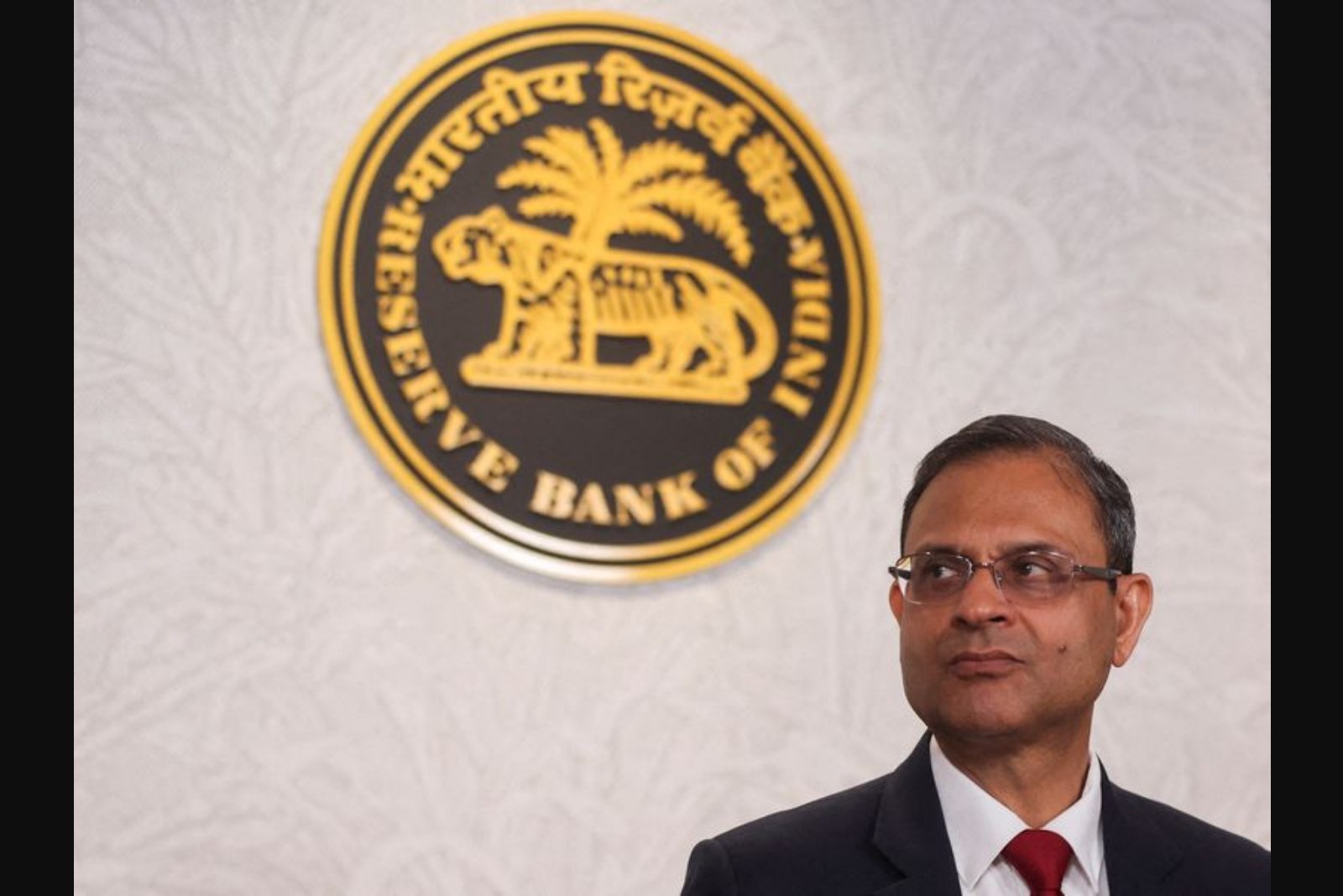
Minutes from the Reserve Bank of India (RBI) monetary policy committee (MPC) meeting in February indicate that a majority of the panel felt current policy rates are suitable for prevailing economic conditions, though two members flagged the possibility of rate cuts in the future.
The six-member committee kept the key repo rate on hold earlier this month, citing a positive outlook for growth and recent trade agreements with the U.S. and the EU as supporting factors. Economists and swap markets have broadly signalled an end to the rate-cutting cycle.
"Growth prospects are looking up while inflation outlook remains broadly unchanged," RBI Governor Sanjay Malhotra said in the minutes, noting that recent external developments have "provided room for greater optimism." He added: "Given the present state of the economy and its outlook - buoyant growth and benign inflation - I feel the current policy rate is appropriate."
Deputy Governor Poonam Gupta told colleagues that after 125 basis points of rate cuts over the past year, "another rate cut does not seem warranted at this point in time." She emphasised that a newly scheduled economic data series, to be rolled out later this month, could alter the Committee's reading of the economy.
India continues to grow at a rapid pace, with the economy expected to expand between 6.8% and 7.2% in the financial year beginning April 1, according to the projections cited in the minutes. GDP data for October-December, due to be released next week, will incorporate a new base year and other methodological changes intended to update the national accounts.
Despite the strong growth trajectory, inflation remains subdued. Retail inflation measured under a new series stood at 2.75% in January. The central bank's forecasts, as noted in the minutes, put inflation at 4% and 4.2% in the first and second quarters of the next fiscal year, respectively.
Not all committee members took the same view on the balance between growth and price pressures. External member Saugata Bhattacharya warned that risks of further inflationary pressures are accumulating, a point that highlights why the RBI is mandated to maintain inflation near 4% within a tolerance band of 2% to 6%.
Two members signalled some scope for future easing. External member Ram Singh commented: "It seems the economy is entering a structural phase where a 7%-plus growth rate and moderate inflation can coexist," and said there could be room for easing at an "appropriate time." Member Nagesh Kumar also noted that monetary policy could support growth, but he is waiting for the new economic data series and improved transmission of prior rate cuts before endorsing further action.
Overall, the minutes portray a committee that views the present policy stance as broadly appropriate, while leaving open the possibility that new data or improved monetary transmission could prompt reassessment. The incoming GDP release and the effects of recent policy moves on lending rates will be central to shaping the committee's next steps.