
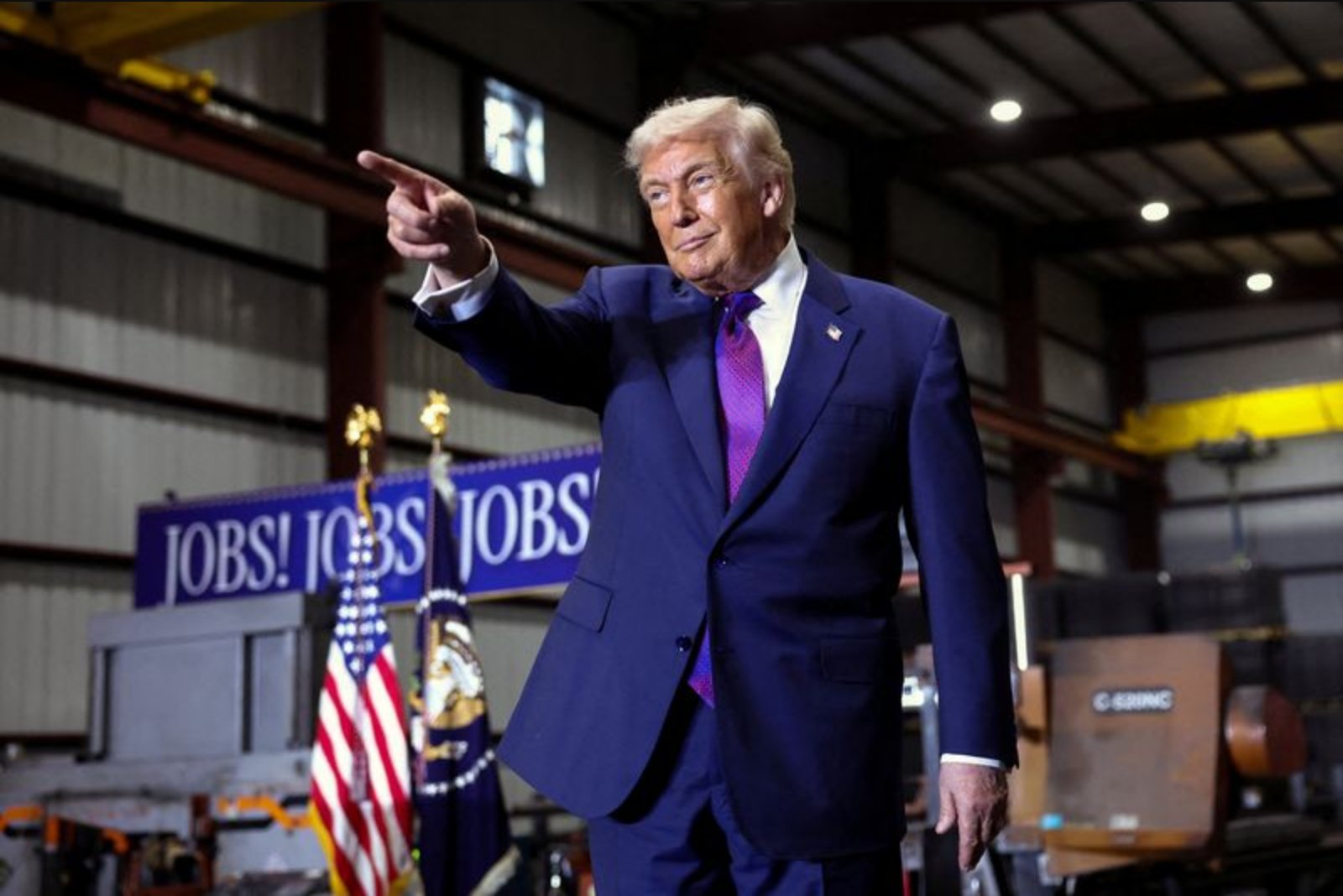
WASHINGTON, Feb 27 - President Donald Trump has repeatedly described current conditions as a period of exceptional economic strength, declaring in his recent State of the Union address that "This is the golden age of America" and that "The roaring economy is roaring like never before." He has also said he has resolved inflation. Yet a broad swath of Americans do not share that assessment, according to a Reuters/Ipsos poll completed on Monday.
The survey found that 68% of respondents disagreed with a statement that "the U.S. economy is booming," a line of questioning that directly challenges the president's repeated public characterizations since his return to office in January 2025. The poll indicates skepticism extends beyond just Democratic voters: while a majority of Republicans supported the notion of a booming economy, the party itself was notably divided.
Among registered Republicans surveyed, 56% said they believed the economy was booming, while 43% disagreed. That intra-party split is notable given the political stakes ahead - Trump’s party will be defending majorities in both the U.S. House of Representatives and the Senate in the November 3 midterm elections.
Concerns about rising costs of living surfaced repeatedly in the poll and in interviews with voters. In Dickson, Tennessee, west of Nashville, Marcus Tripp, a 53-year-old manufacturing worker, said he wants the president to focus more on economic conditions than on immigration enforcement. "The economy is what he needs to be focused on," Tripp said. Representing a household with two incomes, he described still feeling strained by rising rent and other expenses and said those worries outweigh concerns about the immigration status of a neighbor.
Cost of living ranked highest among issues respondents said would influence their vote in November. The poll also showed strong rejection of assertions that inflation is no longer a problem. When asked whether the statement "there is hardly any inflation in the U.S." was accurate, only 16% agreed while 82% overall disagreed. That level of rejection was matched among independents and was also high among Republicans, 72% of whom disagreed.
Democrats in the survey were overwhelmingly negative about claims of an economic boom or the end of inflation. The polling also found many Americans are unfamiliar with several of the administration's recently announced policy proposals aimed at curbing increases in household expenses.
Specifically, 44% of respondents reported they had never heard of the White House plan to limit large investors, such as investment firms, from buying single-family homes. Nearly half of those polled - 48% - had not heard of the proposal to cap credit card interest rates at 10%. By contrast, the president’s push to raise tariffs on imported goods registered far greater public awareness, with 78% saying they had heard at least a little about tariff hikes.
Views on the likely economic impact of higher tariffs skewed toward concern about higher consumer costs: 54% of respondents said they expected tariff increases to push up the cost of living. That figure included 69% of Democrats and 42% of Republicans.
Polling respondents also voiced skepticism about the effectiveness of tariff-based approaches. Tiffany Ritchie, a 50-year-old independent from Corpus Christi, Texas, who voted for Trump in 2024, called the presidential economic assessment insulting and said she doubted that tariffs would resolve affordability challenges. "We’re not going to tariff our way out of this," she said.
On prospects for the broader economy, the article reflects that many economists expect modest growth to pick up this year, though few anticipate a true boom. The Reuters/Ipsos poll was conducted online, surveyed 4,638 U.S. adults nationwide, and carries a margin of error of two percentage points.
Political timing adds immediacy to the economic debate. Republicans and Democrats begin their candidate selection process with primaries starting on Tuesday in Texas, North Carolina and Arkansas, setting the stage for general election contests that will culminate on November 3.
Key excerpts from the poll and interviews:
- 68% of respondents disagreed with the statement that "the U.S. economy is booming."
- Republicans were divided: 56% said the economy was booming, 43% disagreed.
- Only 16% of respondents agreed that "there is hardly any inflation in the U.S.," while 82% disagreed.
- Public awareness varies across policy proposals: 78% had at least some awareness of tariff hikes, 44% had not heard of the plan to limit investor purchases of single-family homes, and 48% had not heard of a proposed 10% cap on credit card interest rates.
The poll paints a picture of widespread concern about household costs and uneven public knowledge about specific policy proposals, at a moment when control of Congress will be contested later this year.