
Overview
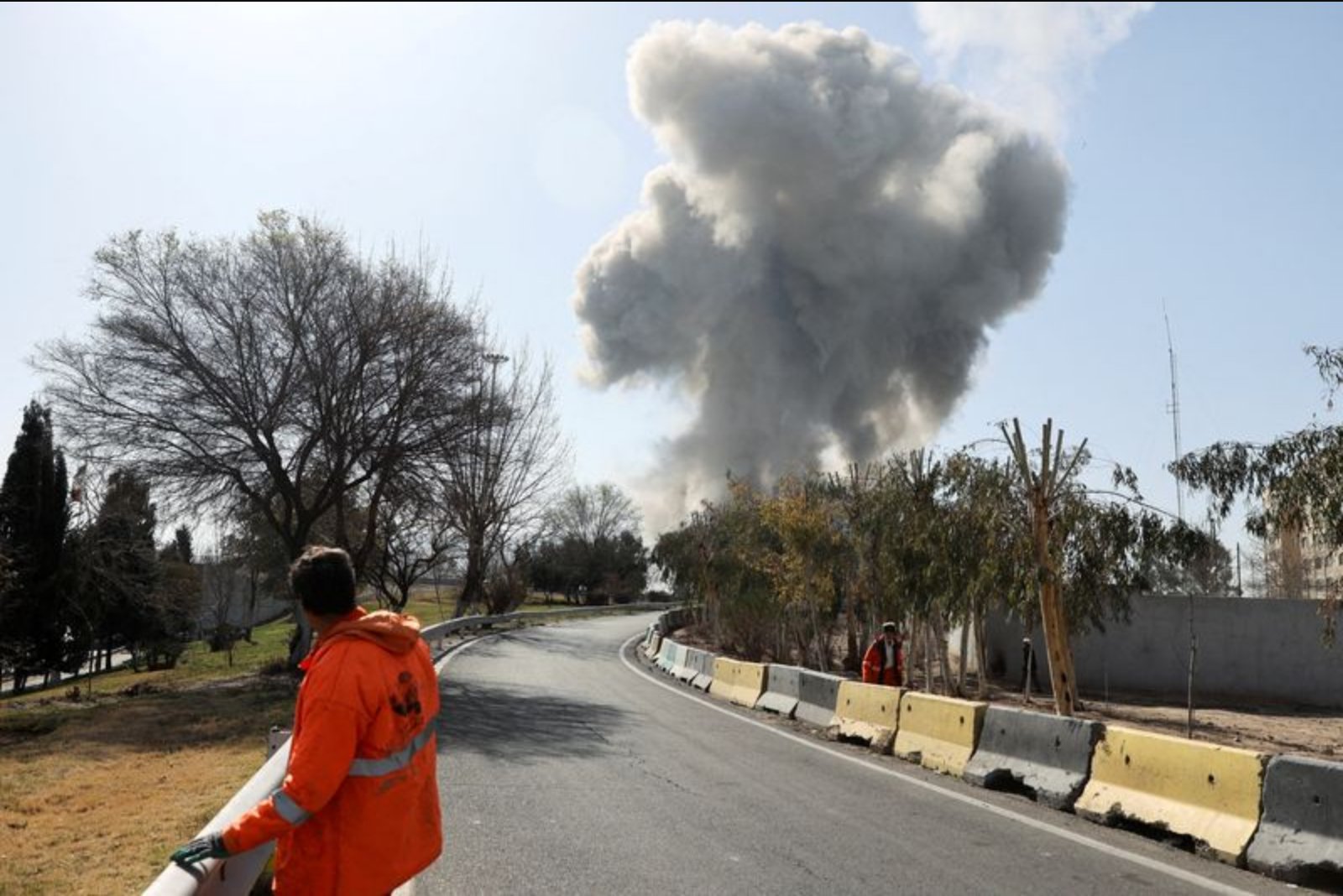
Officials and analysts tracking monetary policy say the recent military action involving the U.S., Israel and Iran has transmitted shocks to global energy markets and to Indian financial markets that are expected to weigh more heavily on economic growth than on inflation. The episode has coincided with roughly a 15% jump in oil prices, interruptions to gas flows from the Middle East and broad market losses in India - including selloffs in equities and government bonds and a weakening rupee that reached record lows.
Despite these headwinds, three people familiar with policy discussions indicated the central bank is unlikely to move toward a hawkish stance imminently. They said the RBI is more likely to keep interest rates low to support demand, though they cautioned assessments could change in the event of extreme developments in the Middle East.
Market reaction and policy divergence
Financial markets have already reacted to the geopolitical shock by pricing higher rates in emerging and global markets. In India, traders in swap markets have increased bets that at least one rate increase could occur over the next 12 months. That market behaviour contrasts with the view reportedly held by some policymakers that the principal near-term effect will be on growth rather than consumer prices.
Ritesh Bhusari, joint general manager for treasury at South Indian Bank, warned that if Brent crude spends time above $80 per barrel across the coming weeks, there could be additional upward movement in swap rates. "I don’t feel the market has sufficiently priced the risk from oil prices rising significantly and there could be room for swap rates to move even higher if Brent oil holds above $80 per barrel over the next couple of weeks," he said.
Where the RBI stands
The central bank’s rate-setting committee paused further rate cuts at its most recent meeting in February after the policy repo rate had been reduced by 125 basis points earlier in 2025. With the next policy review roughly a month away, the three sources said the RBI is not expected to pivot toward hiking rates in response to the current shock - unless the geopolitical situation deteriorates substantially.
An emailed request for comment to the central bank did not receive a response.
How the shock affects growth
Officials highlighted the risk to growth posed by disruptions to natural gas supplies. On availability concerns, several Indian companies pre-emptively curtailed gas deliveries to industrial users, anticipating tighter flows from the Middle East. This precautionary trimming of supplies risks reducing output in sectors that rely heavily on gas, notably fertiliser and power.
One source said that if gas supply disruptions persist for more than four weeks, economic growth could be affected for at least a quarter. Under a scenario in which oil prices remain elevated - specifically above $90 to $95 per barrel for three to four successive quarters - India’s current expectation of more than 7% economic growth for the next financial year would suffer a sustained hit. The source estimated growth could slow to roughly 6.5% under such a prolonged high-oil-price scenario.
A second source noted cuts in gas supplies to fertiliser and power plants would likely reduce output in those sectors in the near term, creating a lagged drag on growth that would become visible in the first and second quarters of the next fiscal year. "If oil prices remain high for an extended period, the 'Goldilocks phase' for the Indian economy will end," that source said.
Inflation pressures and policy room
Against the growth risks, the sources said near-term retail inflation is likely to rise only modestly. In India, retail fuel prices have not moved one-for-one with global crude because fuel retailers often keep domestic pump prices unchanged for stretches of time. In addition, the government has the option of cutting excise duties to shield consumers if global oil prices stay high.
One of the sources observed: "There is plenty of room on the inflation front." The same source added that if inflation were nearer to 5%, there might have been scope for a pre-emptive rate hike; however, retail inflation is currently close to the lower bound of the RBI’s tolerance range.
India’s retail inflation stood at 2.75% in January, which is nearer the lower end of the RBI’s 2% to 6% tolerance band. A Deutsche Bank estimate cited in discussions suggests a 10% to 20% jump in global oil prices could lift Indian inflation by 25 to 50 basis points if the increase were fully passed through to consumers. With only partial pass-through, consumer price inflation could rise to about the 4.5% to 5% range.
Citigroup’s chief India economist, Samiran Chakraborty, noted in a recent briefing that if retail pump prices are left unchanged by fiscal authorities, the RBI would have less cause for concern about near-term inflation and could focus more on downside risks to growth. "This could perversely make the policy stance less hawkish than what the immediate market reaction to higher oil prices might suggest," he wrote.
Constraints on easing
While the central bank is widely seen as unlikely to move rates higher, it may also be limited in how much it can cut rates further if oil prices stay elevated. Deutsche Bank’s chief India economist Kaushik Das observed that if inflation were to approach 5% as a result of higher oil prices, the RBI would probably be reluctant to resume rate cuts aimed at supporting growth in that environment.
Global spillovers and central bank projections
The conflict in the Middle East has clouded policy projections beyond India as well. Traders have delayed expectations for Federal Reserve rate cuts and added wagers on a potential ECB hike. Analysts at Goldman Sachs have warned that a sustained rise in oil above $100 per barrel or a faster-than-expected pass-through of higher costs into consumer prices could push global monetary policy toward greater hawkishness.
Concluding assessment
In the current configuration of risks, the balance facing Indian policymakers appears tilted toward guarding against slower growth rather than reining in inflation, at least in the short term. That assessment is contingent on the conflict not escalating further and on energy prices and gas flows evolving within the ranges discussed by the sources. All three people familiar with the central bank’s deliberations warned that an extreme deterioration of events in the Middle East could prompt a reassessment of the stance described above.
Key sectors affected
- Energy - oil price movements and gas supply disruptions
- Fertiliser - vulnerability to reduced gas supplies
- Power generation - dependence on gas inputs and potential output cuts
- Financial markets - equity, bond and currency volatility