
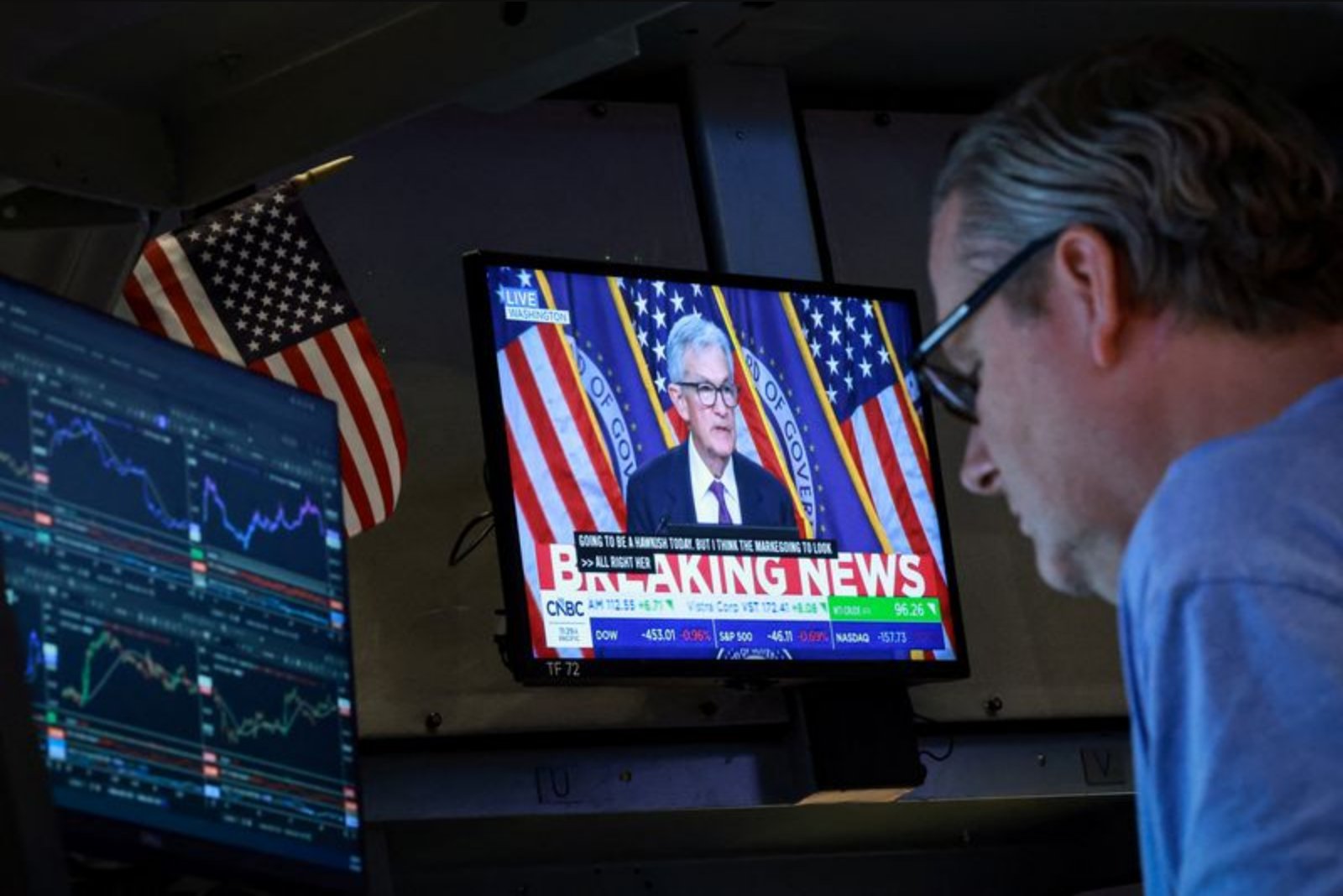
The Federal Reserve held its benchmark interest rate steady for the second consecutive policy meeting and maintained its forecast for one rate cut in 2026, but the broader outlook for U.S. monetary policy grew less certain as a Middle East conflict pushed energy prices higher and fed through to an upward revision in inflation expectations.
Fed officials projected inflation would be higher this year than previously anticipated, a shift the central bank linked to the surge in global oil prices that followed the outbreak of hostilities involving Iran. Fed Chair Jerome Powell cautioned that it is too early to judge the full economic consequences of the conflict.
Investors who had been positioned for near-term monetary easing began to reassess those bets. With volatility rising, market participants looked to a range of alternatives - long-dated government bonds, physical commodities and dividend-paying equities - as potential places to shelter assets while the outlook remains unsettled.
"The market is trapped amidst a whole lot of reasons to be nervous, a lot of reasons to be uncertain, including what is happening at the Fed," said Mark Spindel, chief investment officer at Potomac River Capital.
Equities reacted to the Fed decision and the spike in energy prices, with the S&P 500 falling 1.4% on the day. Oil prices were a significant driver of market moves - Brent crude approached $110 per barrel after Iran's huge Pars gas field was hit in what was described as a major escalation in the U.S.-Israeli war. The U.S. dollar strengthened and Treasury yields climbed, with the 10-year note rising to around 4.26%.
One of the central questions for investors is how the more than 40% rise in crude prices since the conflict began in late February will influence the Fed's willingness to loosen policy. Though the Fed left its median projection for easing unchanged, markets reacted by scaling back expectations for how much easing will take place this year.
Powell highlighted that Fed members' projections show a "meaningful" number of policymakers now expect less easing over the coming year than they had three months earlier. That shift reflects a renewed sensitivity to upside inflation risks tied to energy costs and other factors.
"He pointed not only to high energy prices, but tariffs too... he’s really now on the lookout for inflation," said Jack Ablin, chief investment officer at Cresset Capital. "I’m sure there’s going to be a growing school of thought that says they won’t cut at all this year."
Market pricing in fed funds futures as of late on Wednesday implied only about 14 basis points of easing by December, based on LSEG data - roughly half of a standard quarter-percentage-point move. That expectation is markedly lower than the market's stance in late February, before U.S.-Israeli military strikes on Iran began, when investors were pricing in at least two quarter-point cuts.
"People were way ahead of what the Fed was saying in terms of cuts, and now I think people have really pulled back those expectations," said Marta Norton, chief investment strategist at retirement and wealth services provider Empower. "So to the extent that you were bullish on stocks for monetary stimulus, maybe that’s not the near-term catalyst that you thought it was."
Policy decisions are unfolding against a labor market that has softened from its earlier strength. The Fed lowered its policy rate last year to the current range of 3.50% to 3.75% in response to slower job market conditions and the need to balance its dual mandate of price stability and maximum employment.
"From an overall perspective, it kind of highlights the delicate balance," said Brent Schutte, chief investment officer at Northwestern Mutual Wealth Management Company. Schutte added that his firm is underweight equities, noting that inflation has not shown signs of meaningful improvement even as the jobs backdrop appears weaker.
Uncertainty around Fed leadership added another layer of market concern. This week's meeting was expected to be Powell's second-to-last as chair, with his term as head of the central bank set to expire in May. The President has nominated a former Fed governor, Kevin Warsh, to replace Powell.
Powell said he will remain in his role as chair until a successor is confirmed and that he will not leave the institution while a criminal investigation involving the Fed is unresolved. Those comments, coupled with persistent inflation concerns and unclear timing for rate cuts, contributed to upward pressure on yields.
"With Powell still on the Fed board, 'Warsh (is) less likely to come on board quickly and lower rates,'" said John Velis, Americas macro strategist at BNY, characterizing how Powell's statement affected investor expectations.
As investors reposition portfolios for the shifting policy and geopolitical landscape, some strategists recommended leaning toward income-generating or real-asset exposures. Ablin suggested that stocks with steady and increasing dividends could serve as a defensive allocation while uncertainty resolves.
Phil Blancato, chief market strategist at Osaic, favored increased exposure to commodities given the persistence of inflationary pressures, while expressing less enthusiasm for U.S. equities. "You’re going to have no choice but to think about where you can diversify away from U.S. stocks because ultimately, the Fed’s not coming to rescue the market here," he said.
Finally, some market commentary in recent promotions emphasized the role of data-driven decision making and analytic tools when searching for investment opportunities in uncertain conditions. While such services do not guarantee success, their providers argue they can help investors identify potential investments with better information.
Clear summary
The Fed paused its rate cycle and kept its one-cut-in-2026 projection, but rising oil tied to the Iran conflict lifted projected inflation and narrowed the likelihood of near-term rate cuts, prompting risk-off moves in equities and a rotation toward bonds, commodities and dividend-paying stocks as investors hedge uncertainty.
Key points
- Fed held rates steady and retains a projection for one 2026 cut, but projected 2024 inflation was raised due to higher oil prices.
- Markets repriced policy easing sharply lower after the conflict-driven jump in crude, with fed funds futures implying only about 14 basis points of easing by year-end.
- Market responses included a 1.4% drop in the S&P 500, a rise in the dollar and higher Treasury yields; investors looked to long-dated bonds, commodities and dividend-paying stocks for protection.
Risks and uncertainties
- Escalating Middle East hostilities could keep energy prices elevated, sustaining upward pressure on inflation and reducing the Fed's scope to cut rates - impacting consumers, energy-intensive industries and rate-sensitive sectors.
- Persistently elevated inflation despite a weakening labor market complicates the Fed's dual mandate and heightens volatility for bond, equity and commodity markets.
- Uncertainty over Fed leadership timing and the investigation mentioned by the chair could influence market expectations for the policy path and keep yields volatile.