
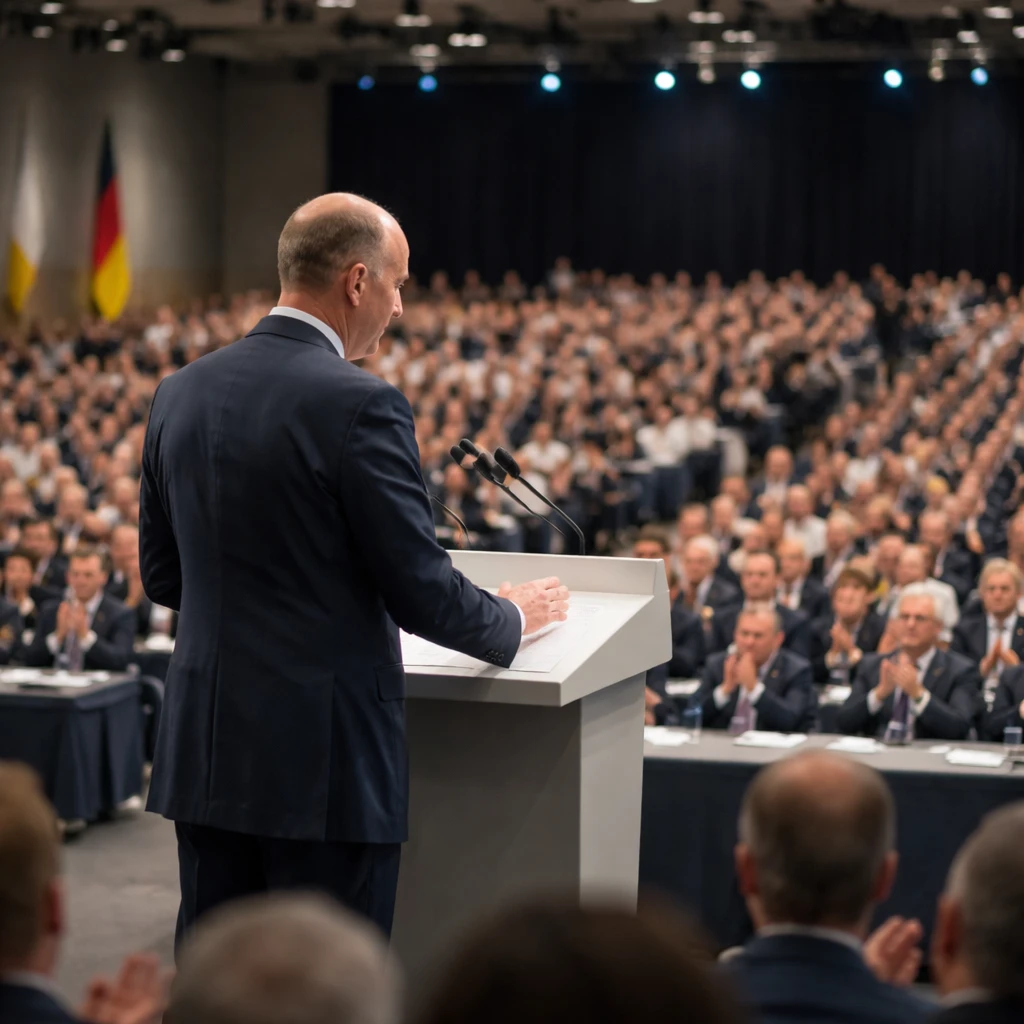
Chancellor Friedrich Merz has dismissed the prospect of further easing Germany's long-standing fiscal constraint known as the "debt brake" before the federal election scheduled for 2029. Speaking at his Christian Democratic Union's party conference in Stuttgart, Merz said it would be irresponsible to incur additional borrowing in the current legislative period.
Merz moved quickly last year to relax the constitutional limits on borrowing after winning the election in February. That decision unlocked several hundred billion euros, earmarked by the government for defence and infrastructure projects. The measure, however, provoked criticism from multiple quarters, including some within his own voter base.
Opponents have argued that the new headroom for borrowing provides the government with greater flexibility for routine or recurrent spending, rather than channeling funds into long-delayed capital investment that could strengthen the economy. Those critiques were part of the backdrop at the Stuttgart gathering, where delegates passed a motion opposing further changes to the debt brake.
Addressing the ARD broadcaster at the party conference, Merz was unequivocal about the limits he wants to observe. "In my view, taking on more debt is irresponsible," he said. He reiterated the message later in his remarks: "The fundamental message of this party conference is clear, and this is my own: We are taking on enough debt during this legislative period."
The chancellor's comments and the party's vote signal a consolidation of the current fiscal stance. By ruling out additional debt-limit reforms before 2029, the government has set an explicit boundary around further borrowing. The decision preserves the earlier relaxation as the principal change to the constitutional borrowing framework during this term.
While the measures taken last year freed substantial funds for defence and infrastructure, the debate that followed highlights political and public concerns over how newly available borrowing capacity is used. Critics maintain that the increased margin for debt could be applied to everyday spending priorities rather than addressing longer-term underinvestment in Europe’s largest economy - a point that resonated with delegates at the CDU conference.
For now, the policy position is clear: no additional loosening of the debt brake before the next federal vote in 2029, and a party resolution formalizing opposition to further reform during the current legislative period.